23 Minimalist Bedroom Decor Ideas That Will Transform Your Space
Introduction
Have you ever walked into a bedroom that instantly felt calm, open, and beautifully uncluttered all at once? That is exactly the feeling that minimalist bedroom decor creates, and it is one of the most loved styles on Pinterest right now. By focusing on clean lines, intentional pieces, and a quiet color palette, this approach turns any room into a peaceful retreat. It works beautifully whether you have a tiny studio or a spacious master suite.
In this blog, you will discover 23 minimalist bedroom decor ideas that are simple to recreate, no matter your budget. From streamlined furniture to thoughtful storage and soft neutral tones, every idea here helps you build a space that feels calm and intentional. Get ready to fall in love with your bedroom all over again.
1. A Low-Profile Platform Bed
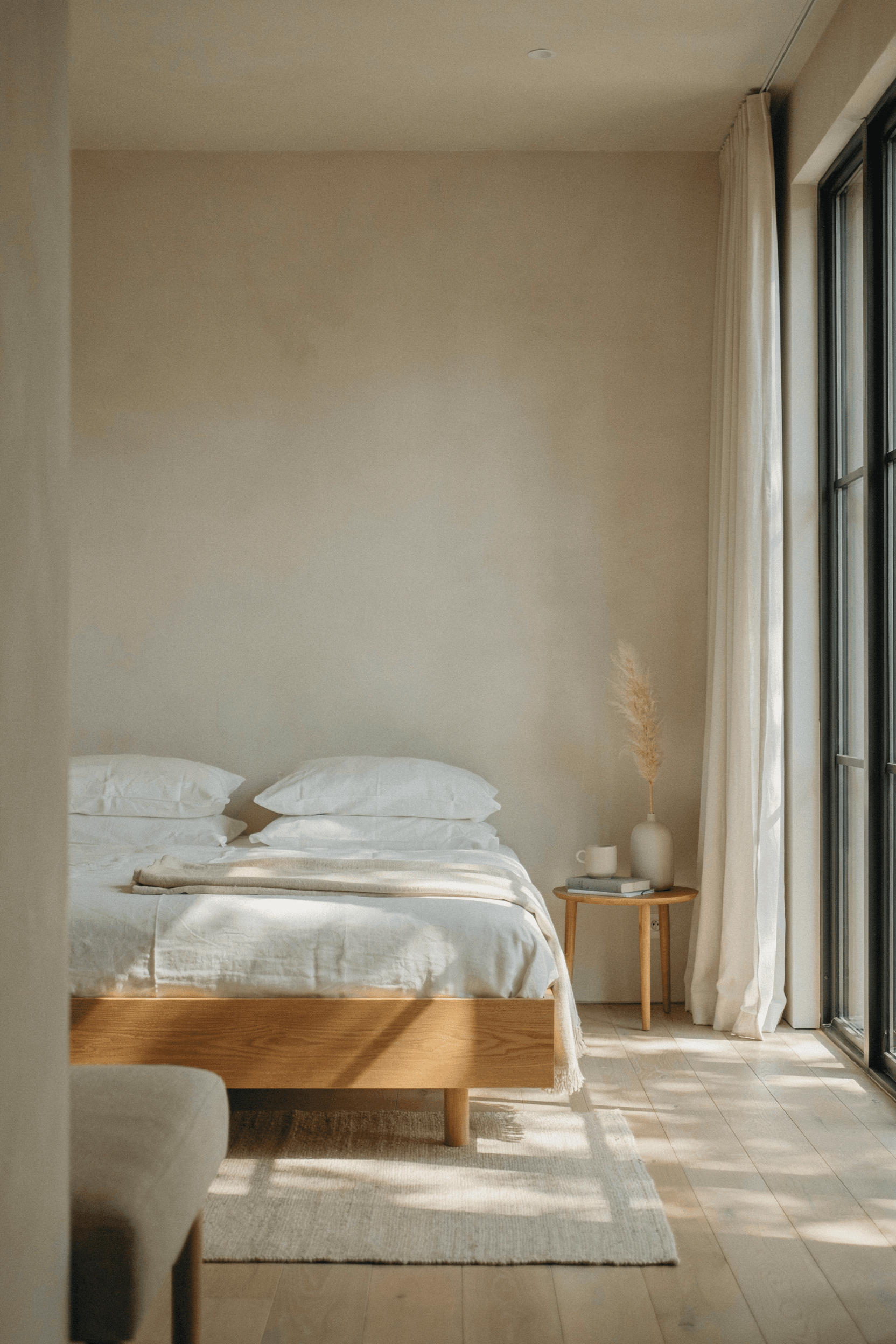
A low-profile platform bed is the cornerstone of minimalist bedroom decor. Its clean, simple silhouette sits close to the ground and avoids bulky frames or headboards. This keeps the room feeling open and visually light, letting the bed feel like part of the architecture rather than a heavy focal point.
Choose a frame in natural wood or matte black for a quiet, grounded look. Skip footboards and ornate detailing entirely. The simplicity of this piece sets the tone for everything else you add to the room.
Best For: Small bedrooms, modern apartments, and low-ceiling rooms
Pro Tip: Choose a frame without a headboard for an airier look.
2. A Strict Neutral Color Palette
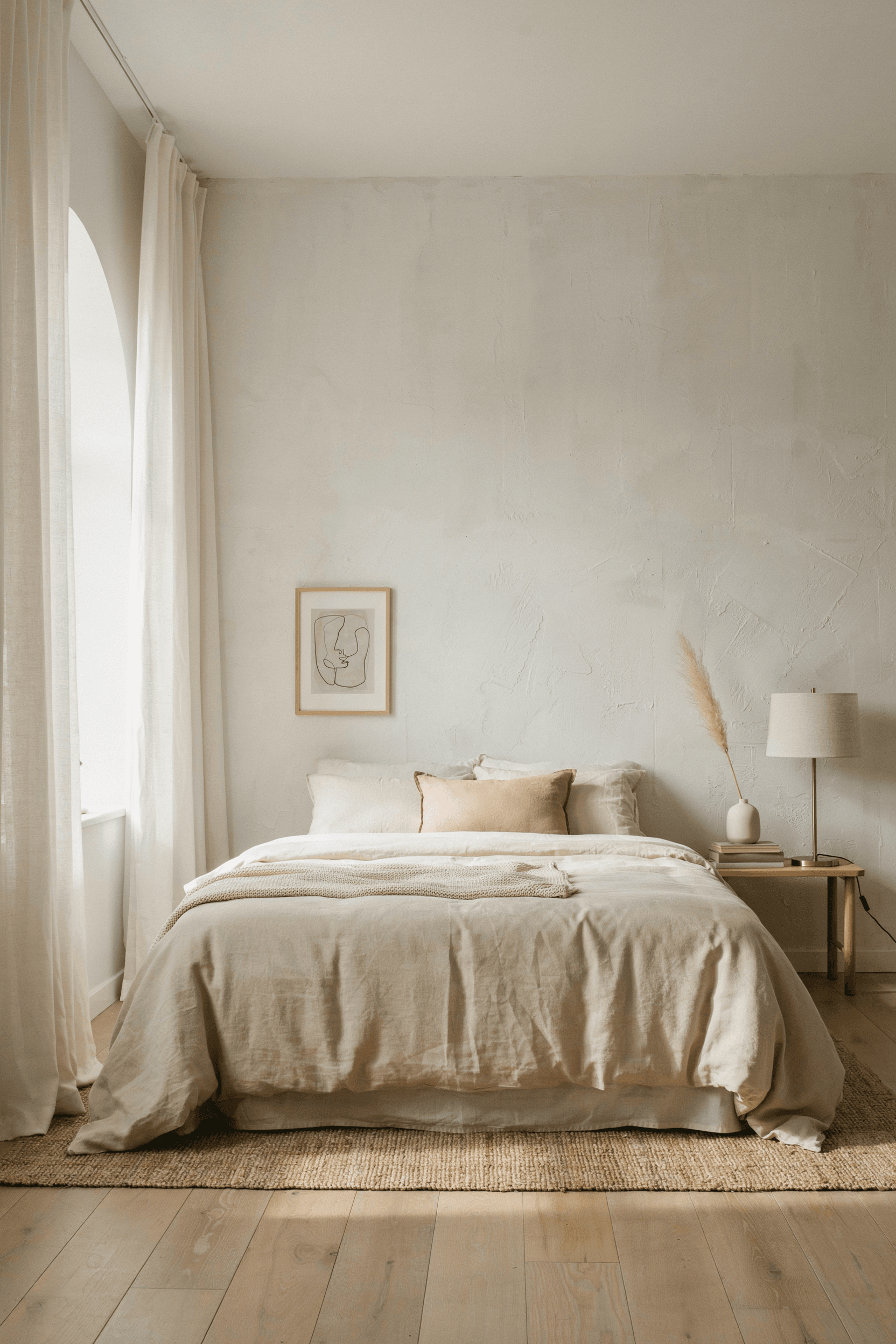
Minimalist bedrooms rely on a tightly controlled neutral palette to feel calm rather than cluttered. White, soft gray, beige, and warm taupe work beautifully together as a foundation. Limiting your palette to two or three tones keeps the eye from feeling overwhelmed by visual noise.
This restraint actually makes decorating easier, since nearly everything you add will coordinate naturally. Layer subtle texture instead of color for depth. The result is a bedroom that feels effortlessly put together.
Best For: Small bedrooms, rental apartments, and open-plan spaces
Pro Tip: Stick to three tones maximum for a cohesive palette.
3. Hidden or Built-In Storage
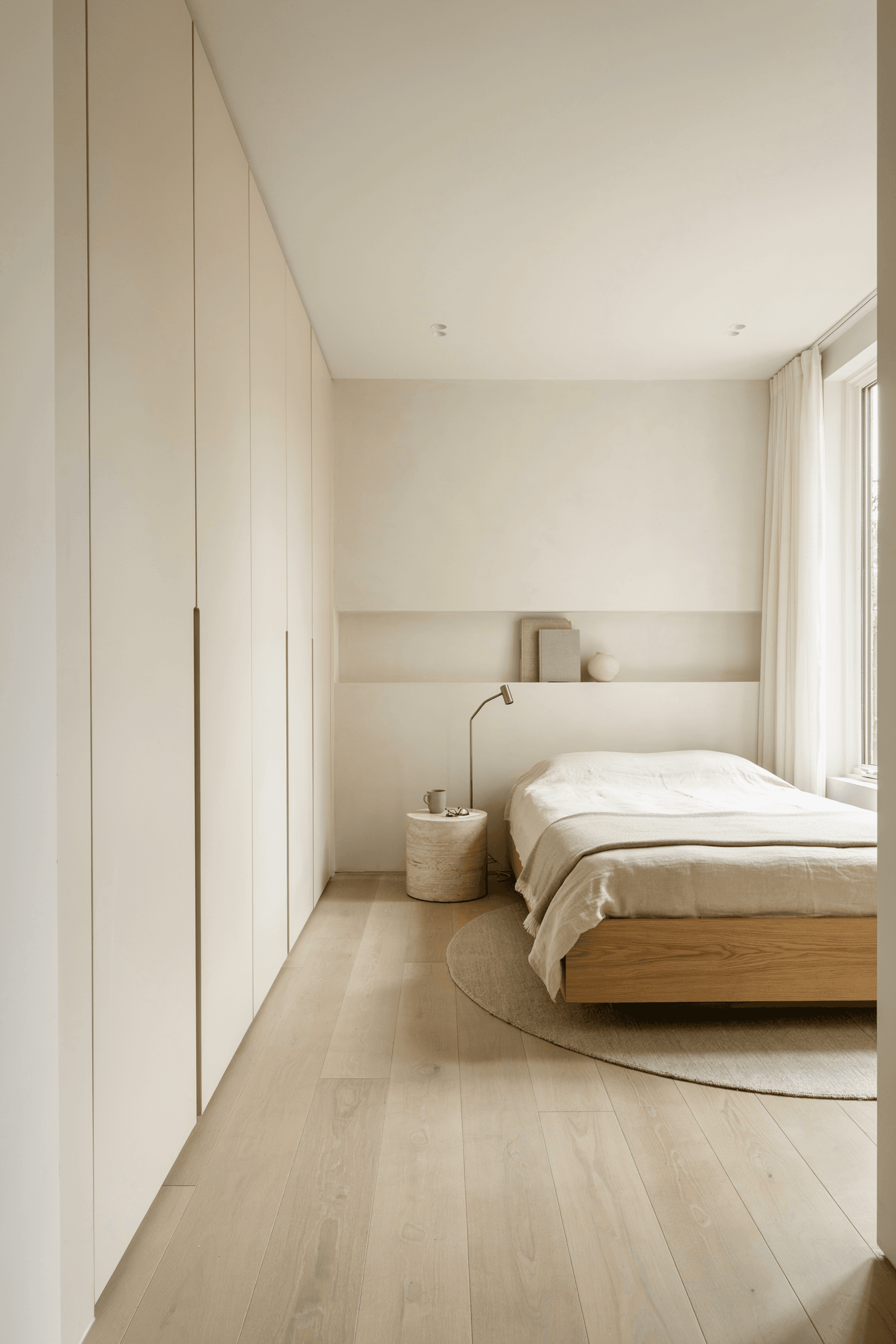
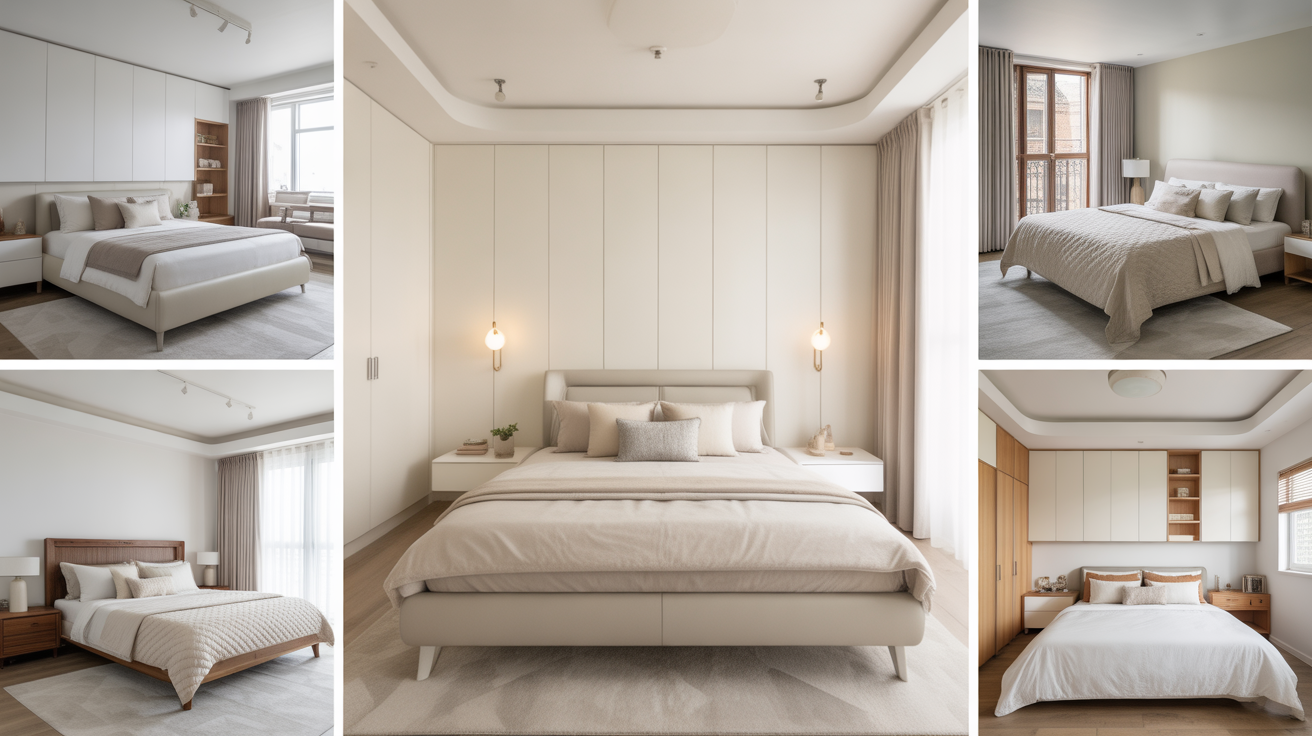
Clutter is the enemy of minimalist design, which is why hidden storage is essential. Built-in closets, under-bed drawers, and concealed cabinets keep everyday items out of sight while keeping the room visually clean. This lets the few visible objects in the room truly stand out.
Choose storage with flush, handle-free fronts whenever possible for a seamless look. Floor-to-ceiling closets with sliding doors blend into the wall beautifully. Out of sight truly means out of mind here.
Best For: Small bedrooms, shared bedrooms, and studio apartments
Pro Tip: Choose handle-free cabinet fronts for a seamless built-in look.
4. A Single Statement Piece
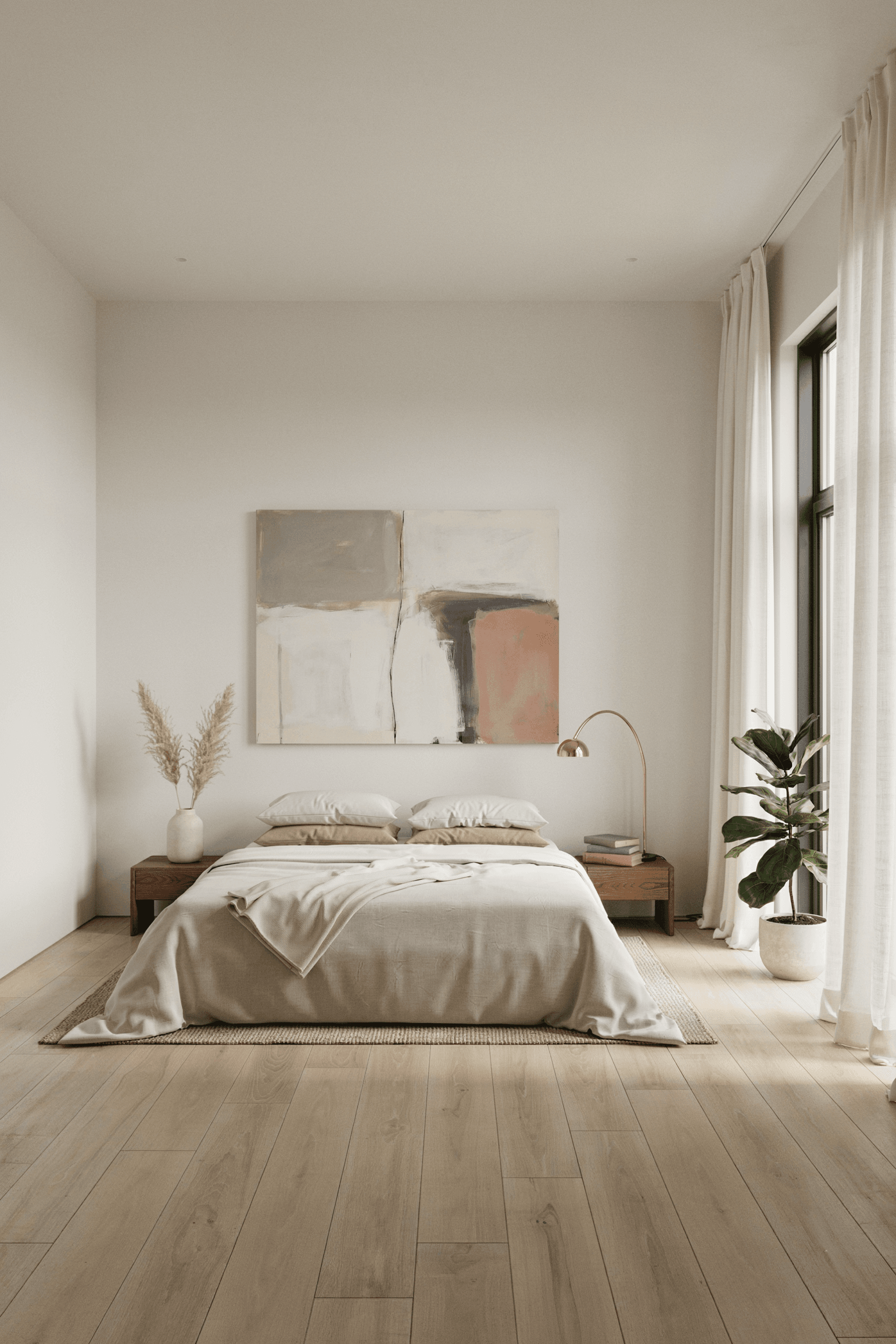
Rather than filling a room with many small decorations, minimalist design favors one strong statement piece. This could be a sculptural lamp, a bold piece of art, or a uniquely shaped chair. One standout item draws the eye and gives the room personality without clutter.
Everything else in the room should support this piece rather than compete with it. Keep surrounding elements simple and neutral. This approach creates impact through restraint rather than abundance.
Best For: Master bedrooms, reading corners, and accent walls
Pro Tip: Choose one bold piece and keep everything else simple.
5. Empty Wall Space
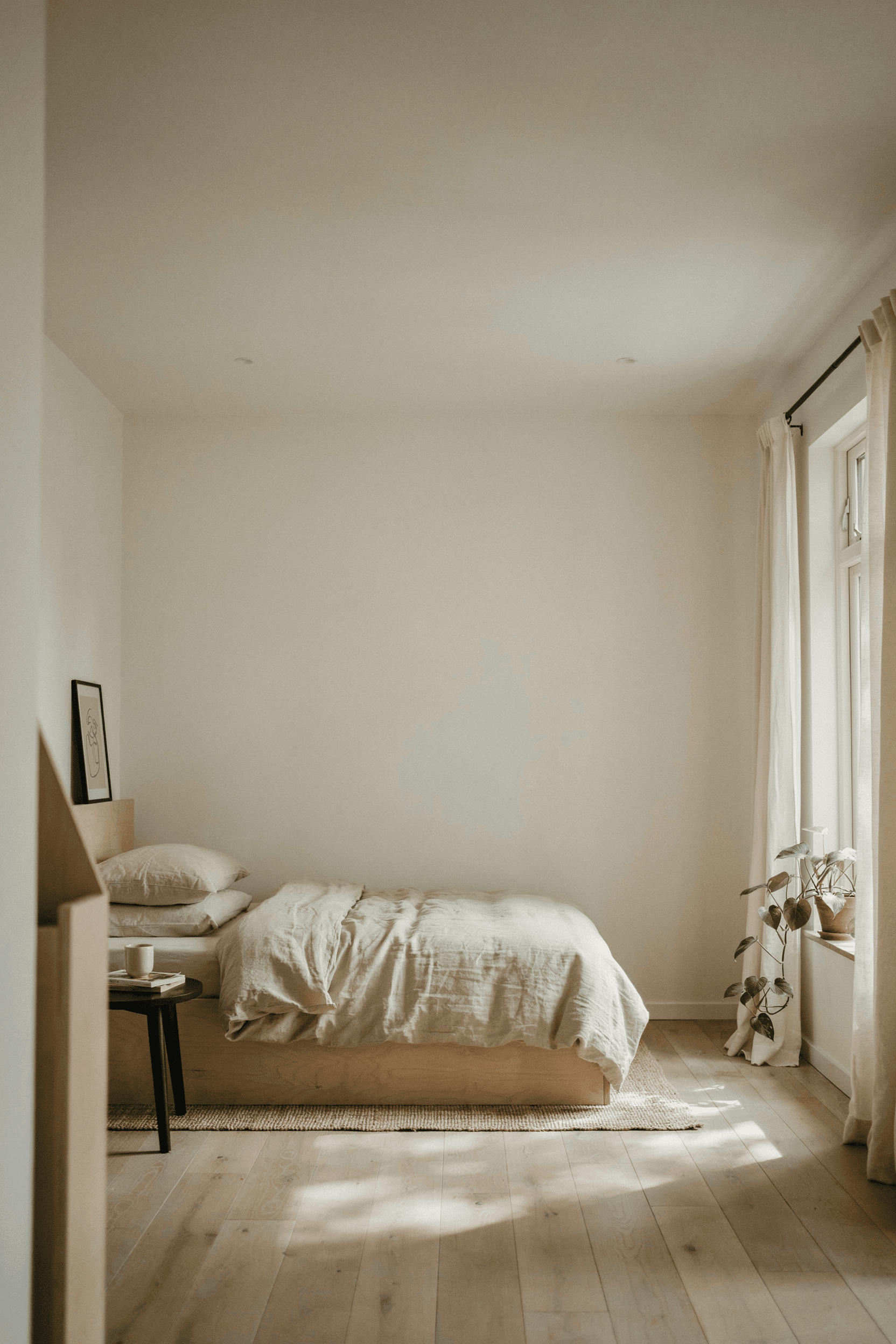
In minimalist bedrooms, empty wall space is treated as a design element in its own right. Leaving walls bare, or nearly bare, gives the eye room to rest and makes the room feel larger and calmer. This is one of the hardest habits to adopt but one of the most rewarding.
Resist the urge to fill every wall with art or shelving. A single small piece on an otherwise empty wall has far more impact than a crowded gallery. Negative space is your friend here.
Best For: Small bedrooms, rental spaces, and modern apartments
Pro Tip: Leave at least one wall completely bare for balance.
6. Streamlined Nightstands
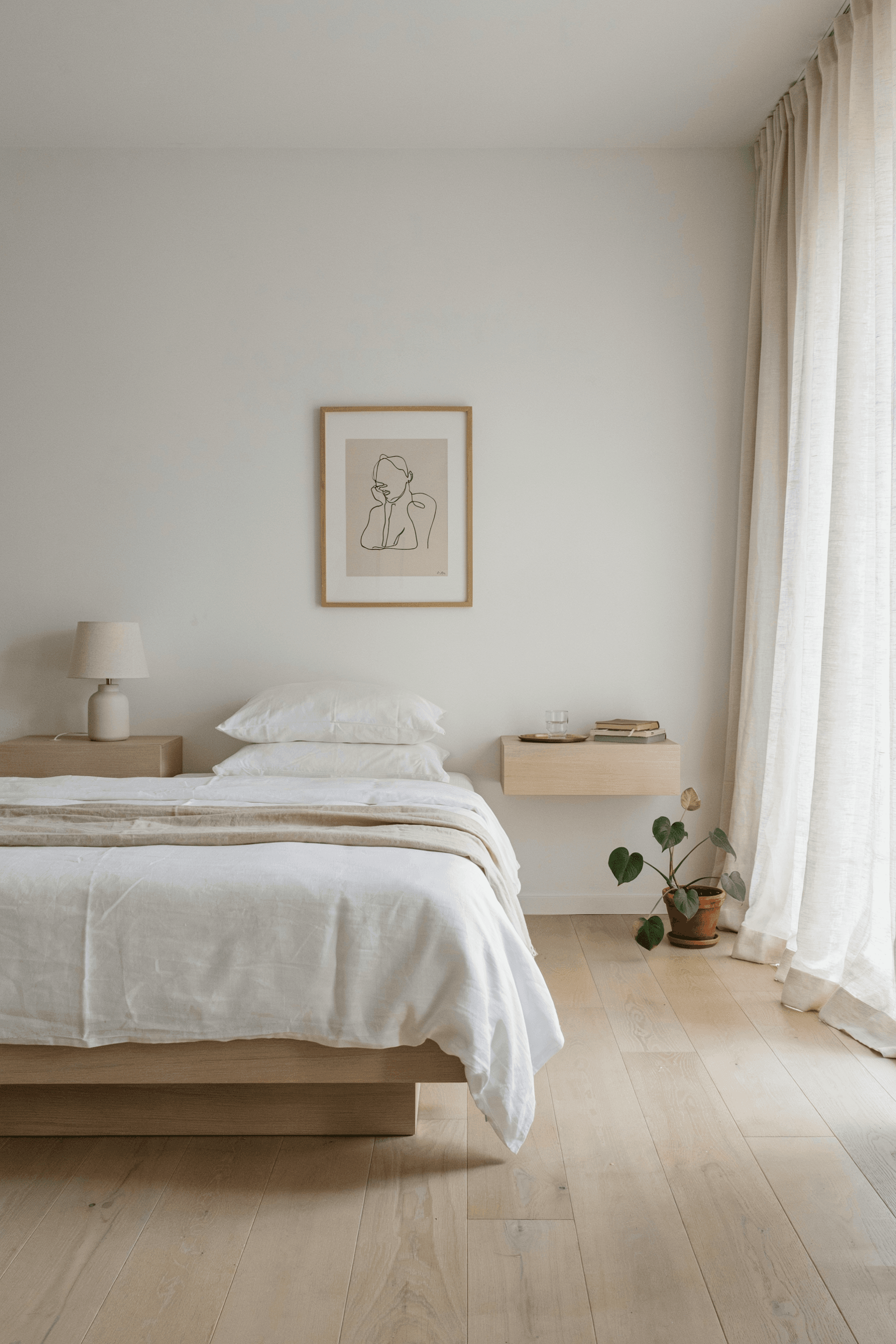
Minimalist nightstands are small, simple, and free of unnecessary detail. A floating shelf or a compact box-shaped table works perfectly. Keep the surface styled with no more than two or three items, such as a lamp and a small book.
Avoid nightstands with multiple drawers or ornate hardware, which tend to invite clutter. The goal is function without visual weight. A clean nightstand instantly makes the whole room feel more composed.
Best For: Small bedrooms, shared bedrooms, and modern apartments
Pro Tip: Style nightstands with no more than three small items.
7. Simple White Bedding
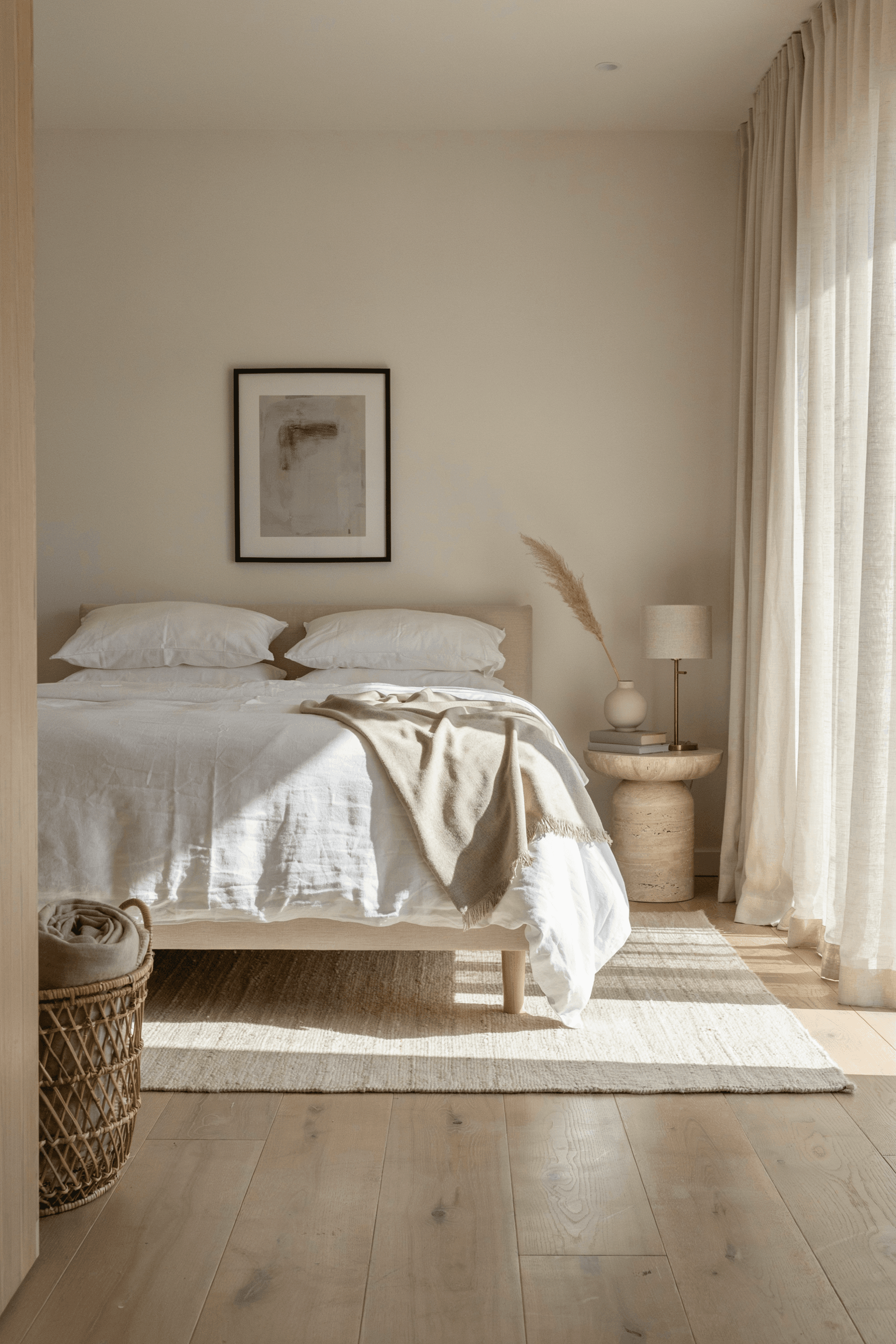
White bedding is a minimalist staple because it feels crisp, clean, and timeless. Choose high-quality cotton or linen sheets in pure white or soft ivory for a hotel-like finish. The simplicity of an all-white bed makes the entire room feel brighter and more spacious.
You can add subtle texture through a waffle weave or ribbed knit without introducing color. Keep pillows minimal in number too. A beautifully made white bed becomes the quiet centerpiece of the room.
Best For: All bedroom sizes, especially light-filled rooms
Pro Tip: Choose pure white linen for a crisp, hotel-like finish.
8. Concealed Lighting
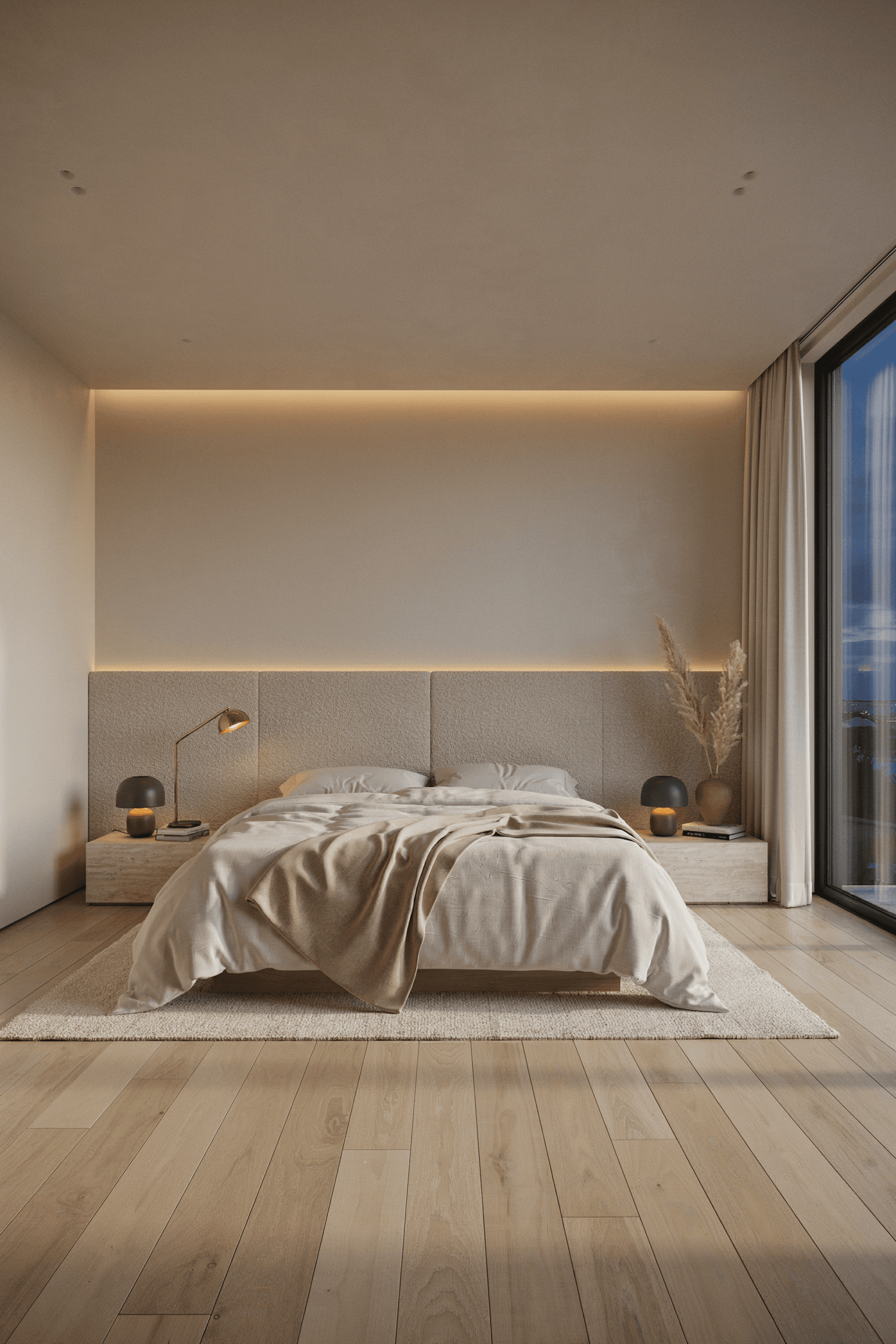
Minimalist bedrooms often hide their light sources rather than displaying decorative fixtures. Recessed ceiling lights, LED strips tucked behind a headboard, or under-shelf lighting create a soft glow without adding visual clutter. This keeps the room feeling sleek and architectural.
Warm white light is essential for keeping the space feeling cozy rather than clinical. Avoid bright overhead lighting as your only source. Layer two or three concealed sources for the best effect.
Best For: Modern bedrooms, headboards, and built-in shelving
Pro Tip: Use warm white LED strips behind the headboard for glow.
9. A Single Accent Color
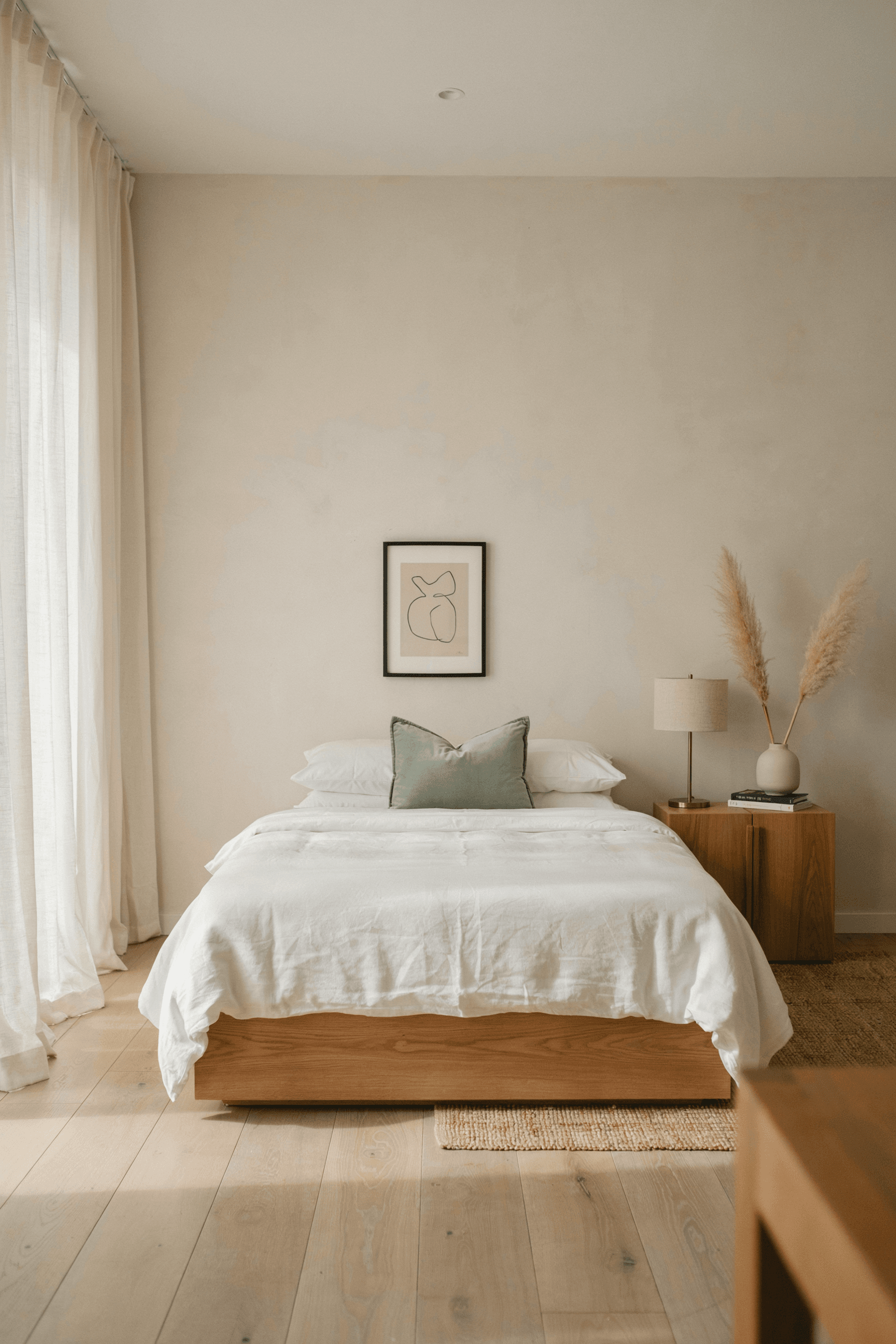
While minimalist bedrooms favor neutrals, one small accent color can add warmth without breaking the calm. A muted sage, soft terracotta, or dusty blue works beautifully in small doses. Use it in just one or two spots, like a cushion or a small vase.
Avoid spreading the accent color across too many items, since this defeats the purpose of restraint. One well-placed pop of color is far more effective than scattered touches. Less truly is more here.
Best For: Neutral bedrooms needing warmth, seasonal styling, and rental spaces
Pro Tip: Use your accent color in only one or two spots.
10. Floating Shelves Instead of Bulky Furniture
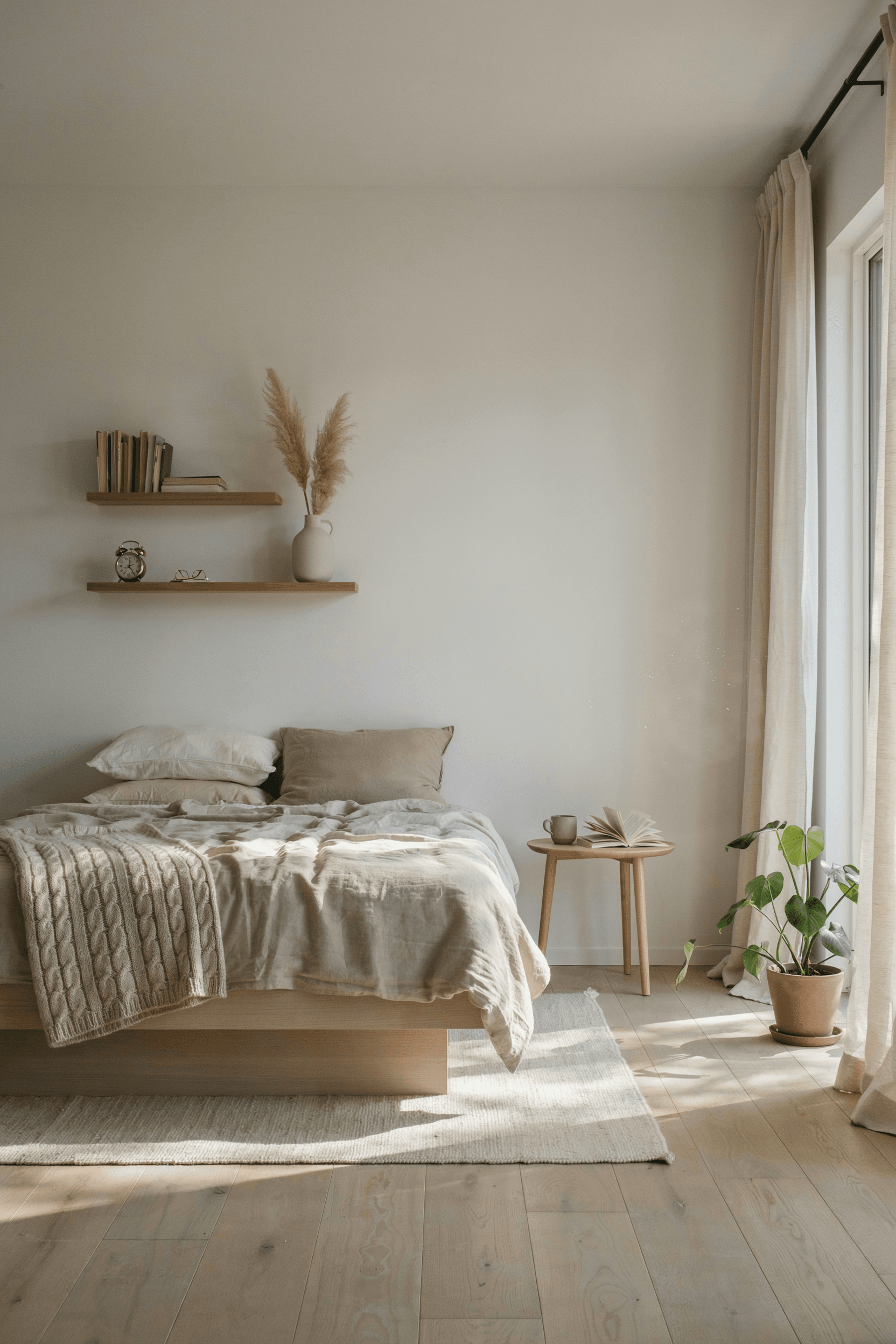
Floating shelves replace bulky dressers and bookcases in many minimalist bedrooms. Mounted directly to the wall, they free up floor space and create a lighter, more open feeling in the room. Style them sparingly with just a few meaningful objects.
Choose a single material, like light wood or matte white, to keep things cohesive. Avoid overcrowding the shelves with decorations. The empty space around each object is just as important as the object itself.
Best For: Small bedrooms, studio apartments, and reading corners
Pro Tip: Leave generous space between each item on the shelf.
11. A Clutter-Free Closet System
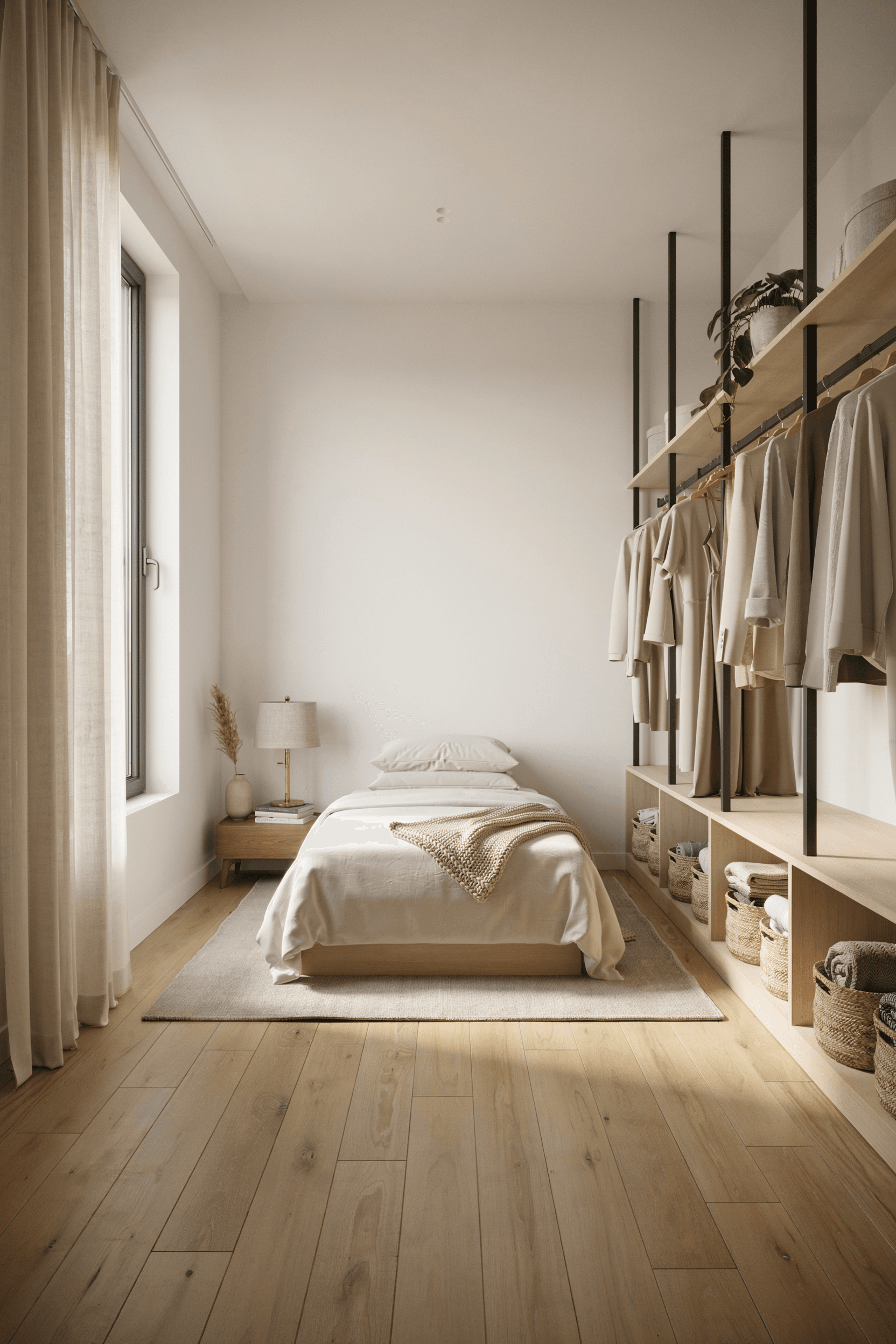
An organized, minimal closet keeps clothing and accessories from spilling into the visible bedroom space. Use matching hangers, labeled boxes, and a simple color-coded system to keep everything tidy and easy to find. This discipline extends the minimalist philosophy beyond just visible decor.
A closet with a clear system also makes getting dressed faster and less stressful each morning. Donate or store items you rarely use to free up space. A calm closet supports a calm bedroom.
Best For: Master bedrooms, shared closets, and small apartments
Pro Tip: Use matching hangers for an instantly tidier closet look.
12. Matte Black or Brushed Metal Accents
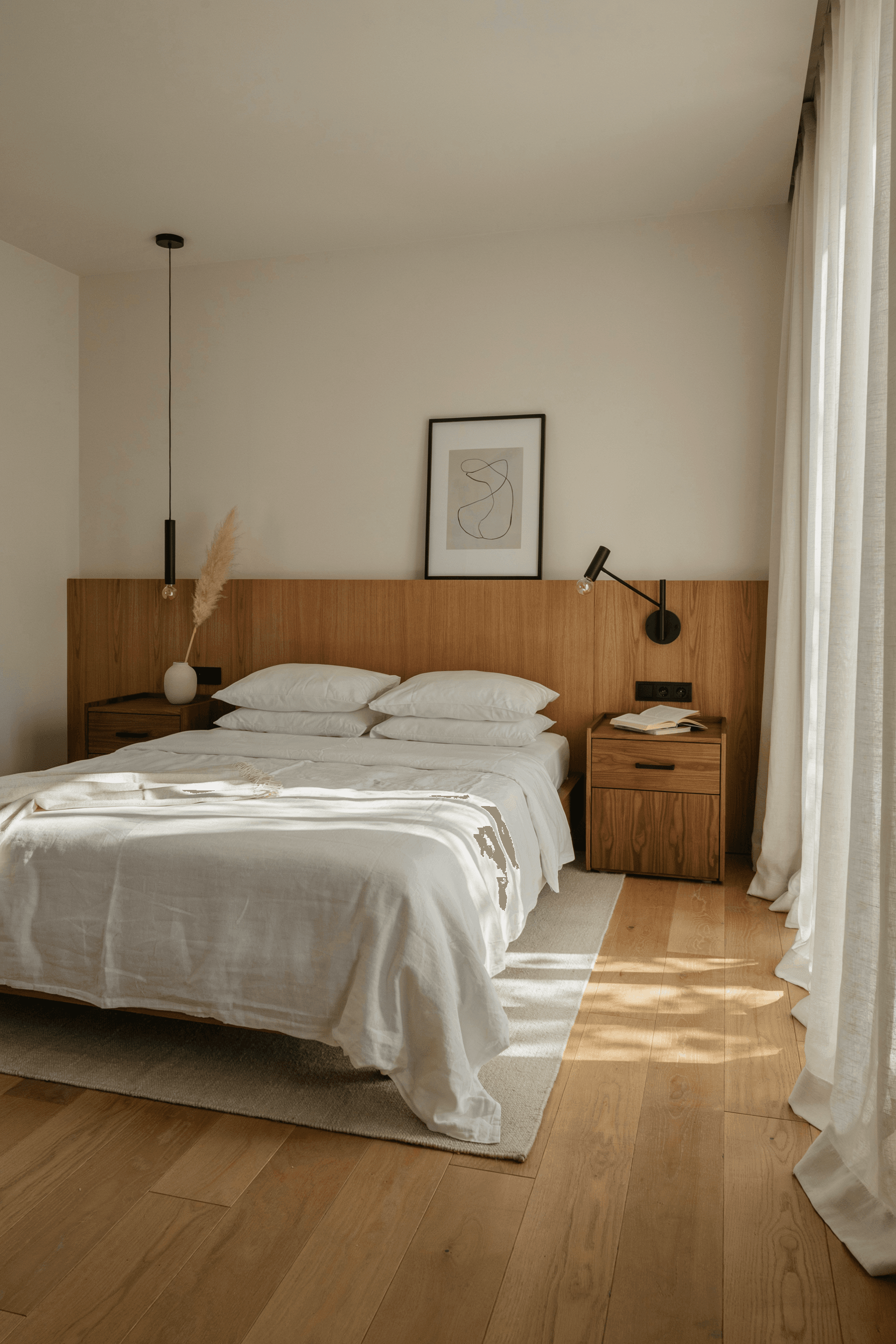
Small metal accents in matte black or brushed brass add subtle sophistication to a minimalist bedroom without overwhelming the palette. Drawer pulls, lamp bases, and curtain rods are perfect places to introduce this detail. The cool, clean finish pairs beautifully with soft neutral tones.
Keep these accents consistent throughout the room rather than mixing several metal finishes. This creates a cohesive, intentional look. A few well-chosen metal touches can elevate the entire space instantly.
Best For: Modern bedrooms, master suites, and contemporary apartments
Pro Tip: Stick to one metal finish throughout the entire room.
13. A Simple Area Rug
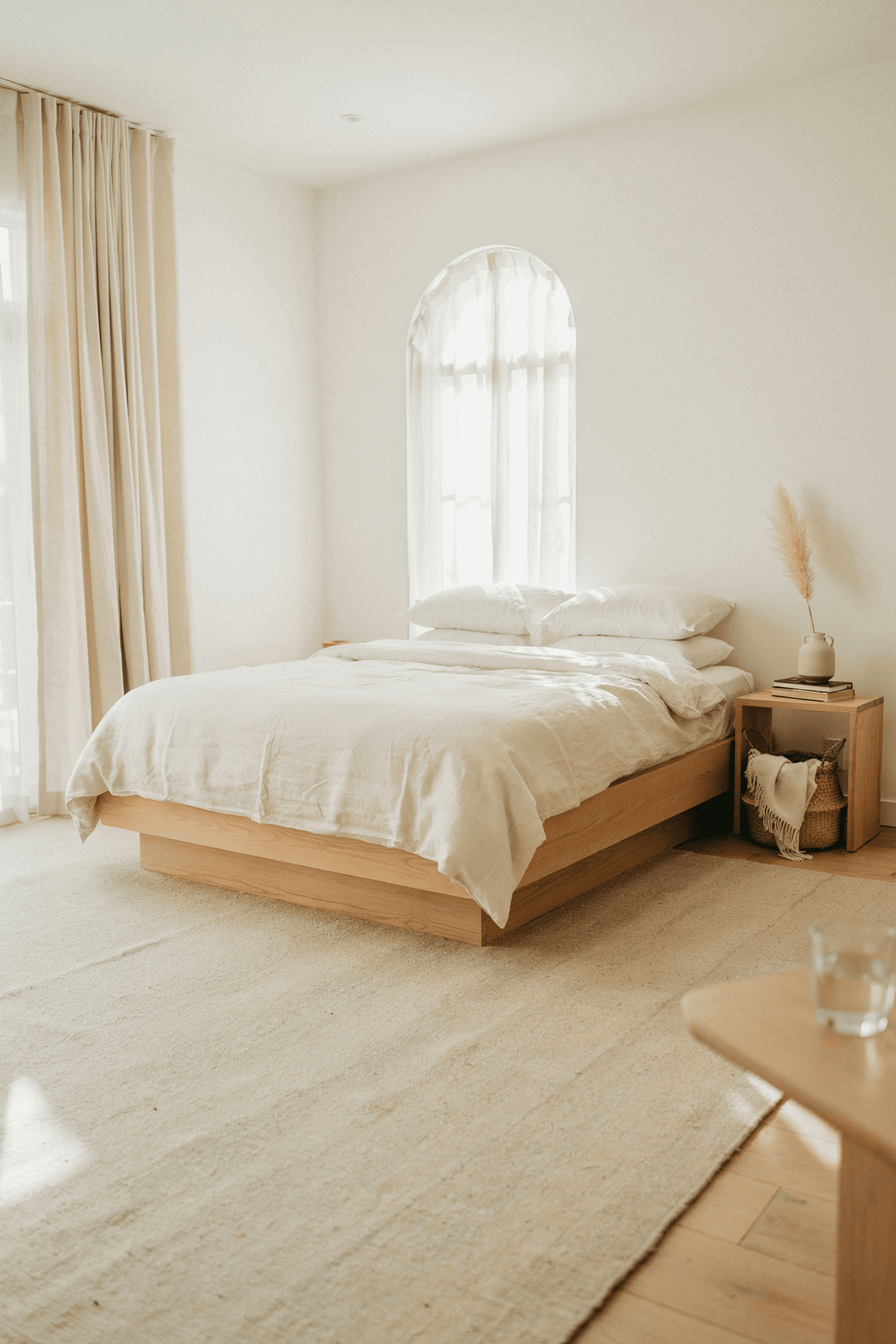
A simple, low-pile area rug grounds a minimalist bedroom without adding visual noise. Solid neutral tones or very subtle textures work best, avoiding bold patterns or busy designs. Wool or cotton rugs in soft gray or ivory feel especially calming underfoot.
Choose a rug large enough to extend slightly beyond the bed on each side. This creates a sense of cohesion in the room. A well-placed rug adds warmth while still respecting the minimalist aesthetic.
Best For: Hardwood floors, large bedrooms, and minimalist spaces
Pro Tip: Choose a solid neutral rug to avoid visual clutter.
14. Curtains in a Single Solid Tone
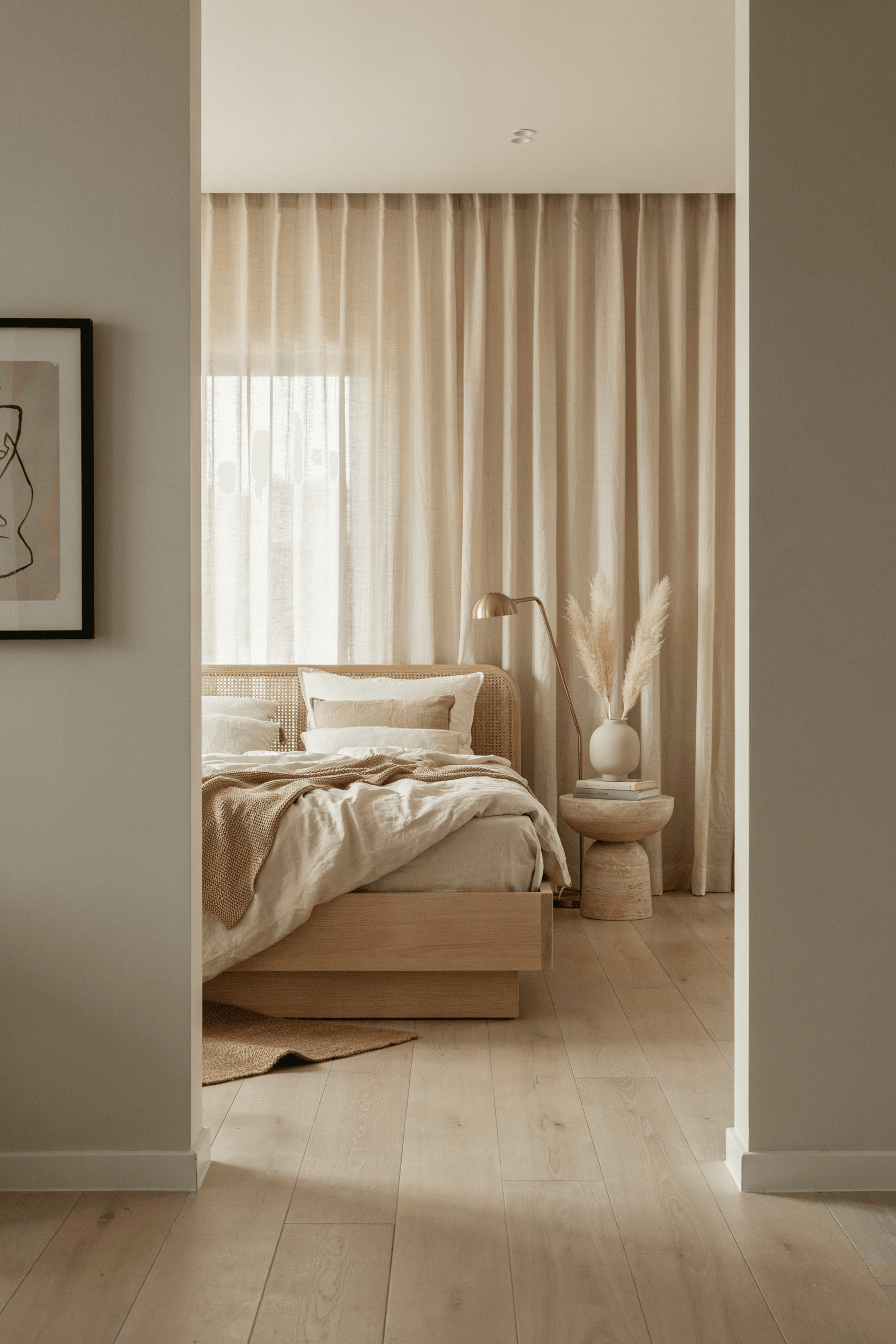
Window treatments in minimalist bedrooms are kept simple with solid, neutral fabrics. White, soft gray, or warm beige curtains let natural light filter through without distracting patterns. Hanging them high near the ceiling creates a clean, elongated look.
Avoid heavy drapes, tassels, or layered fabrics that feel ornate. A single panel of lightweight linen on each side of the window is often all you need. Simplicity here keeps the whole room feeling airy.
Best For: South-facing bedrooms, large windows, and bright rooms
Pro Tip: Choose one solid fabric tone for clean, simple windows.
15. A Capsule Approach to Decor
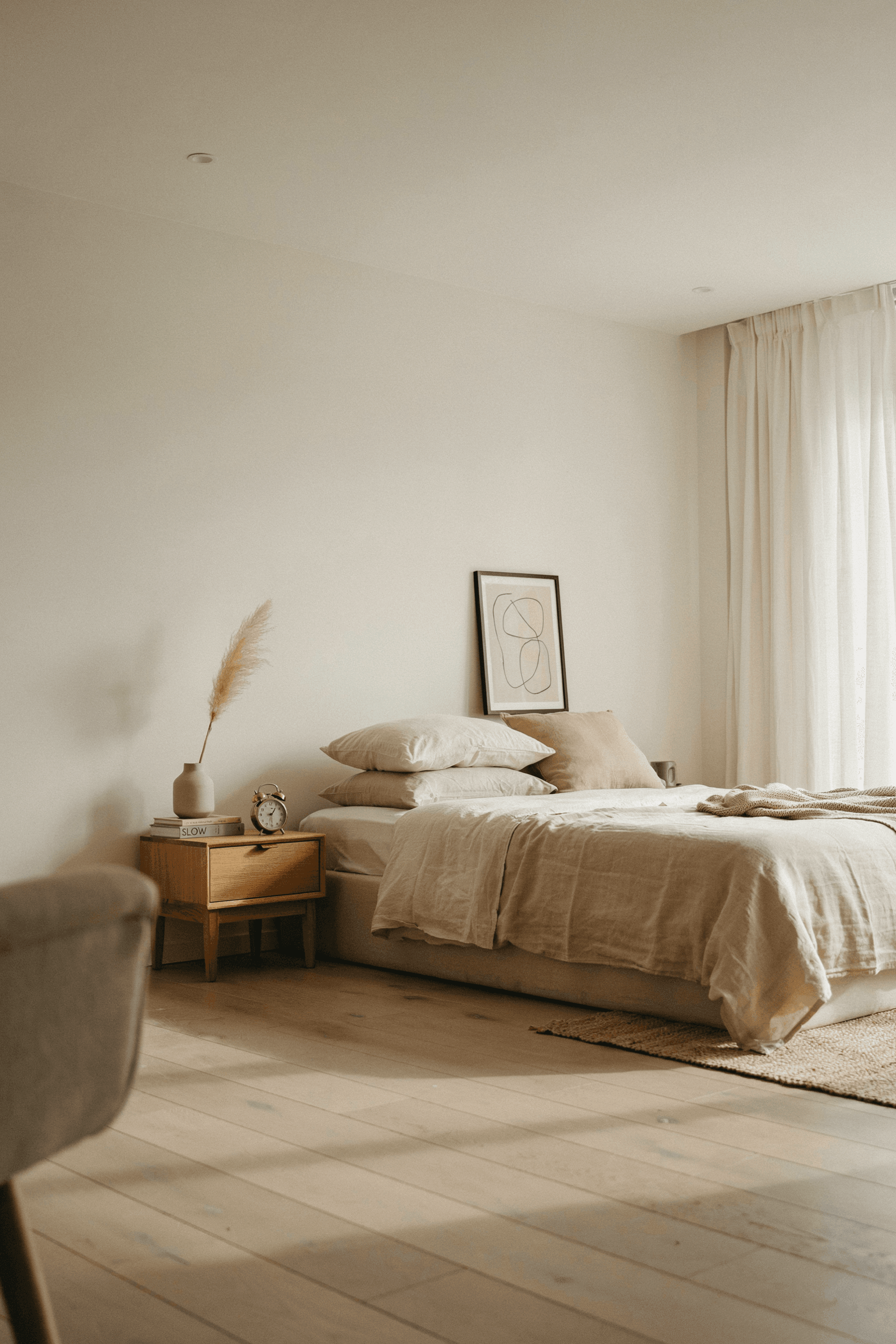
A capsule approach means choosing a small, intentional collection of decor pieces rather than constantly adding more. Every object should earn its place by being useful or genuinely meaningful to you. This mindset is the heart of true minimalist bedroom design.
Before adding anything new, ask whether it adds real value to the space. Rotate seasonal pieces sparingly rather than layering them on top of everything else. Fewer, better choices always win in this style.
Best For: Any bedroom, especially those prone to clutter and visual noise
Pro Tip: Ask if each item adds real value before adding it.
16. A Single Piece of Wall Art
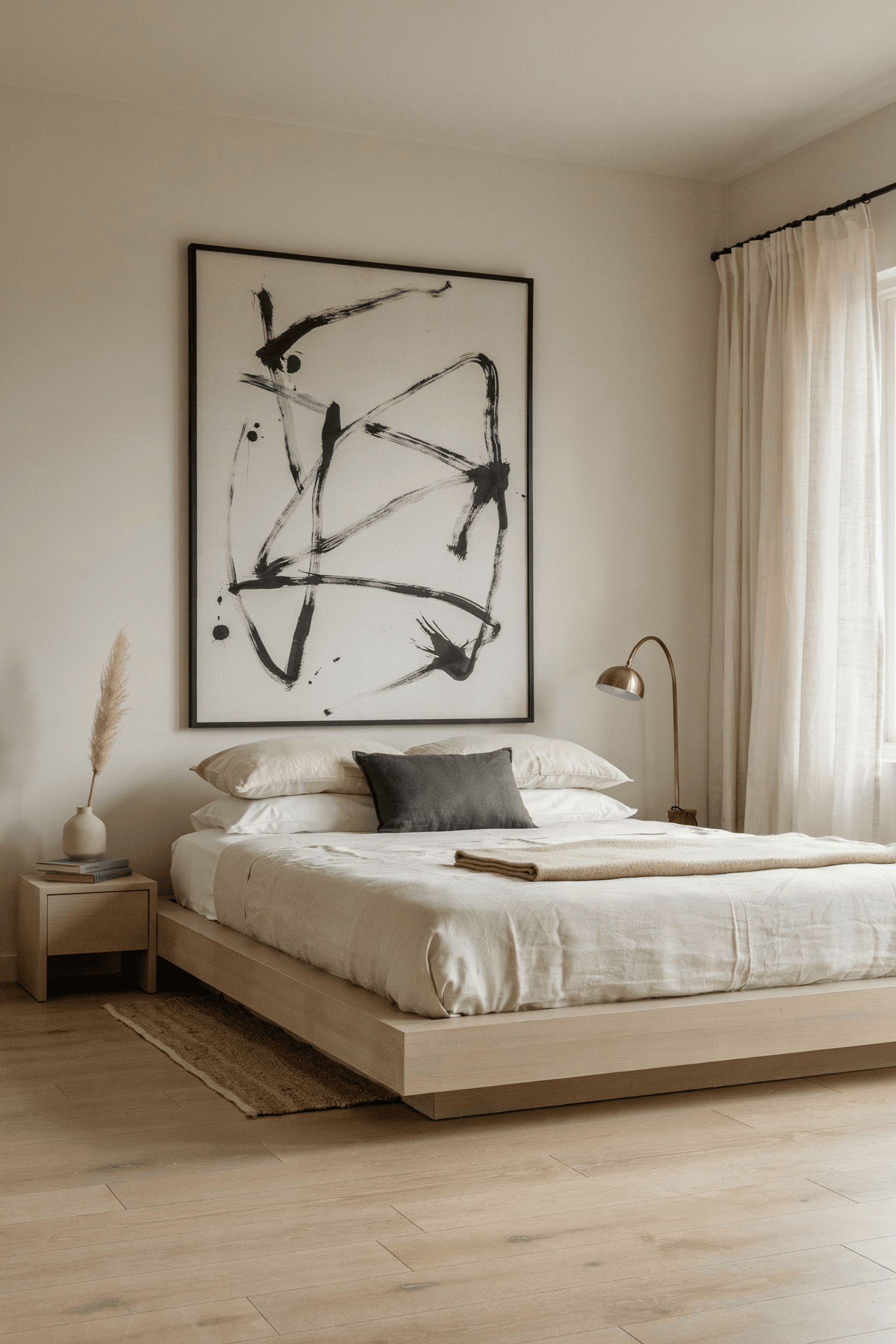
Rather than a gallery wall, minimalist bedrooms often feature just one carefully chosen piece of art. A simple abstract print, a black and white photograph, or a single line drawing works beautifully above the bed. This one piece becomes a quiet but powerful focal point.
Choose a frame in a thin, simple finish that matches your other metal accents. Leave generous empty space around the artwork rather than crowding it. One meaningful piece says more than many scattered ones.
Best For: Above the bed, accent walls, and reading corners
Pro Tip: Choose one meaningful piece instead of a crowded gallery.
17. A Hidden or Slim Profile TV
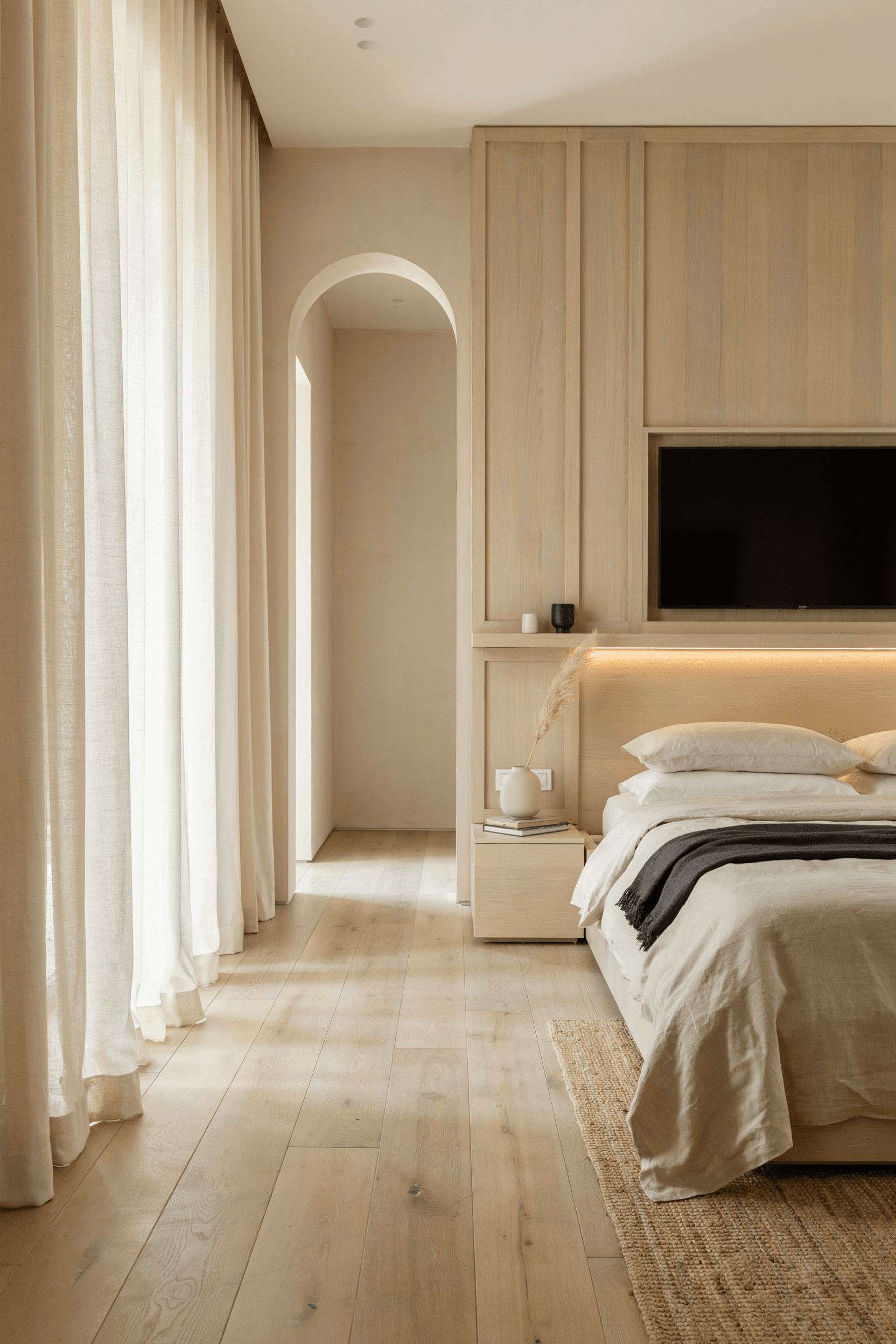
If a television is part of your bedroom, minimalist design treats it as discreetly as possible. A slim wall-mounted model, or one hidden inside a cabinet, keeps the room feeling like a calm retreat rather than a media space. This small choice makes a noticeable difference.
Position cords and cables out of sight using simple cable management tools. Choose a frame-style TV if you want it to blend into your wall art when not in use. Discretion is key here.
Best For: Modern bedrooms, master suites, and small apartments
Pro Tip: Hide cables with simple clips to keep the wall clean.
18. A Single Functional Chair
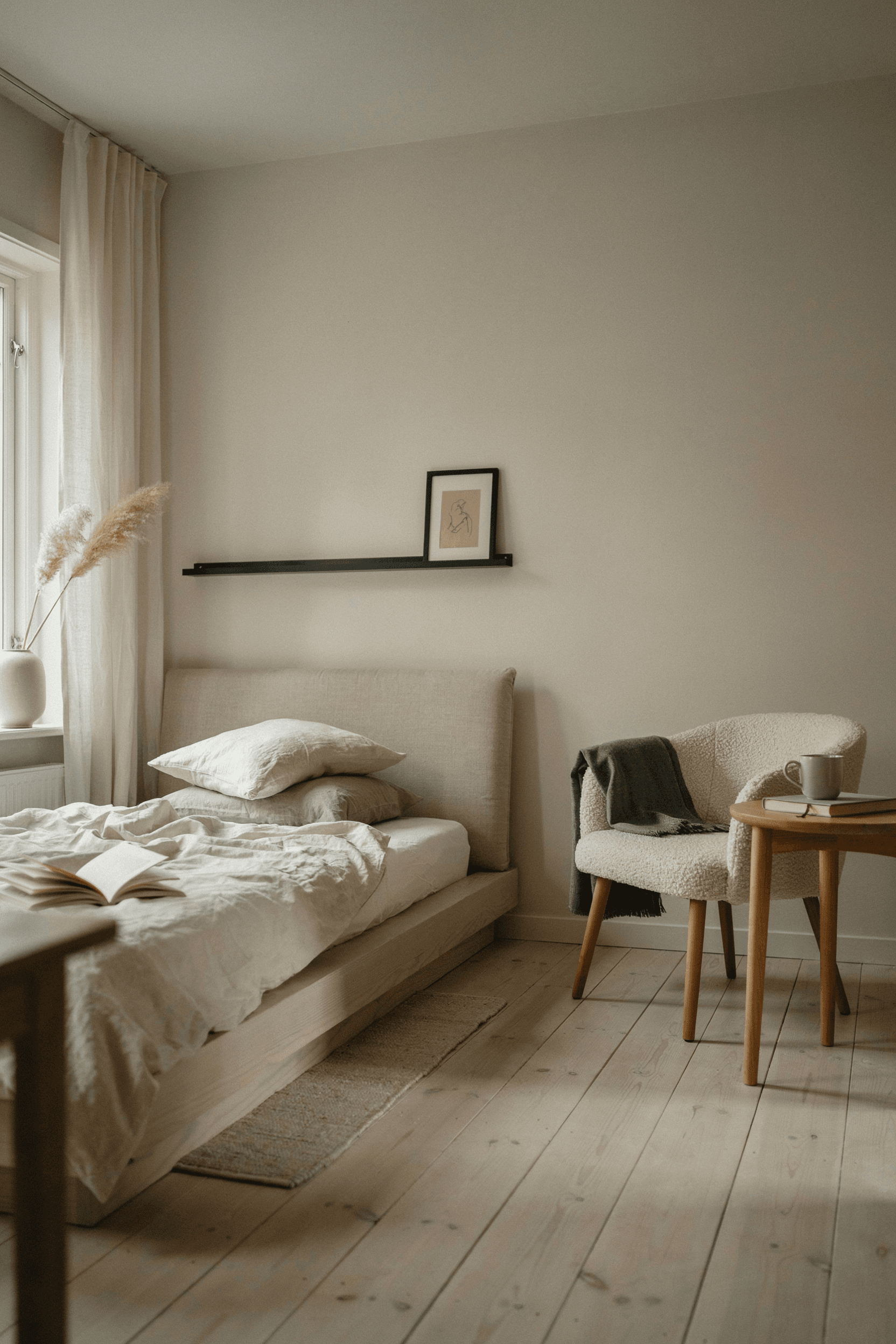
Instead of multiple seating pieces, a minimalist bedroom often includes just one functional chair. A simple, unupholstered or lightly upholstered design in a neutral tone works best. This chair can hold a robe, a stack of books, or simply serve as a quiet spot to sit.
Avoid oversized armchairs that dominate the floor space. A slim, architectural shape keeps the room feeling open. One well-placed chair adds function without disrupting the room’s calm visual rhythm.
Best For: Master bedrooms, corner spaces, and small apartments
Pro Tip: Choose one slim chair instead of multiple seating pieces.
19. Matching Drawer and Cabinet Fronts
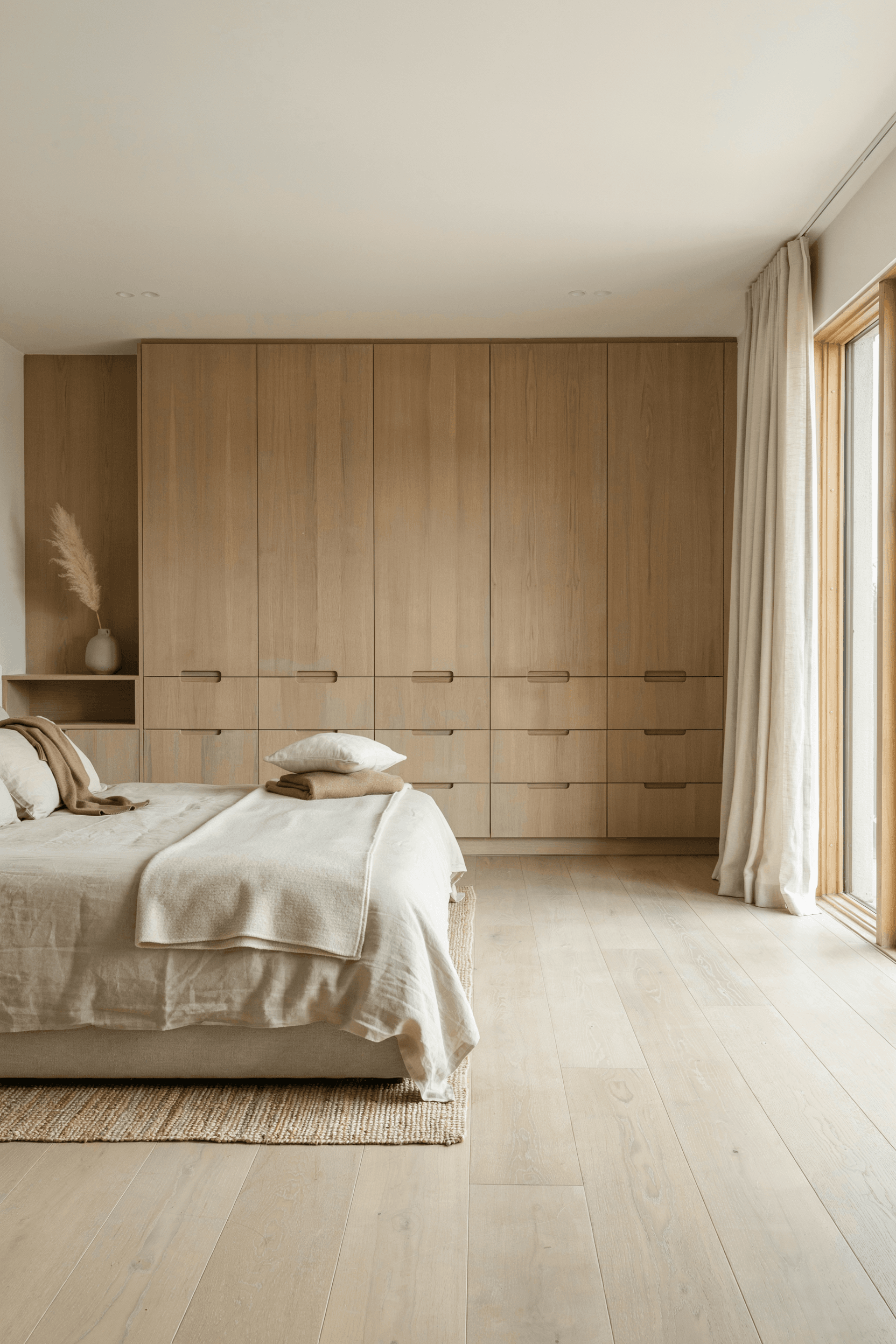
Mismatched furniture finishes can quickly disrupt a minimalist bedroom’s calm. Choosing matching drawer and cabinet fronts throughout the room, whether in wood, white, or matte black, creates instant visual harmony. This consistency is often the difference between a cluttered look and a polished one.
If you already own mismatched pieces, simple paint or new hardware can unify them affordably. Aim for one dominant material across your storage furniture. Cohesion here does more work than any single decorative item.
Best For: Master bedrooms, shared bedrooms, and walk-in closet alternatives
Pro Tip: Match all drawer and cabinet fronts for instant cohesion.
20. A Single Plant for Natural Calm
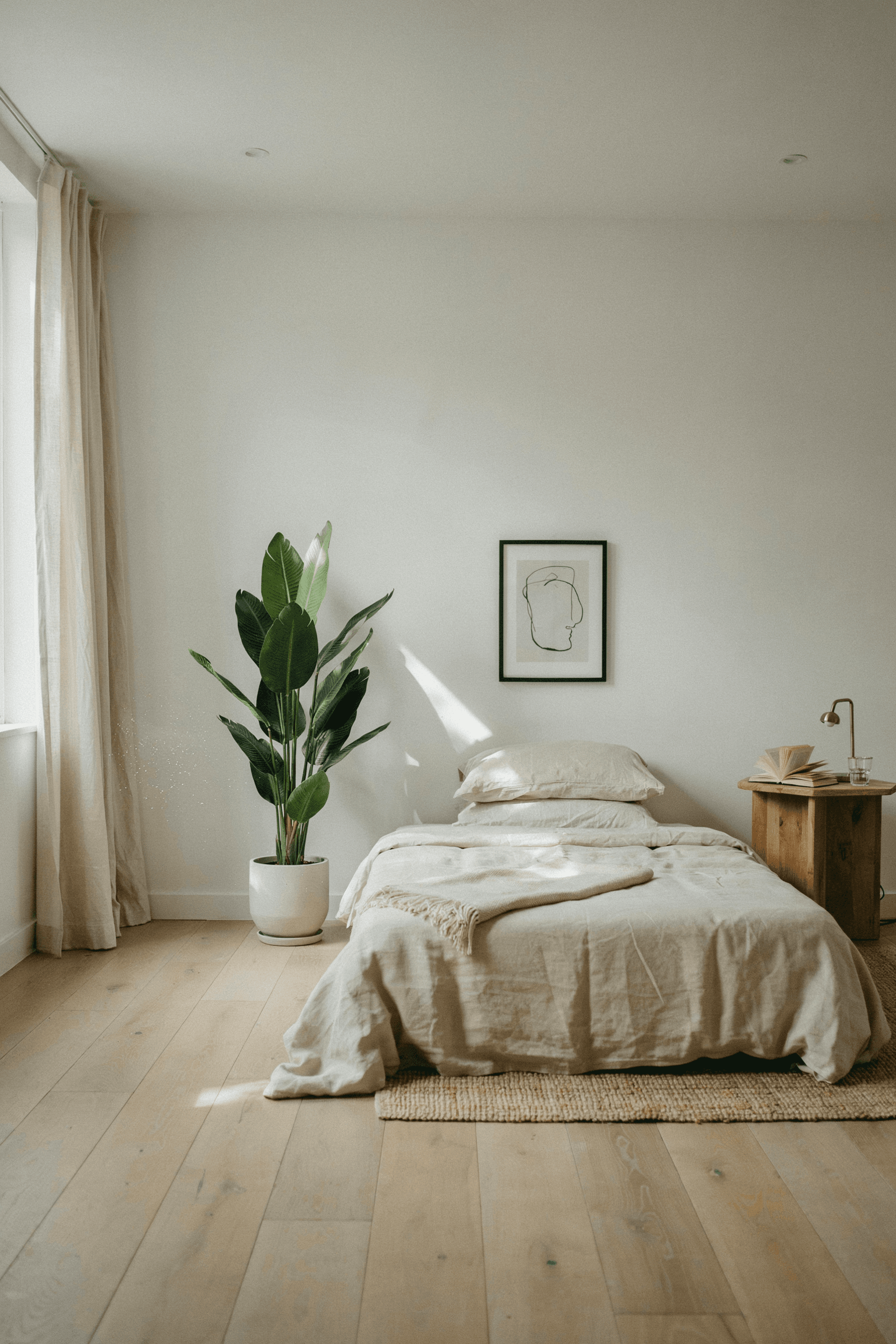
Even the most minimalist bedrooms benefit from one carefully chosen plant. A single snake plant, fiddle leaf fig, or small succulent adds life and softness without introducing clutter. Choose a simple ceramic or concrete pot that matches your neutral palette.
One plant is often more effective than several scattered around the room. Place it somewhere it will genuinely thrive, like a sunny windowsill or bright corner. This small touch of nature softens the room beautifully.
Best For: Windowsills, bedroom corners, and floating shelves
Pro Tip: Choose one plant rather than several scattered around.
21. A Simple, Unobtrusive Lamp
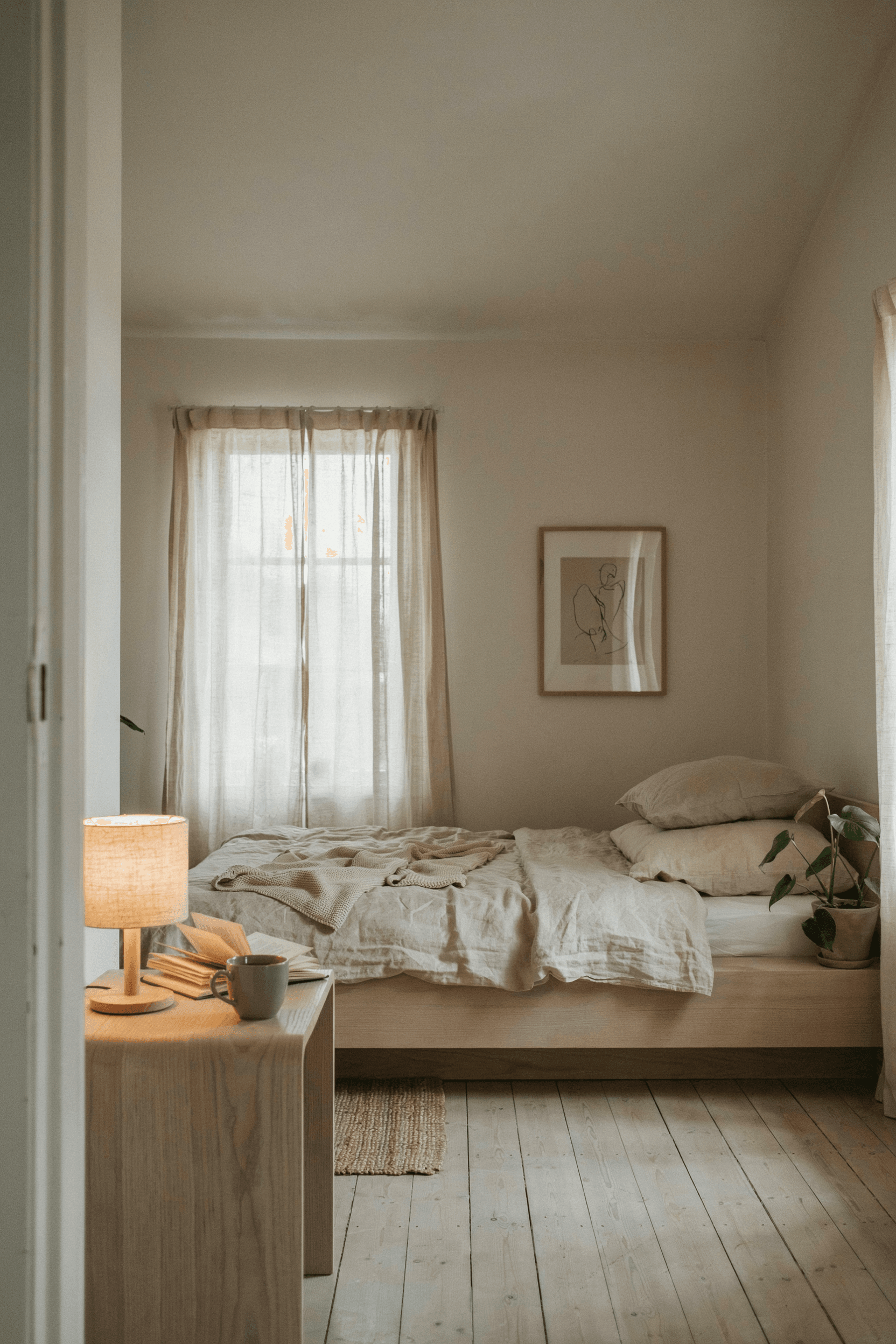
Lighting fixtures in a minimalist bedroom should feel quiet and functional rather than decorative. A simple table lamp or wall sconce with a plain shade in white or natural linen works beautifully. The goal is soft, warm light without a fixture that draws too much attention.
Choose a base in a single material that matches your other metal or wood accents. Avoid ornate or patterned lampshades entirely. A quiet lamp contributes warmth to the room without disrupting its visual calm.
Best For: Bedside tables, dressers, and reading corners
Pro Tip: Choose a plain shade in white or natural linen.
22. A Clear, Open Floor Plan
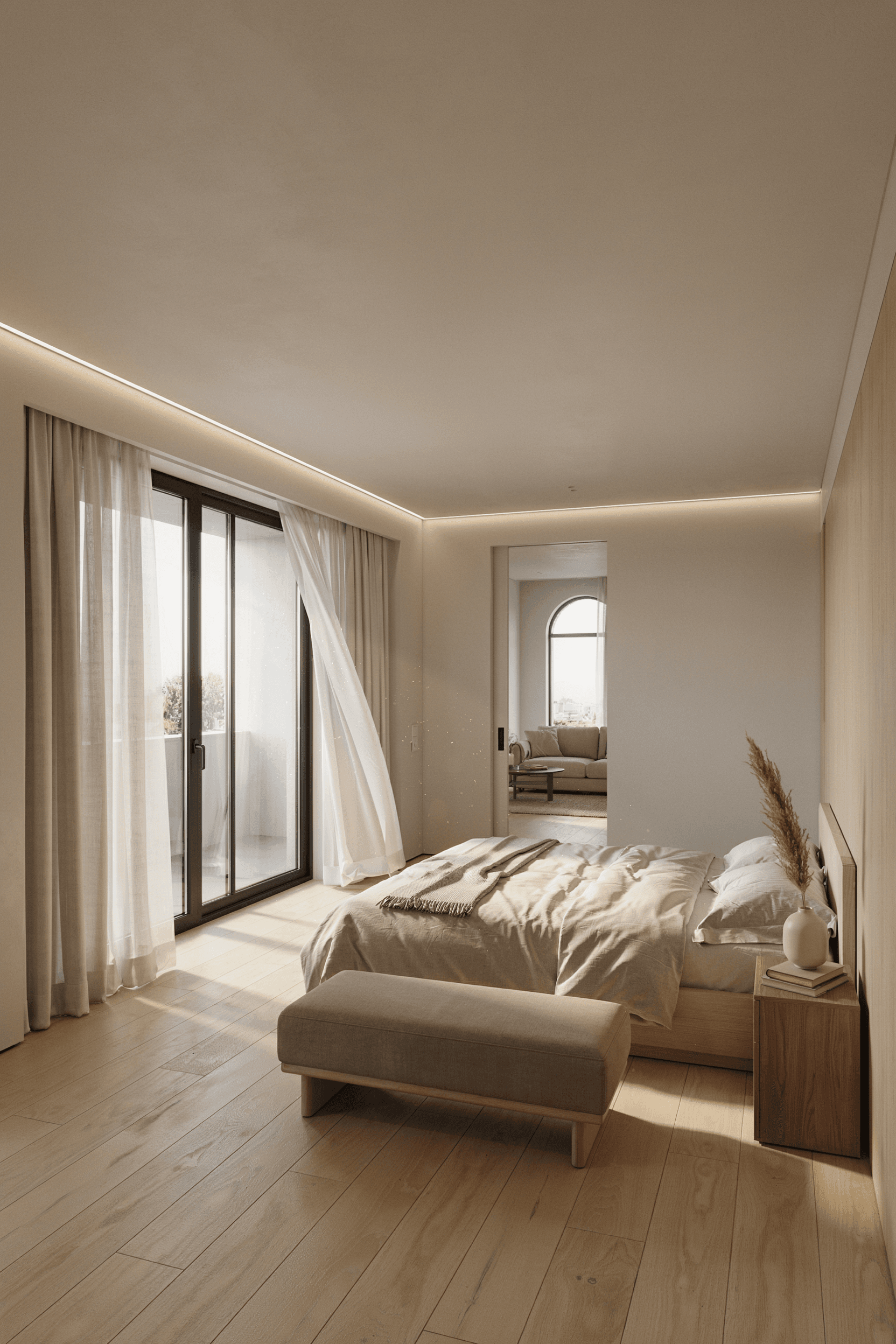
Minimalist bedrooms prioritize open floor space as much as any single piece of furniture. Arrange furniture along the walls to keep the center of the room clear and easy to move through. This openness is what makes a minimalist bedroom feel genuinely peaceful to be in.
Avoid placing too many pieces in the room, even beautiful ones, if they crowd the floor. Walk through your space and notice where you feel cramped. An open floor plan supports calm in every direction.
Best For: All bedroom sizes, especially smaller rooms
Pro Tip: Keep the center of the room completely clear.
23. A Daily Reset Routine
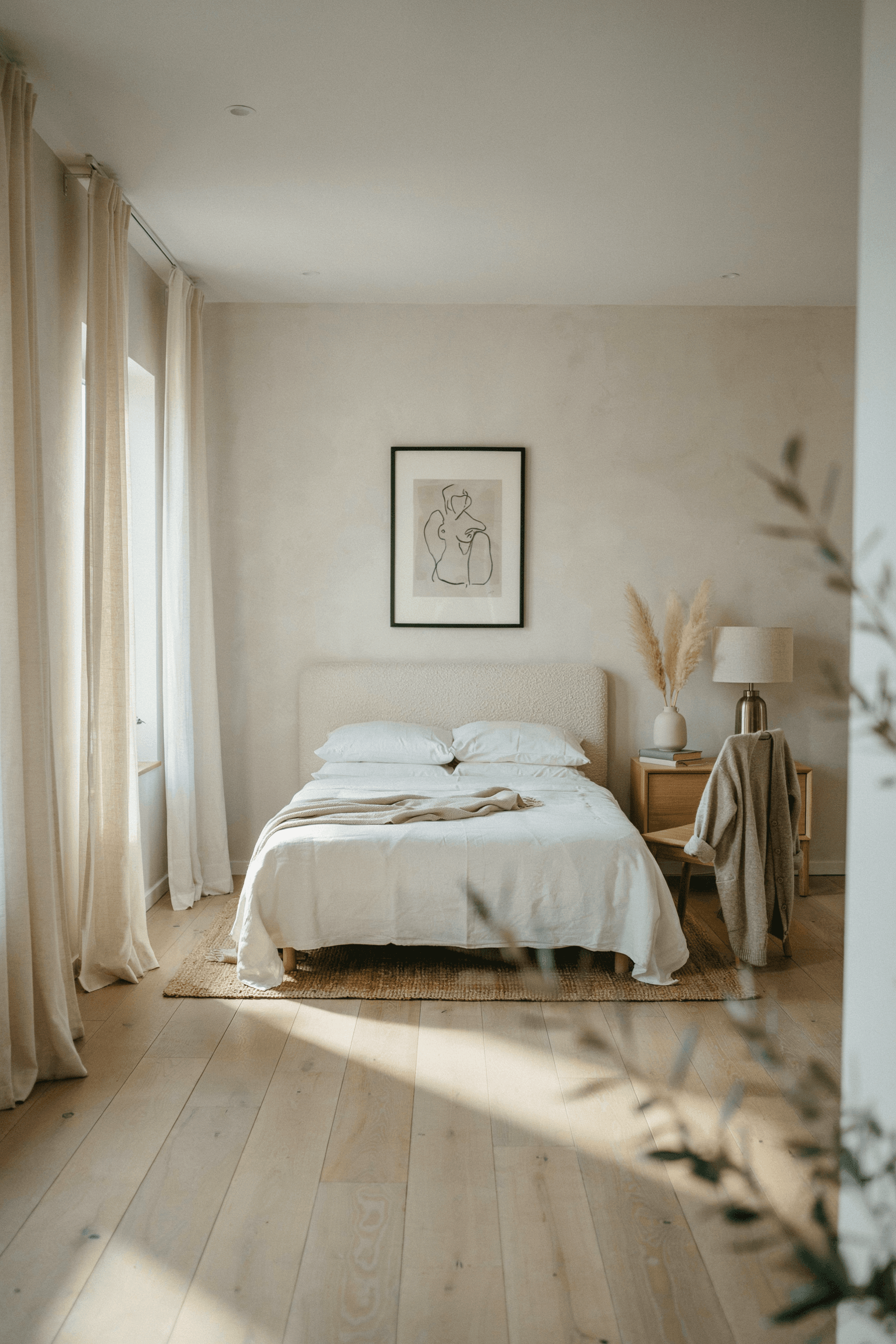
The final piece of minimalist bedroom decor is not an object at all, but a habit. Making the bed each morning and clearing surfaces each evening keeps the room looking as intentional as it was designed to be. This small daily ritual protects your design investment.
Set aside just five minutes each day to return items to their place. This consistency is what separates a truly minimalist bedroom from one that simply started that way. The habit is the final decor piece.
Best For: Any bedroom, especially those that tend toward clutter
Pro Tip: Spend five minutes each evening resetting every surface.
Final Thoughts
Creating a minimalist bedroom that feels genuinely calm does not require a complete renovation or an empty bank account. As you have seen throughout these 23 minimalist bedroom decor ideas, the most powerful changes are often the smallest ones: choosing one statement piece, hiding your clutter, and leaving generous empty space throughout the room. Start with one or two ideas that feel most exciting to you right now and let the space evolve naturally from there.
Your bedroom should always be your favorite room in the house, the place where you feel most at ease and most restored. These minimalist bedroom decor ideas are here to help you build exactly that kind of space, one intentional choice at a time. For more home decor inspiration, visit Trendy Decor Guide and explore everything waiting for you there. Your calm, beautiful bedroom is closer than you think.