18 Elegant Living Room Curtains Ideas That Will Refresh Your Entire Space
Introduction
Are you searching for the one design detail that can instantly make your living room feel more polished, refined, and beautifully put together? Elegant living room curtains ideas are often the most overlooked upgrade in a home, yet curtains have the power to completely change how a room feels in terms of light, height, and warmth. The right curtains pull every other element of a room together effortlessly.
In this post, you will discover 18 of the most elegant and achievable living room curtain ideas covering fabric, colour, length, hardware, and styling. Whether you are decorating from scratch or simply replacing tired curtains, each idea here delivers immediate visual impact and lasting style. Get ready to see your living room in a completely new and beautiful way.
1. Floor-to-Ceiling Linen Curtains
Floor-to-ceiling linen curtains are one of the most effortlessly elegant choices you can make for any living room, regardless of its size or style. Linen’s natural texture and subtle variation in weave creates a relaxed yet refined look that feels both casual and genuinely luxurious at the same time. The fabric moves beautifully in a gentle breeze and filters natural light in the warmest possible way.
Hang the curtain rod as close to the ceiling as possible so the fabric drops in one long, uninterrupted fall to the floor below. This simple trick immediately makes any living room feel taller, grander, and far more considered in its overall design composition. Choose linen in warm white, oatmeal, or soft sage for a timeless result that works with virtually any interior palette.
Best For: Bright living rooms, neutral interiors, and rooms with high ceilings
Pro Tip: Mount the rod ten centimetres from the ceiling to visually maximise room height.
2. Velvet Curtains in Jewel Tones
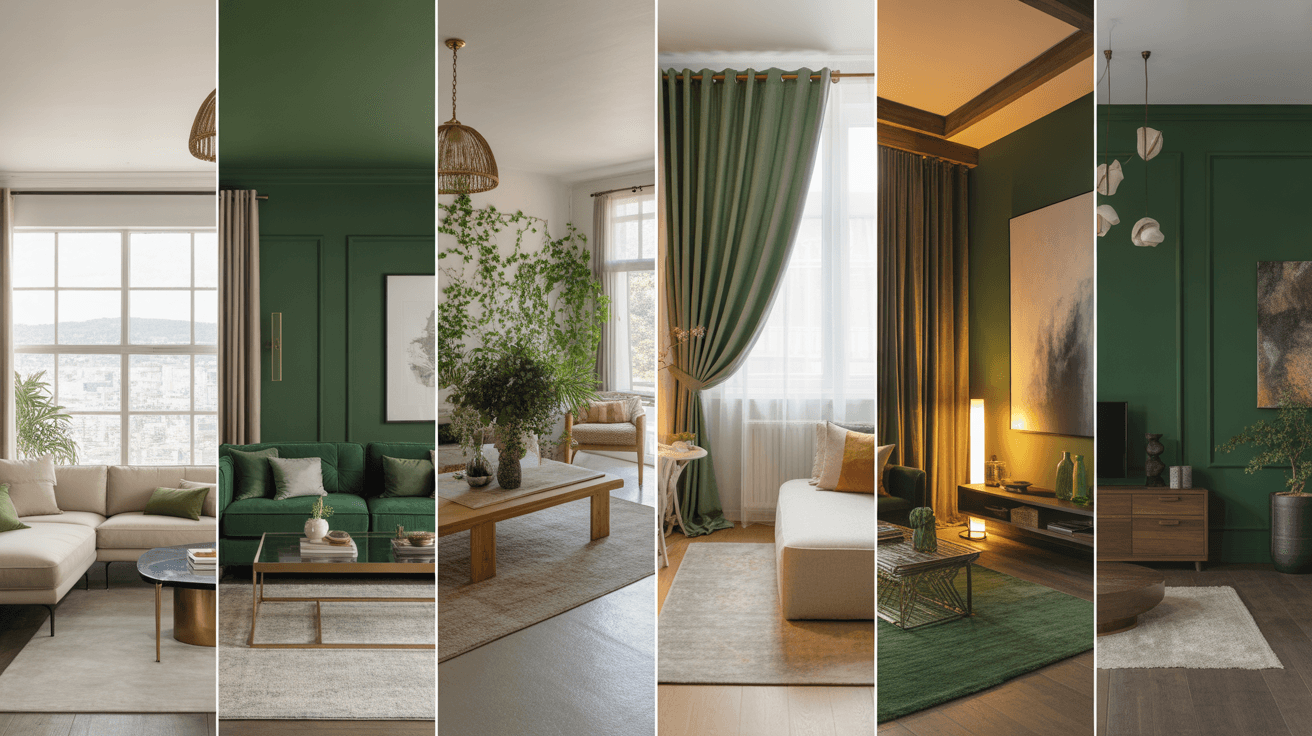
Velvet curtains in rich jewel tones — deep emerald, sapphire blue, burgundy, or plum — bring an immediate sense of drama, opulence, and sophisticated elegance to any living room. The pile of velvet fabric catches and absorbs light in a way that makes colour appear incredibly deep, rich, and luxurious from every angle of the room. This is one of the boldest and most rewarding curtain choices available for any interior.
Pair jewel-toned velvet curtains with neutral walls and understated furniture so the curtains become the undisputed focal point of the entire room without competition. Gold or brass curtain hardware complements the richness of velvet beautifully and adds a layer of warmth and refinement to the overall window treatment. Velvet curtains also provide excellent insulation and sound absorption as a practical bonus alongside their striking visual impact.
Best For: Formal living rooms, darker interiors, and rooms with statement furniture
Pro Tip: Steam velvet curtains gently rather than ironing to preserve the pile’s natural direction.
3. Sheer White Curtains Layered with Drapes
Layering sheer white curtains beneath heavier drapes is one of the most classic and genuinely elegant window treatment approaches available for any living room. The sheer layer filters beautiful soft light throughout the day while the outer drape adds privacy, warmth, and a polished finished look to the window. Together, the two layers create a window treatment that feels complete, considered, and professionally styled.
Choose sheers in a fine voile or cotton muslin so they billow softly and allow maximum light diffusion without feeling too heavy or clinical in the space. Select the outer drape in a complementary tone that is two or three shades deeper than the sheer for a layered look with genuine visual depth. This combination works beautifully in living rooms that need both privacy and a connection to natural light throughout the day.
Best For: Living rooms with large windows, bright south-facing rooms, and neutral interiors
Pro Tip: Use double curtain rods to hang sheers and drapes cleanly on separate tracks.
4. Pinch Pleat Curtains
Pinch pleat curtains are a hallmark of traditional elegance and remain one of the most refined and tailored heading styles available for living room window treatments. The evenly spaced pleats at the top of the curtain create a structured, sculptural effect that looks beautifully formal and genuinely expensive even in more modest fabric choices. This heading style suits rooms that call for a sense of ceremony and considered design.
Choose pinch pleat curtains in silk, faux silk, or a heavyweight linen blend for a fabric that holds the pleat shape beautifully and drapes in clean, defined folds. Hang them from a sleek metal pole with coordinating finials to complete the tailored and polished overall effect throughout the window. Pinch pleat curtains reward investment in quality fabric because every fold showcases the material’s weight, texture, and drape in full.
Best For: Formal living rooms, traditional interiors, and rooms with wide windows
Pro Tip: Allow two to two-and-a-half times the window width in fabric for full and generous pleating.
5. Curtains with Contrast Trim or Border
Adding a contrast trim or border to curtains — along the leading edge, hem, or both — instantly elevates a simple curtain panel into something that feels genuinely bespoke and carefully designed. This technique draws the eye to the curtain’s silhouette and gives the window treatment a couture quality that off-the-shelf curtains simply cannot replicate at any price point. Even a narrow trim makes a significant visual difference.
Choose a trim colour that references another accent already present in the living room — a cushion, a rug, or an artwork — to tie the curtains into the broader room palette seamlessly. A wide velvet border on a linen curtain, or a narrow satin ribbon on a silk panel, creates beautiful material contrast that adds visual interest and crafted detail. This is one of the most cost-effective ways to make standard curtains look entirely custom and considered.
Best For: Neutral curtains needing personality, tailored interiors, and formal living rooms
Pro Tip: Keep contrast trim to one colour only to maintain an elegant and restrained overall result.
6. Blackout Curtains in Muted Tones
Blackout curtains do not have to sacrifice style for function — in muted, sophisticated tones they can look just as elegant as any purely decorative window treatment in the living room. Choose blackout curtains in dusty rose, warm taupe, charcoal, or deep slate for colours that feel genuinely refined rather than clinical or utilitarian in any way. The right tone makes the room feel cosy, calm, and beautifully considered throughout the day and evening.
Look for blackout curtains made with a triple-weave fabric construction rather than a coated backing, as triple-weave drapes far more elegantly and holds its shape through many years of use. Pair with sheer panels on a double rod for days when full blackout is not needed but privacy and softness are still desired throughout. Muted blackout curtains in a quality fabric deliver both genuine practicality and lasting visual elegance in equal measure.
Best For: South-facing living rooms, media rooms, and rooms used for daytime napping
Pro Tip: Choose triple-weave blackout fabric for the most elegant drape without a stiff plastic appearance.
7. Silk or Faux Silk Curtains
Silk and faux silk curtains bring an unmistakable sense of luxury, luminosity, and formal elegance to any living room they grace with their presence. The way silk catches light — shifting subtly between sheen and shadow as the fabric moves — creates a visual richness that no other curtain material can quite replicate throughout the day. Even faux silk at a fraction of the cost delivers a remarkably similar optical effect.
Choose silk curtains in champagne, ivory, soft gold, or blush for tones that amplify the fabric’s natural luminosity and create a warm, radiant glow near the window. Line silk curtains with a quality interlining to add body, improve drape, and protect the delicate outer fabric from sun damage over time. Silk curtains work most beautifully in living rooms that receive warm afternoon or evening light that brings out their full reflective quality.
Best For: Formal living rooms, south or west-facing rooms, and luxurious interiors
Pro Tip: Always interline silk curtains to prevent sun damage and improve the overall drape quality.
8. Curtains Hung from Ceiling to Floor with a Pool
Allowing curtains to pool slightly on the floor — with an extra ten to twenty centimetres of fabric resting gently at the base — creates an undeniably romantic and deeply luxurious effect in any living room. This styling technique has been a signature of grand European interiors for centuries and immediately communicates a sense of generosity, elegance, and considered design to anyone who enters the room. The pooled hem feels deliberately indulgent in the most refined way.
Choose heavy fabrics such as velvet, wool, or lined linen for a pooled hem that rests beautifully rather than bunching awkwardly or gathering in an untidy way near the baseboard. This look works best in low-traffic areas of the living room where the pooled hem will not be disturbed or walked through frequently by residents or guests. Pooled curtains are a simple and powerful way to introduce a hotel suite quality into an everyday living space.
Best For: Formal living rooms, low-traffic window areas, and grand or high-ceilinged rooms
Pro Tip: Add fifteen centimetres of extra fabric length to achieve a full and generous pooled hem.
9. Neutral Curtains with Textured Fabric
Neutral curtains are far from boring when the fabric itself carries genuine texture, depth, and tactile interest throughout the weave and surface of the material. Woven jacquard, boucle, heavy cotton twill, or subtly embossed linen in warm white, cream, or warm grey create window treatments that feel rich and layered without introducing any bold colour or pattern into the room. Texture is the quiet luxury of curtain design.
Let the curtain’s fabric do all the visual work by keeping the hardware and heading style clean, simple, and unobtrusive so nothing competes with the textile’s natural beauty. A textured neutral curtain pairs beautifully with almost any living room palette, making it the most versatile and enduring curtain investment you can make for a space you plan to redecorate over time. Texture invites the eye and the hand in equal measure, making these curtains feel alive and genuinely interesting.
Best For: All living room styles, neutral interiors, and rooms with bold furniture or artwork
Pro Tip: Hold a fabric swatch up to your window light before purchasing to assess texture and opacity.
10. Patterned Curtains as a Statement Feature
Patterned curtains — in a bold botanical print, a classic stripe, a refined geometric, or an elegant damask — can serve as the defining statement feature of an entire living room when chosen and styled thoughtfully. Rather than competing with other decorative elements, a well-chosen curtain pattern can anchor the room’s colour palette and establish the overall design mood with considerable confidence. Pattern has a powerful ability to set the tone for everything else in the room.
Keep the rest of the living room relatively calm and quiet in colour and pattern so the curtains command the full visual attention they deserve without the room feeling chaotic. Pull one or two colours from the curtain pattern into cushions, a rug, or a single accent chair to create a coherent and deliberately considered design thread running throughout the space. Patterned curtains reward bold decision-making and make the living room feel genuinely curated and unique.
Best For: Neutral living rooms needing a focal point, large windows, and confident design schemes
Pro Tip: Choose a pattern with at least one neutral colour in the repeat to keep the room feeling balanced.
11. Roman Blinds Combined with Side Panels
Combining flat Roman blinds with stationary side panels creates a window treatment that is both elegantly structured and visually generous in any living room setting. The Roman blind provides clean light control and a tailored architectural quality while the side panels add softness, height, and a sense of visual completeness that blinds alone cannot deliver on their own. Together they create a layered and considered window treatment.
Choose the same fabric for both the blind and the panels for a cohesive and intentional look, or use a complementary texture — a patterned blind with a plain panel — for subtle and refined contrast. This combination works especially well on windows that are too narrow for full curtain panels but still benefit from the added elegance that side panels naturally provide. It is a quietly sophisticated solution that always looks professionally styled and intentionally designed.
Best For: Narrow windows, bay windows, and living rooms with a tailored design aesthetic
Pro Tip: Use the same fabric for blind and panels to create a seamless and unified window treatment.
12. Tab Top Curtains in Natural Fabric
Tab top curtains in natural fabrics — raw linen, washed cotton, or unbleached canvas — create a relaxed, artisanal elegance that feels genuinely warm and beautifully unpretentious in any living room. The visible tabs at the top of the curtain add an organic, handcrafted detail that distinguishes this heading style from more formal alternatives and gives it an approachable, lived-in quality. This is casual luxury at its most effortless and appealing.
Choose a chunky wooden or matte iron curtain pole to complement the natural fabric texture and reinforce the warm, tactile character of the overall window treatment. Wash the fabric before making or hanging the curtains to soften the fibres and achieve that perfectly relaxed, slightly rumpled appearance that makes natural fabric curtains look so genuinely inviting. Tab top curtains in natural fabrics suit living rooms that value warmth and character over formal perfection.
Best For: Relaxed living rooms, Scandinavian interiors, and natural or earthy design schemes
Pro Tip: Pre-wash natural fabric curtains before hanging to achieve a beautifully softened and relaxed drape.
13. Curtains with Decorative Holdbacks
Decorative curtain holdbacks — in sculpted brass, ceramic, rope, or carved wood — are one of the most elegant and underrated styling details available for living room curtains and window treatments. A holdback draws the curtain panel to one side in a graceful arc, framing the window beautifully and allowing maximum natural light to flood into the room during the daytime. The holdback itself becomes a small but meaningful piece of decorative hardware.
Choose a holdback in a finish that references other metallic or material accents already present in the living room to ensure the detail reads as part of the overall design rather than an afterthought. Position holdbacks roughly two-thirds of the way up the curtain panel for the most elegant and proportionally pleasing gathered effect at the window. This small addition elevates even the simplest curtain panel into something that looks genuinely styled and professionally finished.
Best For: Living rooms with natural light, single panels, and formal or traditional interiors
Pro Tip: Position holdbacks two-thirds up the panel for the most elegant and proportional curtain gather.
14. Monochromatic Curtains Matching the Wall
Choosing curtains that closely match the wall colour — in the same tone or just one shade deeper — creates a sophisticated, enveloping effect that makes the living room feel calm, expansive, and beautifully composed. This tonal approach to curtains removes the visual interruption that contrasting curtains can create and allows the room’s furniture, artwork, and accessories to take full centre stage instead. It is a quietly confident and deeply elegant design decision.
Choose a curtain fabric with enough texture — a woven linen or a matte velvet — to create subtle distinction from the flat wall surface behind it so the window treatment still registers as a deliberate design element. This approach works especially beautifully in living rooms decorated in soft terracotta, sage green, warm grey, or any other rich and saturated wall tone. Monochromatic curtains make a room feel like it has been put together by a professional interior designer with genuine confidence.
Best For: Saturated or coloured walls, contemporary interiors, and minimalist design schemes
Pro Tip: Choose a curtain fabric one tone deeper than the wall for just enough distinction and visual depth.
15. Extra-Wide Curtain Panels
Hanging extra-wide curtain panels that extend well beyond the window frame on both sides is one of the simplest and most effective ways to make a living room window appear significantly larger and more impressive than it actually is. When the curtain rod extends far beyond the window edge, the fabric frames the window with a generous visual border that creates a sense of grandeur and architectural scale. Width signals luxury in any curtain installation.
Choose panels that are at least one and a half to two times the total width of the window when fully closed for a look that feels genuinely full, rich, and generously proportioned. This technique works especially well in living rooms with modest or average-sized windows that benefit from the visual enhancement that extra-wide panels naturally provide. Wide curtains paired with floor-to-ceiling height create the most dramatic and hotel-inspired result achievable in any living room.
Best For: Small or average windows, living rooms lacking architectural interest, and rental properties
Pro Tip: Extend the curtain rod thirty centimetres beyond each side of the window frame for maximum width impact.
16. Curtains with Embroidered or Woven Detail
Curtains featuring embroidered motifs, woven jacquard patterns, or hand-stitched detail bring a couture level of artisanal beauty and decorative richness to any living room window treatment. Unlike printed fabric, woven or embroidered detail has genuine tactile depth that reads as handcrafted and considered from both a distance and up close throughout the day. This is the curtain equivalent of wearing a piece of embroidered couture clothing — quietly extraordinary.
Choose embroidered curtains in a tone-on-tone colour scheme — ivory embroidery on ivory linen, for example — for a refined and subtle effect that adds texture without visual noise or busyness to the room. Alternatively, a contrast colour embroidery in a single botanical or geometric motif creates a beautiful and intentional decorative statement that celebrates the craftsperson’s skill. Either approach results in a window treatment that feels genuinely special, memorable, and worth the investment made.
Best For: Traditional living rooms, eclectic interiors, and rooms with a love of artisanal detail
Pro Tip: Dry clean embroidered curtains only to preserve the stitching and prevent any distortion of the detail.
17. Eyelet Curtains in Contemporary Fabrics
Eyelet curtains with metal ring headings offer a clean, contemporary elegance that suits modern living rooms beautifully while remaining far easier to open and close than more formal heading styles. The evenly spaced rings create a consistent, rhythmic fold pattern when the curtain is drawn back that looks neat, tailored, and deliberately considered at every window in the room. This heading style also slides very smoothly along a standard pole.
Choose eyelet curtains in contemporary fabrics — a brushed microfibre, a textured polyester linen blend, or a matte blackout fabric — for a result that looks polished and current without requiring significant investment or maintenance. Ensure the eyelet rings are in a finish that coordinates with the curtain pole — brushed silver eyelets on a brushed nickel pole creates the most seamless and unified overall result. Eyelet curtains are the most practical, elegant option for living rooms used heavily every day.
Best For: Modern living rooms, family homes, and rooms requiring easy daily curtain operation
Pro Tip: Choose eyelet rings in the same metal finish as your curtain pole for a seamlessly unified look.
18. Curtains with Fringe or Tassel Trim
Curtains finished with a fringe or tassel trim along the hem or leading edge bring a playful yet genuinely sophisticated decorative detail to any living room window treatment. Fringe and tassel trim references the great tradition of European interior design and adds movement, texture, and a handcrafted quality to curtains that would otherwise feel standard and unremarkable at the window. This trim detail elevates curtains from functional to genuinely decorative.
Choose a fringe or tassel in a complementary tone — a warm terracotta fringe on natural linen, or a cream tassel on deep navy velvet — for a combination that feels intentional and beautifully considered throughout. Keep the rest of the living room’s decorative details relatively restrained so the trimmed curtains register as the room’s signature finishing touch without competing with too many other decorative elements. Fringe and tassel trim is the detail that makes guests stop, look closely, and genuinely admire the curtains throughout the room.
Best For: Traditional living rooms, eclectic interiors, and neutral curtains needing a finishing detail
Pro Tip: Match the fringe weight and scale to the curtain fabric — heavy fabric needs a substantial trim.
Final Thoughts
These 18 elegant living room curtain ideas prove that the right window treatment is one of the most powerful and transformative design decisions you can make for any living space. Whether you choose the dramatic richness of jewel-toned velvet, the relaxed grace of pooled linen, or the quiet sophistication of a tonal monochromatic panel, there is an elegant curtain idea here for every home and every style. Begin with the windows you see most and build outward from there.
Curtains are the one element in a living room that touches the ceiling, the floor, and every hour of natural light throughout the day — they deserve to be chosen with real care and genuine intention. For more beautiful decorating ideas, styling guides, and home inspiration, visit us at Trendy Decor Guide— we are here to help you create a living room that feels truly extraordinary in every detail.