23 Office Interior Design Ideas for a Stylish & Functional Workspace
Introduction
A well-designed office interior can completely transform the way you work, think, and feel throughout the day. The right combination of furniture, lighting, color, and layout creates a workspace that boosts productivity, reduces stress, and makes every working hour more enjoyable. These 23 office interior design ideas will help you create a workspace that looks impressive and works perfectly.
These ideas are perfect for corporate offices, home offices, and small business spaces. Whether you prefer a sleek modern look, a warm rustic feel, or a bold creative environment, you will find ideas that combine style, function, and smart design. Let’s go step by step.
1. Open Plan Office Design
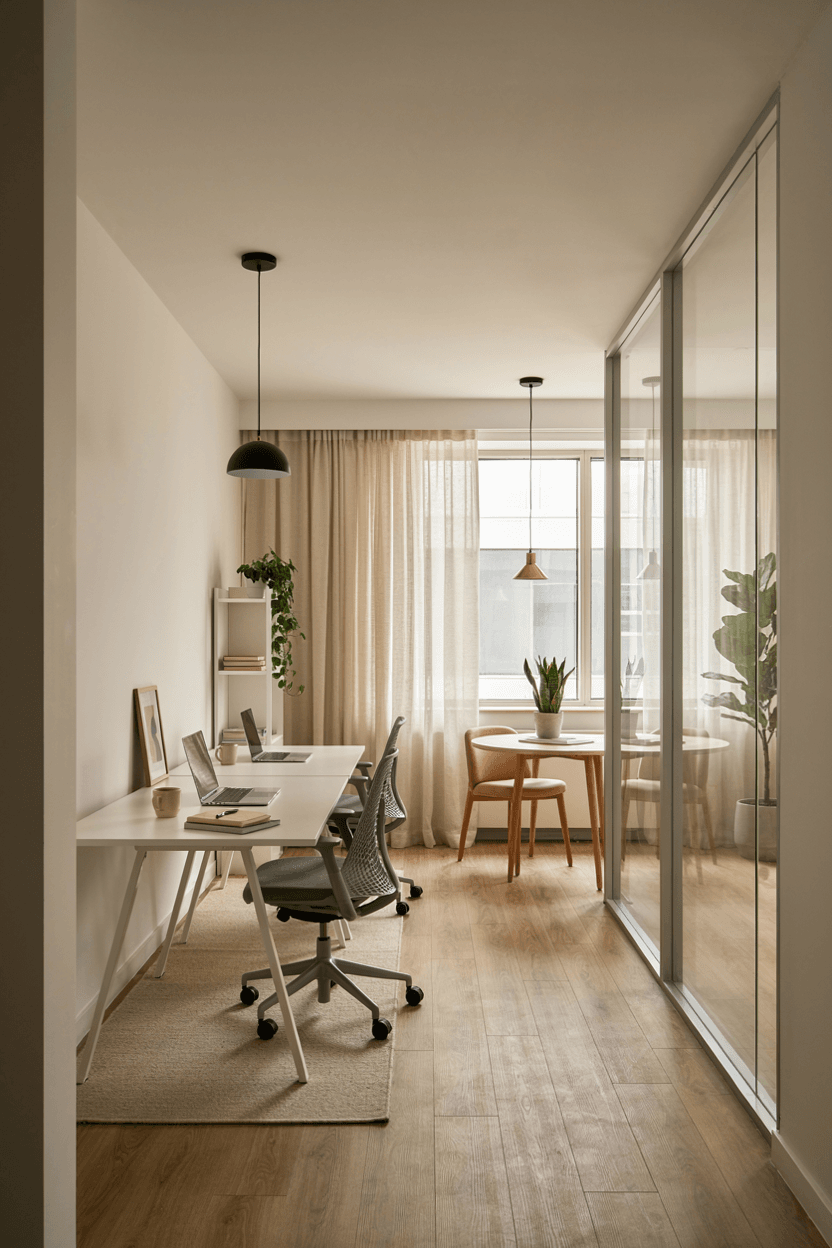
An open plan office removes walls and physical barriers to create a shared and collaborative workspace where teams can communicate freely and naturally. It encourages spontaneous interaction, idea sharing, and a sense of community among colleagues. The open layout also makes the space feel larger, brighter, and more energetic.
This idea works best for growing teams and creative businesses that rely on daily collaboration and fast communication. Use low-profile furniture and consistent flooring to maintain visual flow across the entire open space. Define different work zones with rugs, lighting, or subtle partitions rather than walls.
Best For: Collaborative teams that need open communication and a shared workspace energy
Pro Tip: Use rugs and pendant lights to define zones without breaking the open flow
2. Biophilic Office Design
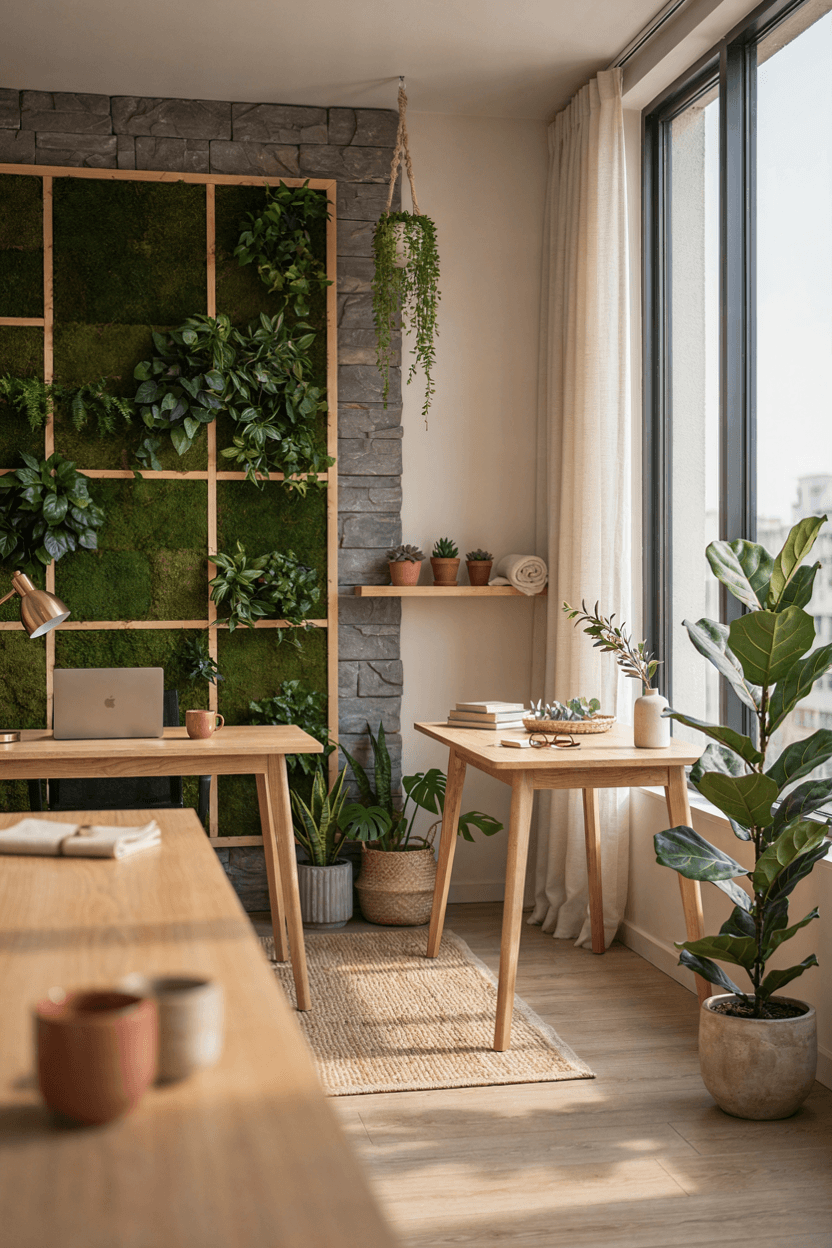
A biophilic office design brings nature directly into the workspace through plants, natural materials, water features, and abundant natural light. It creates a calmer, healthier, and more creatively stimulating environment that genuinely improves employee wellbeing and productivity. Nature in the office is no longer a luxury but a proven performance-enhancing design choice.
This idea works best for modern offices that prioritize employee health, creativity, and long-term retention. Use living green walls, potted trees, natural wood furniture, and stone surfaces throughout the space. Positioning desks near windows ensures every team member benefits from natural daylight.
Best For: Modern offices that prioritize employee wellbeing and natural workspace environments
Pro Tip: Install a living green wall as the office focal point for maximum biophilic impact
3. Modern Minimalist Office
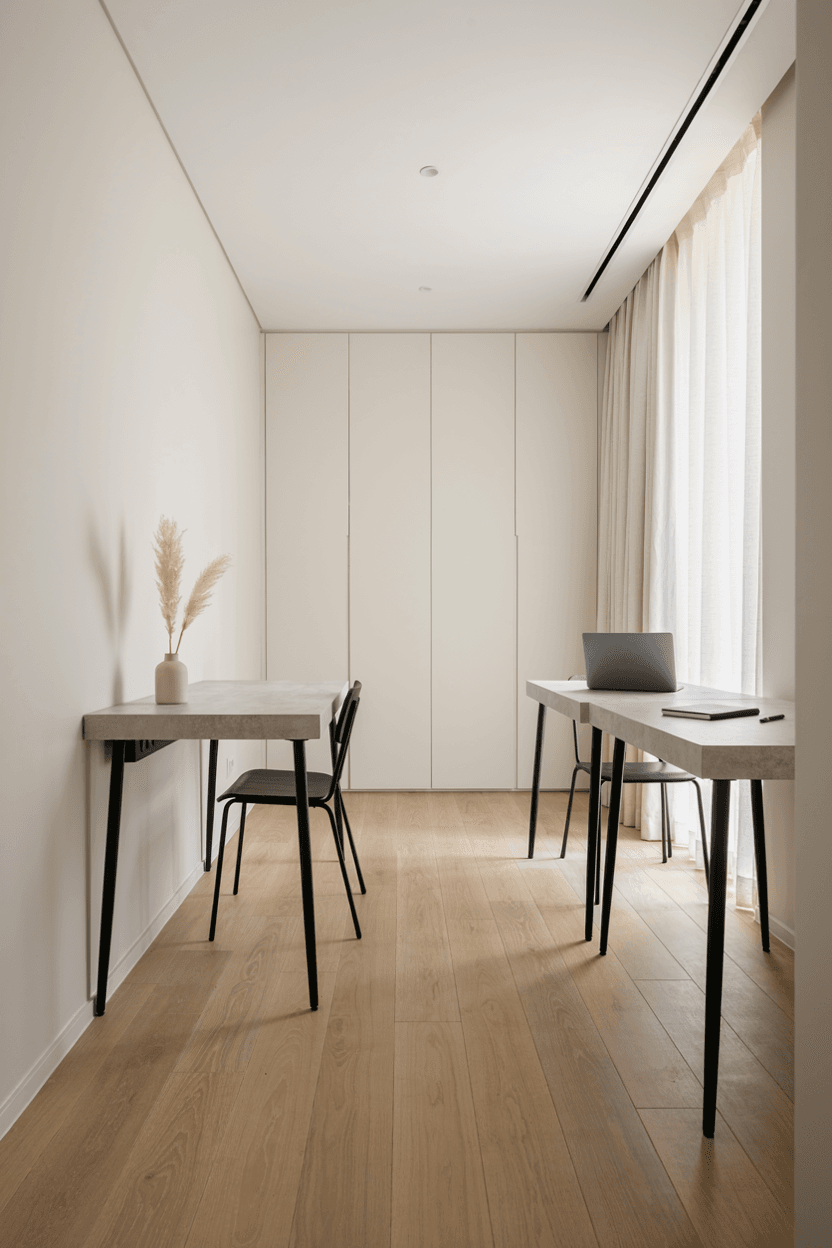
A modern minimalist office uses clean lines, neutral tones, and carefully edited furniture to create a workspace that feels calm, sharp, and professionally refined. Every element serves a clear purpose and nothing unnecessary competes for visual attention. The result is an office that communicates clarity, efficiency, and confident design.
This idea works best for professional services firms, tech companies, and any business that wants to project a clean and forward-thinking brand image. Choose white or concrete-effect desks, slim metal chairs, and hidden storage to maintain the perfectly uncluttered minimalist aesthetic. Concealing all cables within desks and walls is essential to the overall clean result.
Best For: Professional firms that want a clean, calm, and confidently refined office aesthetic
Pro Tip: Conceal all cables within furniture and walls to maintain a perfectly clean minimalist finish
4. Industrial Office Interior
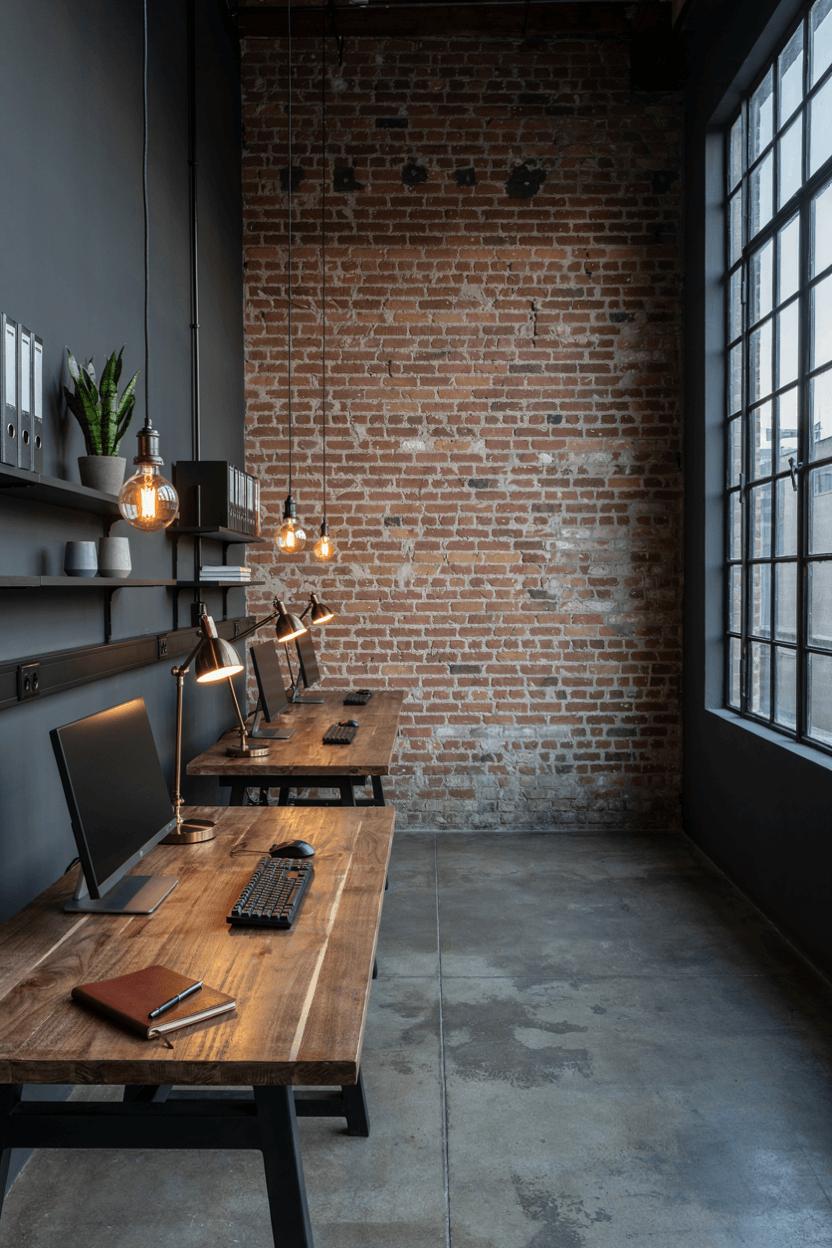
An industrial office interior uses raw materials like exposed brick, steel beams, concrete floors, and reclaimed wood to create a bold and characterful workspace full of urban energy. The honest and utilitarian aesthetic communicates creativity, authenticity, and a confident design sensibility. It makes the office feel genuinely exciting to work in every day.
This idea works best for creative agencies, startups, and tech companies that want their workspace to reflect an innovative and non-conventional brand personality. Combine dark metal shelving, Edison bulb pendant lights, and reclaimed wood desks for a cohesive industrial result. Keeping the color palette to dark greys, blacks, and warm wood tones maintains authenticity.
Best For: Creative agencies and startups that want a bold and authentically industrial workspace
Pro Tip: Use matte black fixtures and hardware consistently to strengthen the industrial aesthetic throughout
5. Scandinavian Office Design
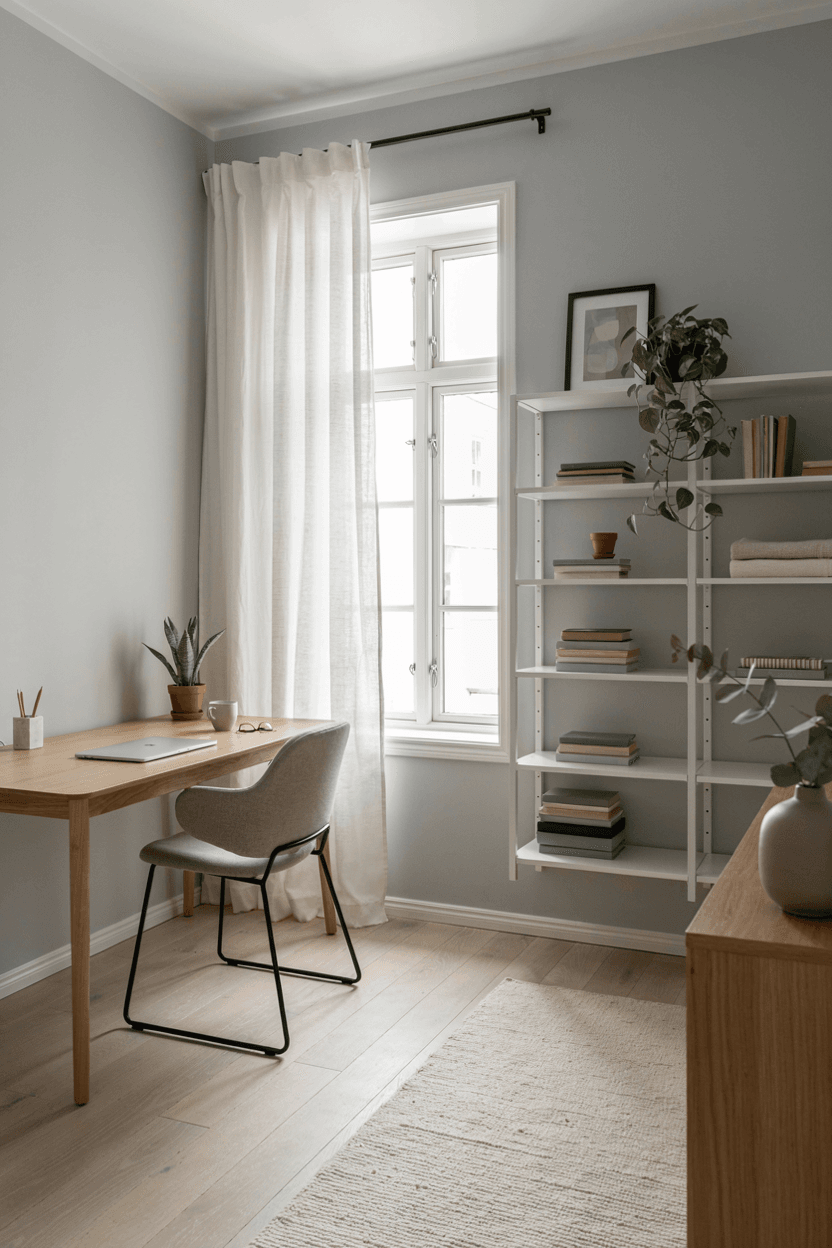
A Scandinavian office design uses pale woods, white surfaces, clean furniture, and abundant natural light to create a calm, bright, and beautifully functional workspace. The Nordic design philosophy prioritizes both practicality and beauty without ever feeling cold or sterile. It creates an office where people genuinely enjoy spending their working day.
This idea works best for businesses that value employee comfort, simplicity, and a clean and welcoming office environment. Choose light oak desks, simple white shelving, and green plants as the primary decorative element. Keeping accessories minimal and the palette to whites, greys, and natural wood maintains the authentic Scandinavian feel.
Best For: Businesses that value simplicity, employee comfort, and a naturally beautiful workspace
Pro Tip: Maximize window access for every desk position to maintain the bright Scandinavian atmosphere
6. Collaborative Office Layout
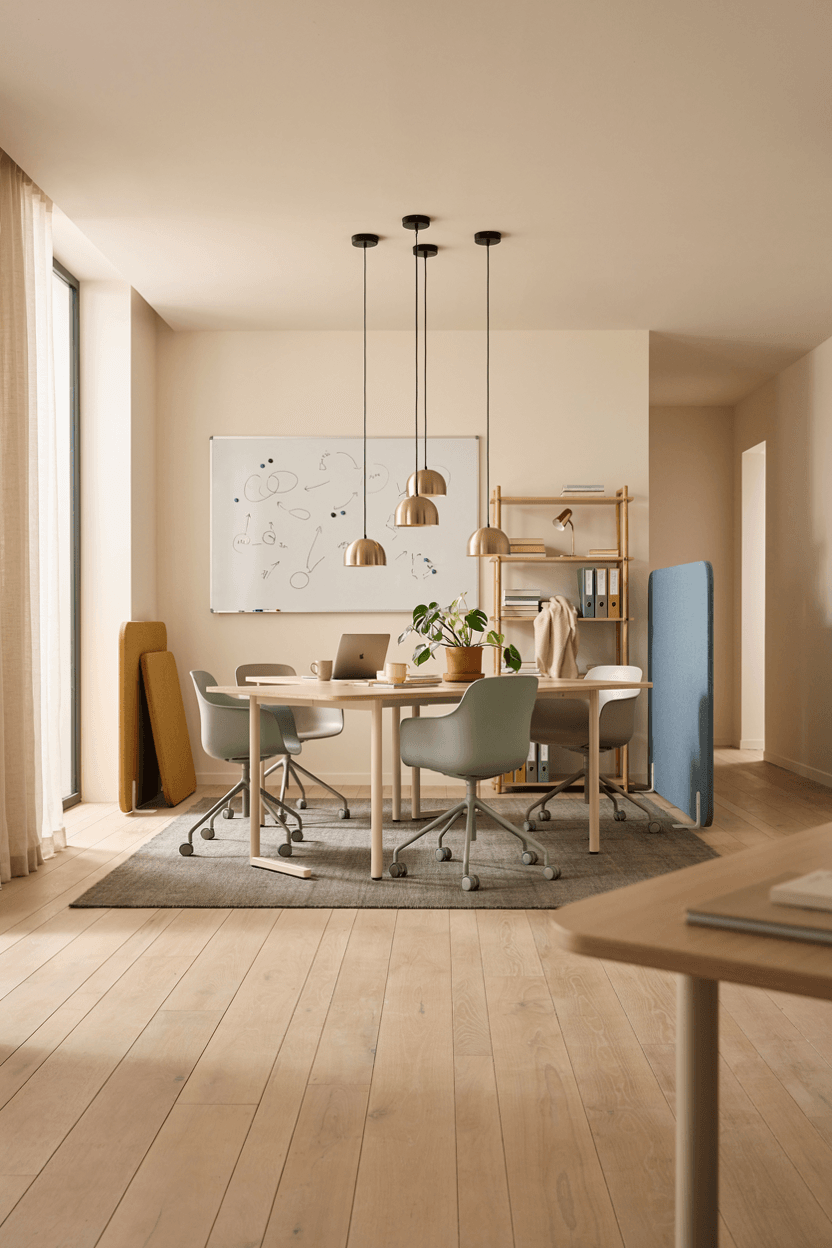
A collaborative office layout is specifically designed to encourage teamwork, group discussion, and the spontaneous sharing of ideas through thoughtful furniture arrangement and dedicated shared spaces. Cluster desks into team pods, create informal meeting corners, and provide writable walls and shared screens throughout the space. It makes collaboration feel natural and effortless rather than forced.
This idea works best for project-based teams, design studios, and businesses where cross-functional collaboration is a daily operational necessity. Use movable furniture that can be quickly reconfigured for different team sizes and meeting formats. Adding writable glass walls or large whiteboards within the collaborative zones increases creative output significantly.
Best For: Project-based teams that need a workspace specifically designed to support daily collaboration
Pro Tip: Use movable furniture throughout so the layout can be quickly reconfigured for any team size or meeting format
7. Private Office with Glass Walls
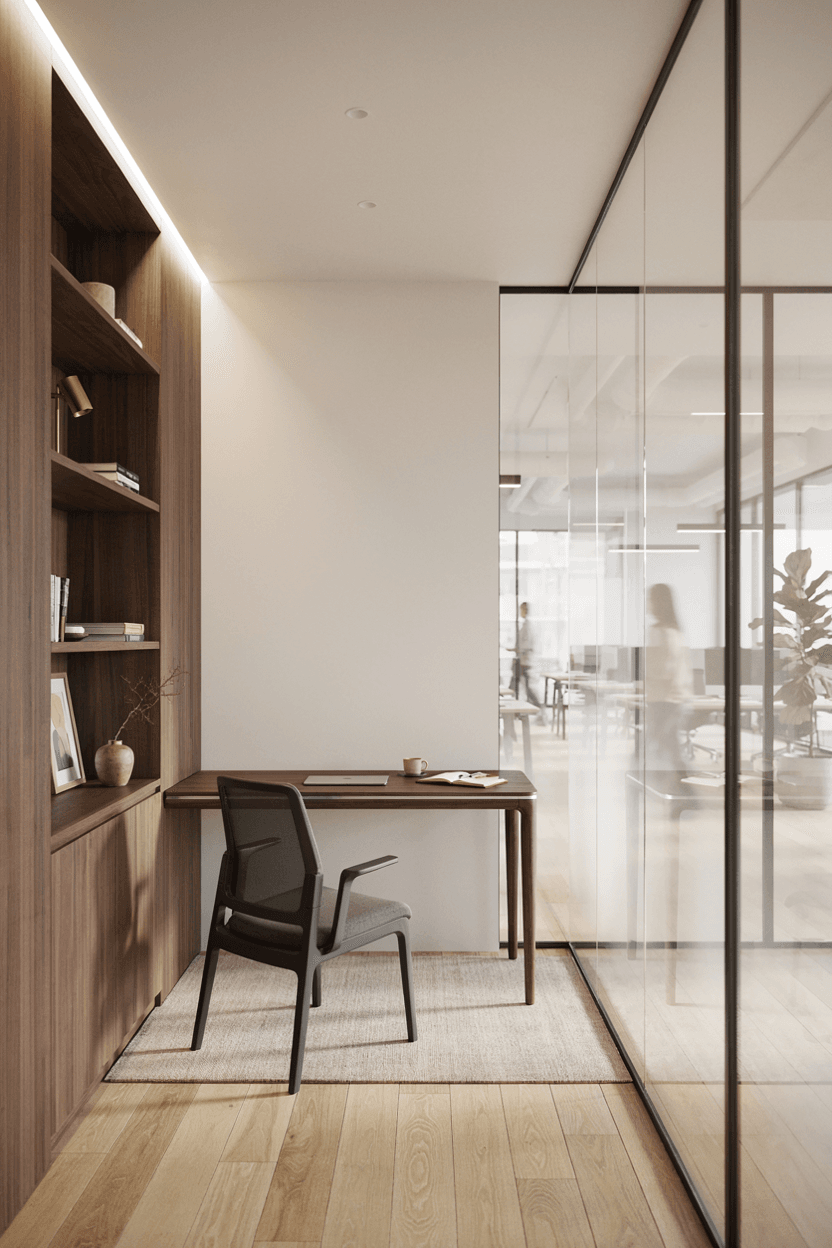
A private office with glass walls provides visual privacy and a sense of personal workspace while maintaining a transparent and open connection to the wider office environment. The glass keeps the private office from feeling isolated or disconnected and allows natural light to flow freely into surrounding spaces. It balances privacy with openness in the most elegant way.
This idea works best for senior managers, team leaders, and executives who need a dedicated workspace but want to remain visually accessible and connected to their team. Use frosted or switchable smart glass for meetings requiring full privacy and clear glass for everyday transparent working. Adding a solid wall on one side with built-in shelving provides a private backdrop for video calls.
Best For: Managers and executives who need private space while remaining visually connected to their team
Pro Tip: Use switchable smart glass that frosts on demand for instant meeting privacy without permanent obscuring
8. Office with Statement Lighting
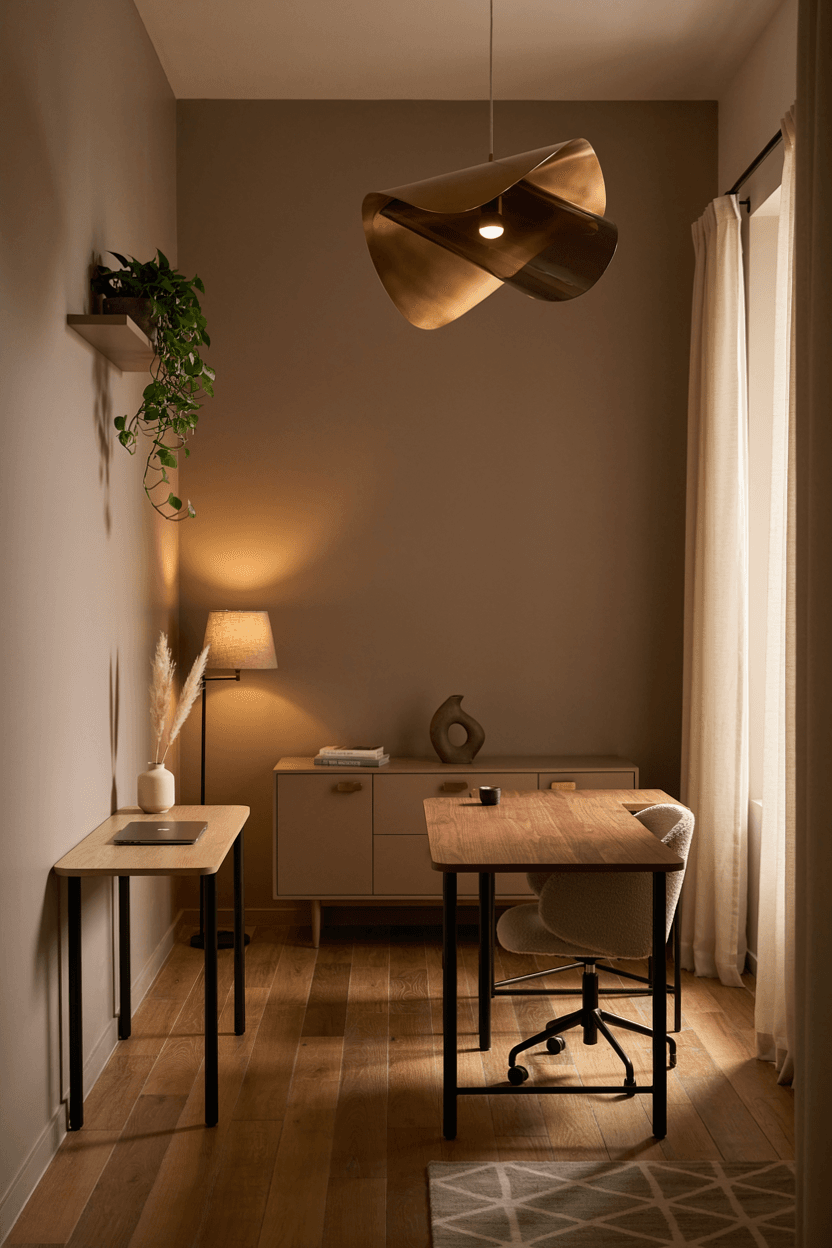
Statement lighting transforms an ordinary office interior into a visually dramatic and atmospherically rich workspace that makes a powerful first impression. Oversized pendant lights, sculptural chandeliers, and architectural LED installations all contribute to an office environment that feels designed, considered, and genuinely impressive. Lighting is the single most impactful decorative investment in any office space.
This idea works best for reception areas, boardrooms, collaborative lounges, and any office zone where making a strong visual impression is important. Choose pendant lights that complement the overall office aesthetic, such as industrial metal fittings for a raw office or elegant glass globes for a luxury environment. Layering ambient, task, and accent lighting creates the most comfortable and visually interesting result.
Best For: Reception areas and boardrooms where a strong visual impression is the primary design goal
Pro Tip: Layer three types of lighting — ambient, task, and accent — for the most comfortable and visually rich result
9. Color-Blocked Office Design
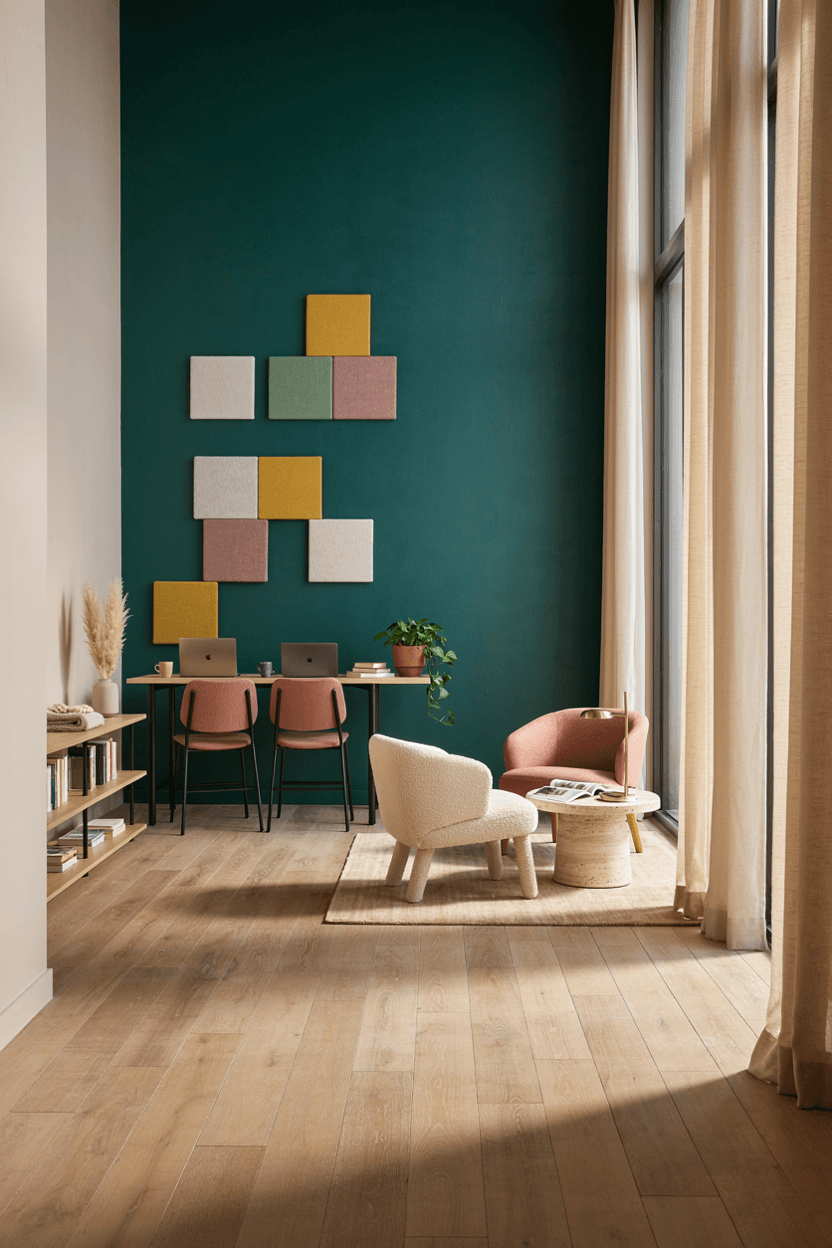
A color-blocked office design uses bold sections of contrasting solid colors to define different zones, energize the workspace, and express a confident and creative brand personality. Painting one wall in a deep jewel tone, choosing brightly colored furniture pods, or using colored acoustic panels across the ceiling all create a dynamic and visually exciting office environment. It makes the office genuinely memorable.
This idea works best for creative businesses, marketing agencies, and brands that want their office to reflect an energetic, expressive, and forward-thinking personality. Choose two or three brand colors and apply them consistently across walls, furniture, and accessories in clearly defined zones. Keeping the floor and ceiling neutral prevents the color-blocking from feeling overwhelming.
Best For: Creative businesses that want a bold, energetic, and brand-expressive office environment
Pro Tip: Keep floors and ceilings neutral so the color-blocked walls and furniture remain the clear visual stars
10. Luxury Executive Office
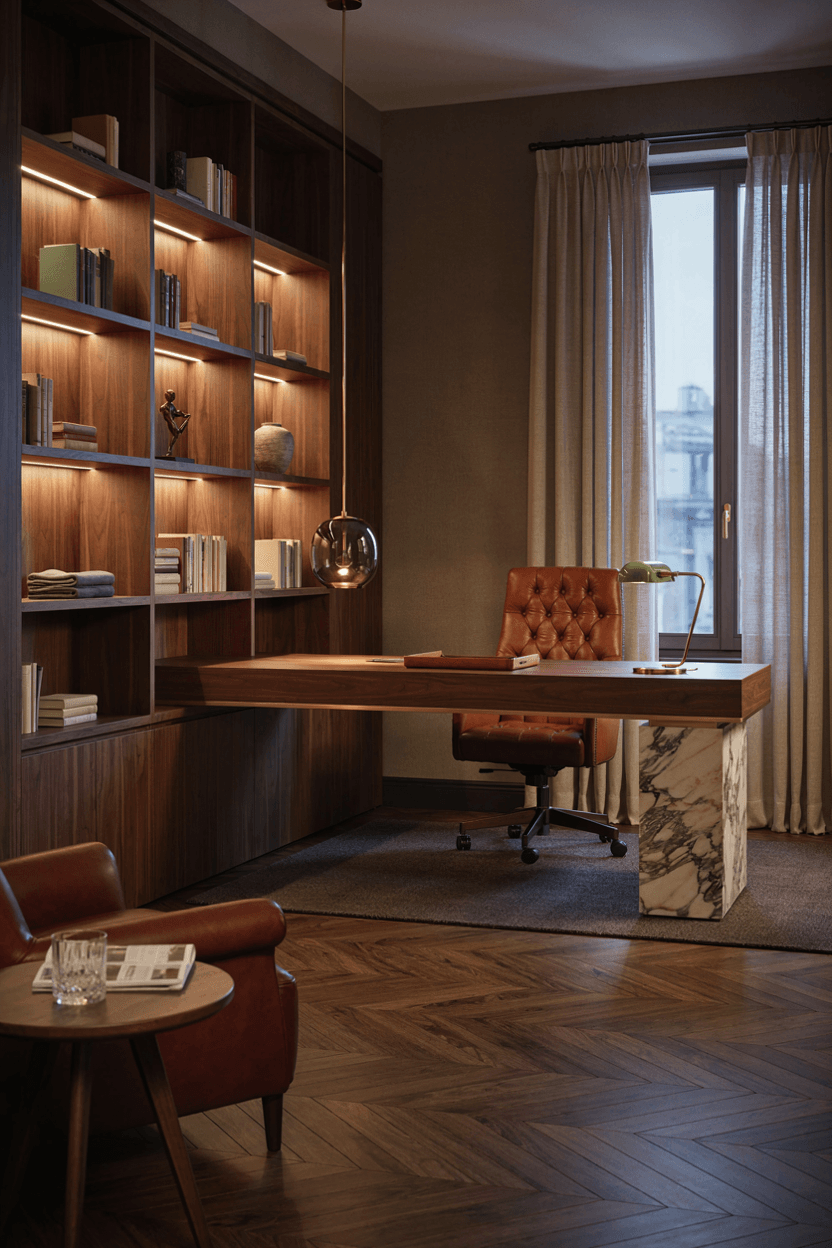
A luxury executive office creates a workspace of exceptional quality and refined detail that communicates authority, success, and impeccable professional taste. Rich hardwood furniture, leather upholstery, marble surfaces, statement lighting, and bespoke cabinetry combine to produce an office environment of genuine grandeur. Every material and every detail is chosen with the highest standards in mind.
This idea works best for C-suite executives, senior partners, and business leaders whose office environment directly reflects their professional standing and personal brand. Choose a large, solid hardwood executive desk, a high-quality leather chair, and custom-built-in shelving in a dark premium finish. Adding a seating area with a leather sofa and a statement chandelier completes the luxuriously appointed executive office.
Best For: Senior executives and business leaders who need a premium and authoritative office environment
Pro Tip: Invest in one exceptional statement light fixture as it elevates the entire room instantly and dramatically
11. Creative Agency Office
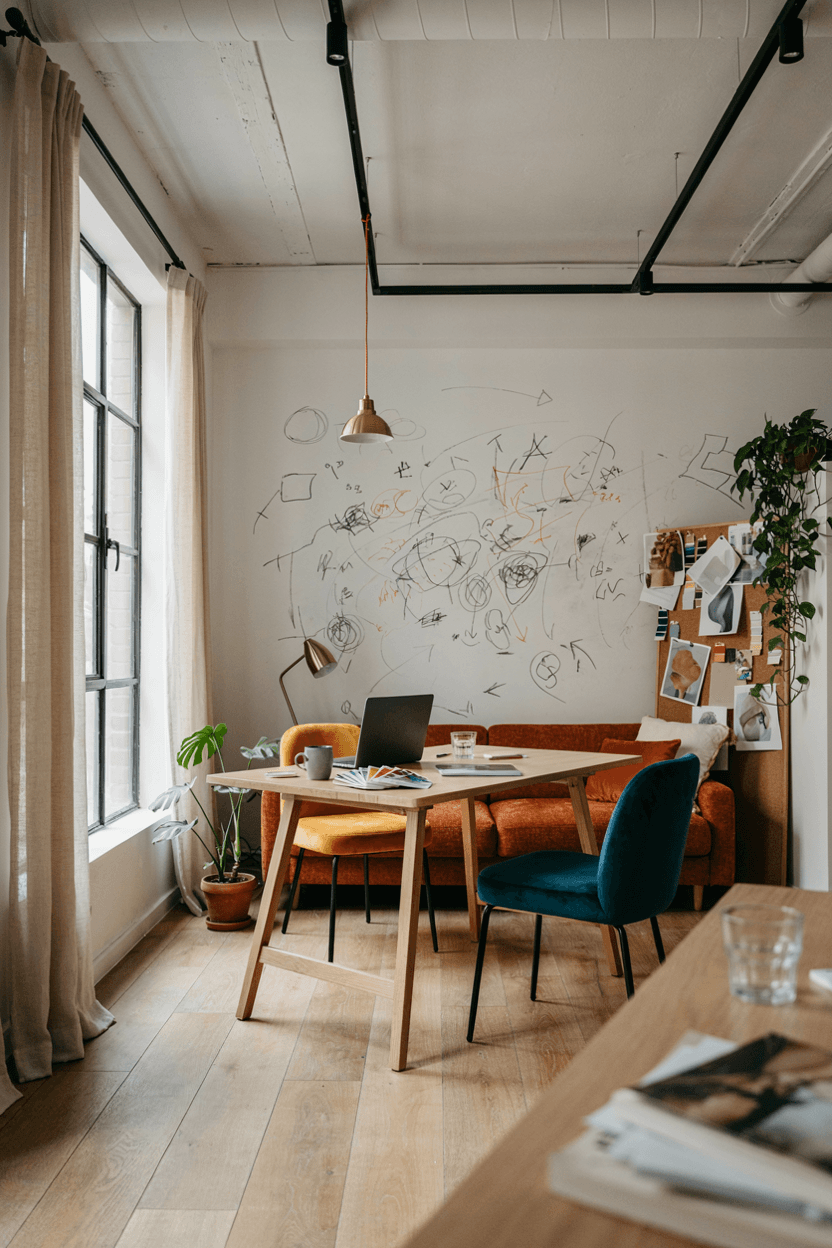
A creative agency office is designed to actively stimulate imagination, encourage experimentation, and reflect the bold and unconventional personality of the creative work produced within it. Exposed ceilings, mismatched furniture, writable walls, inspiration boards, and vibrant color all contribute to a workspace that feels alive, energetic, and genuinely inspiring. It makes creative thinking feel natural and effortless.
This idea works best for advertising agencies, design studios, and any creative business where the physical environment directly influences the quality and originality of the work produced. Mix different furniture styles and heights to create an eclectic and stimulating visual environment. Display work-in-progress projects, mood boards, and inspiration throughout the space to keep creative energy high.
Best For: Creative agencies and design studios where the workspace must actively inspire and stimulate creative thinking
Pro Tip: Cover one full wall in a writable surface so ideas can be captured, shared, and developed anywhere in the office
12. Office with Acoustic Panels
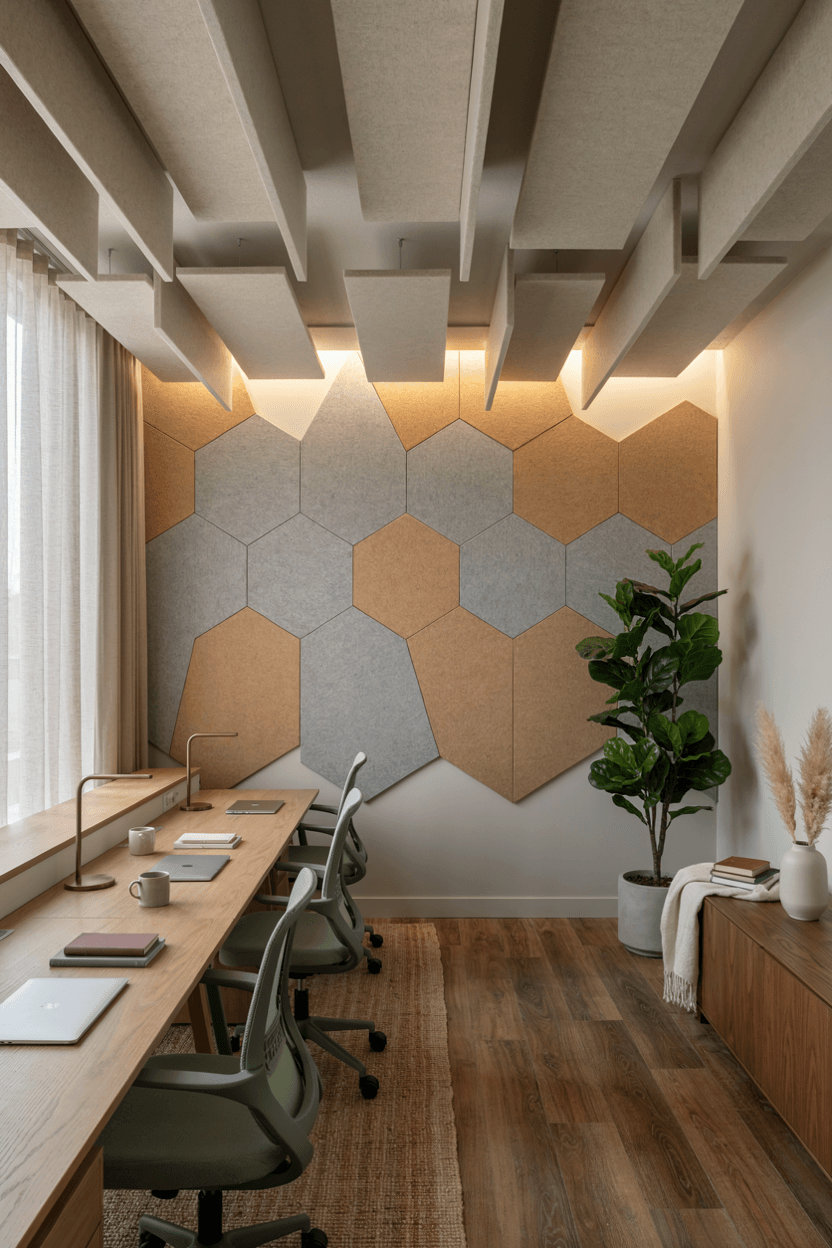
Acoustic panels in an office control noise, reduce echo, and create a quieter and more focused working environment without sacrificing visual appeal. Modern acoustic panels come in beautiful colors, geometric shapes, and textured materials that contribute significantly to the overall office aesthetic while solving one of the most common workplace comfort problems. Good acoustics directly improve concentration and communication quality.
This idea works best for open plan offices, call centers, and any workspace where noise distraction is a daily challenge for focused work. Choose acoustic panels in brand colors or complementary tones and arrange them in geometric patterns on walls and ceilings for a decorative as well as functional result. Combining ceiling baffles with wall panels provides the most comprehensive acoustic treatment throughout the space.
Best For: Open plan offices where noise distraction affects concentration and communication quality
Pro Tip: Arrange acoustic panels in geometric patterns on the ceiling to make them a decorative feature
13. Office with Exposed Brick
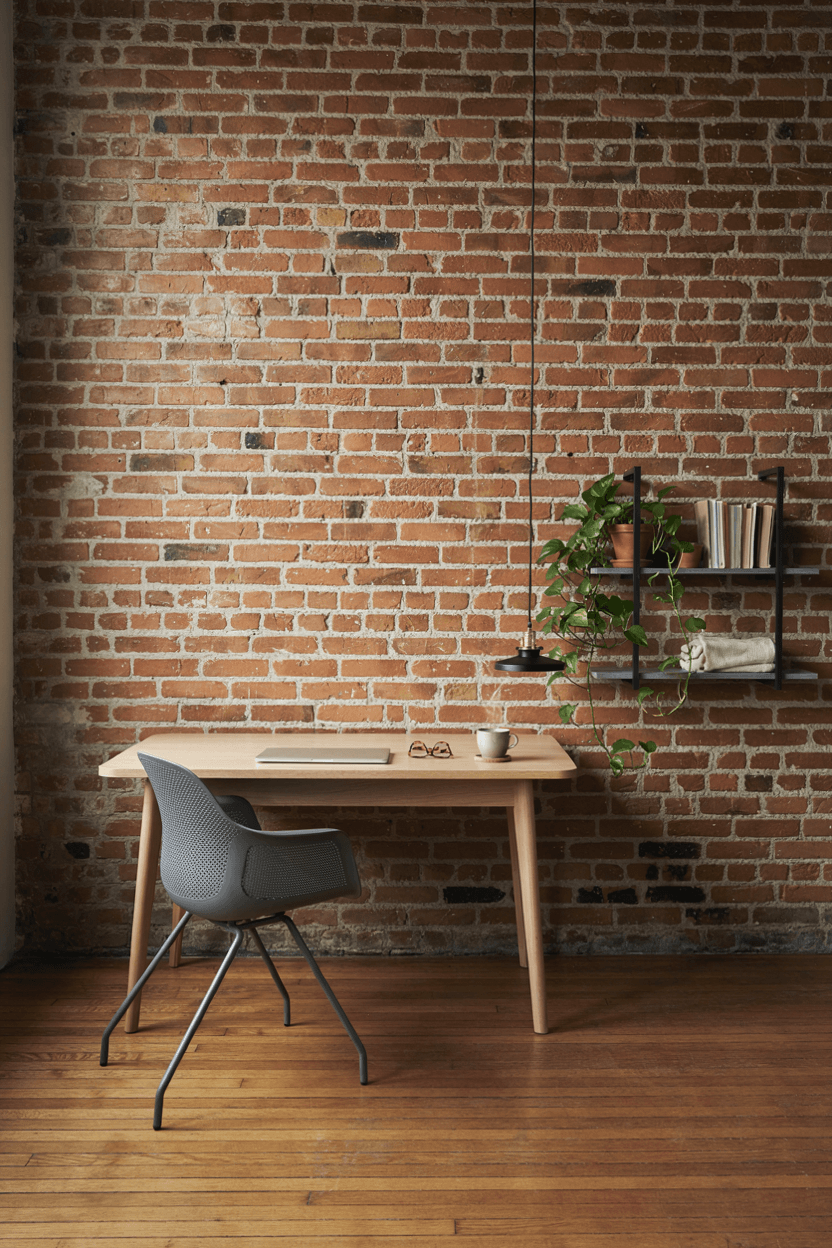
An exposed brick office wall adds raw texture, warmth, and an authentic urban character to the workspace that no painted or plastered surface can replicate. Whether original Victorian brick or modern brick slips applied to a flat wall, the effect is a richly textured and deeply characterful backdrop that makes the entire office feel more interesting and alive. It works beautifully in both traditional and contemporary settings.
This idea works best for offices in converted warehouses, period buildings, and urban premises where the existing brick can be revealed and celebrated. Mount shelves directly onto the brick, use the wall as a backdrop for a reception desk, or build a meeting room with a full brick feature wall. Pairing the brick with contemporary furniture creates a compelling and sophisticated old-meets-new contrast.
Best For: Urban and converted office spaces that want to celebrate authentic exposed brick character
Pro Tip: Apply a clear matte sealant to exposed brick to protect it while preserving its natural and raw appearance
14. Japandi Office Interior
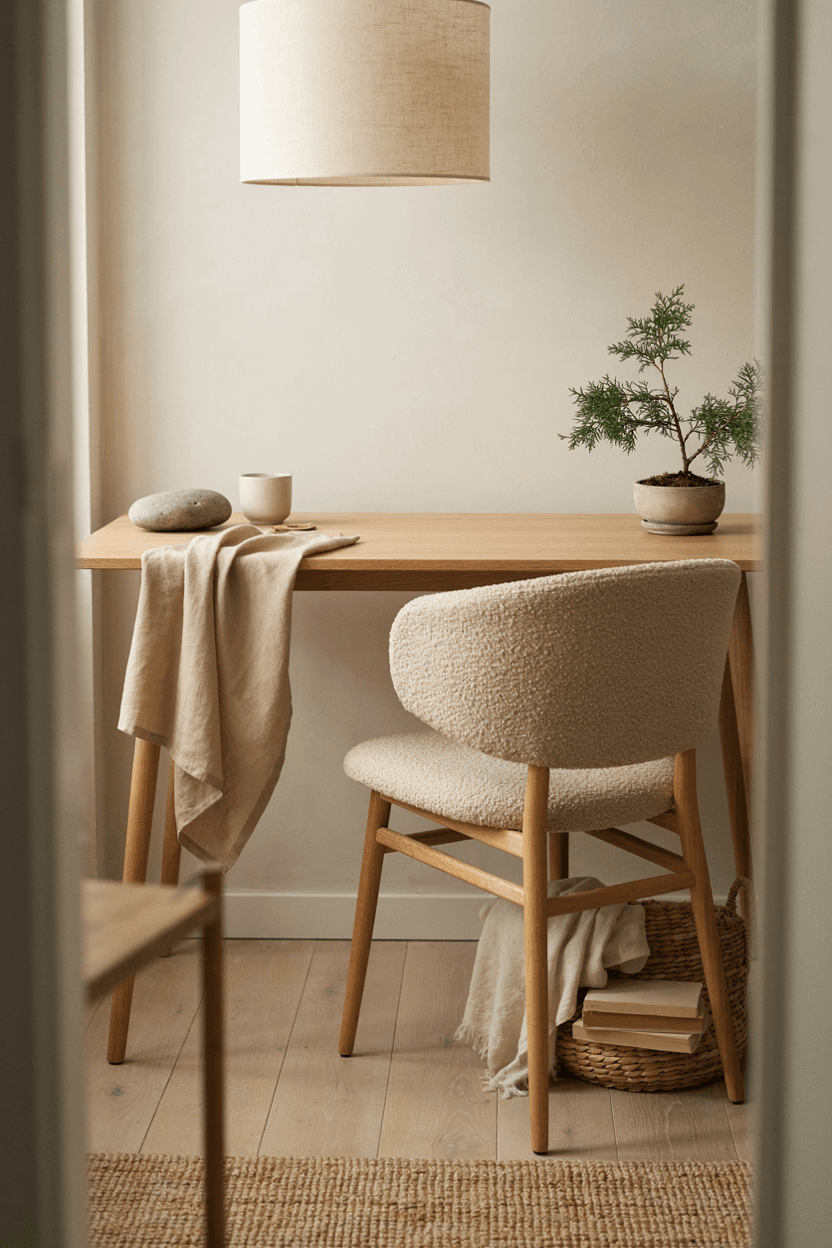
A Japandi office interior blends Japanese minimalism with Scandinavian warmth to create a workspace of extraordinary calm, natural beauty, and considered simplicity. Natural wood, washi paper light fittings, stone surfaces, bonsai plants, and a restrained neutral palette combine to produce an office that feels both serene and deeply sophisticated. It is one of the most refined and thoughtful office design approaches available.
This idea works best for wellness businesses, design studios, architecture firms, and any professional environment where calm, focus, and aesthetic refinement are core values. Choose low-profile furniture in pale wood, add natural stone or rattan accessories, and limit the color palette strictly to whites, beiges, and soft greens. Keeping every surface uncluttered and every object intentional maintains the pure Japandi result.
Best For: Professional environments where calm focus, natural beauty, and design refinement are core values
Pro Tip: Limit the entire office palette to five tones maximum to maintain the serene and unified Japandi atmosphere
15. Office with Standing Desk Zones
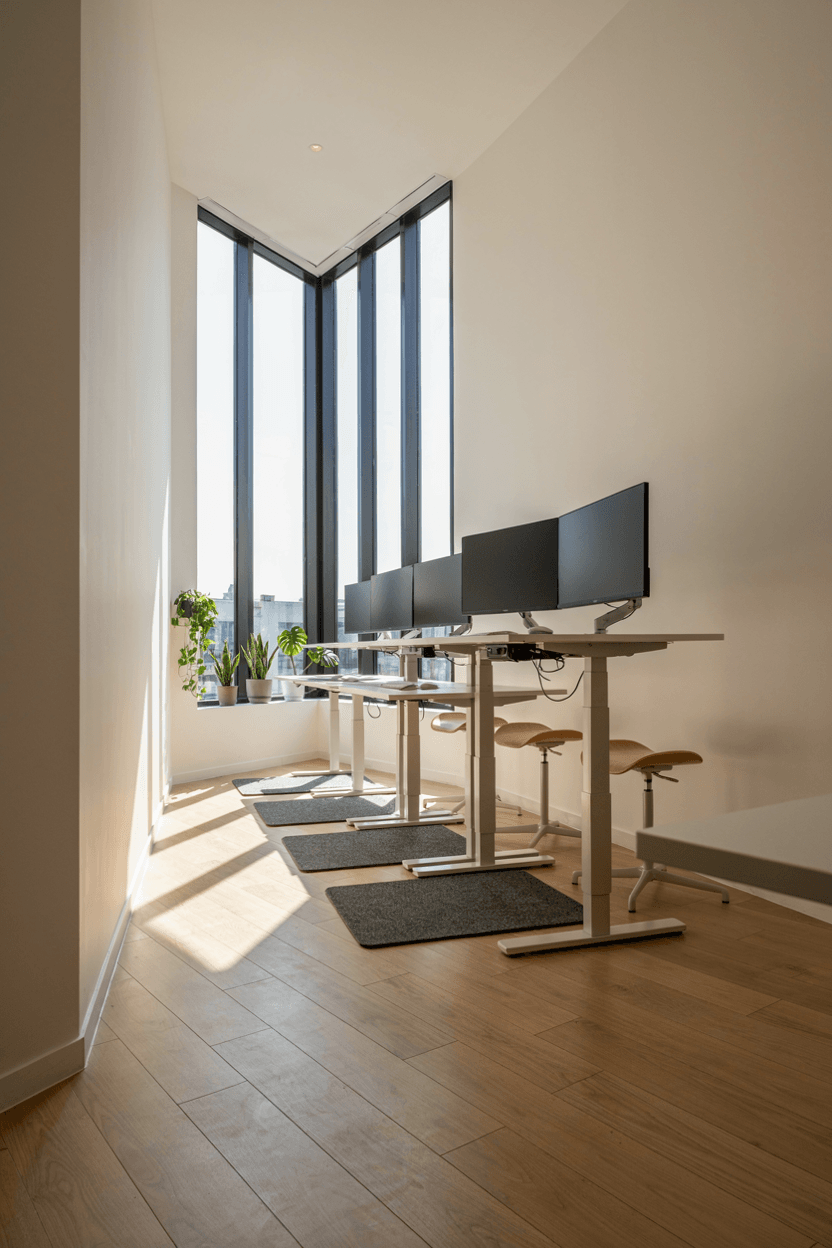
Dedicated standing desk zones within an office provide employees with the flexibility to alternate between sitting and standing throughout the working day, promoting better health, higher energy levels, and improved focus. Standing zones also create natural gathering points for informal discussions and quick collaborative moments without the formality of a meeting room. They add both physical and social dynamism to the office layout.
This idea works best for modern health-conscious offices that want to demonstrate a genuine commitment to employee wellbeing and ergonomic working conditions. Install a row of height-adjustable standing desks along a bright window wall or in a dedicated zone separate from the main seated desking area. Adding anti-fatigue mats beneath each standing position makes extended use genuinely comfortable for every team member.
Best For: Health-conscious offices that want to provide ergonomic flexibility and promote active working habits
Pro Tip: Place standing desk zones near windows so standing workers benefit from the best natural light in the office
16. Office with Lounge Area
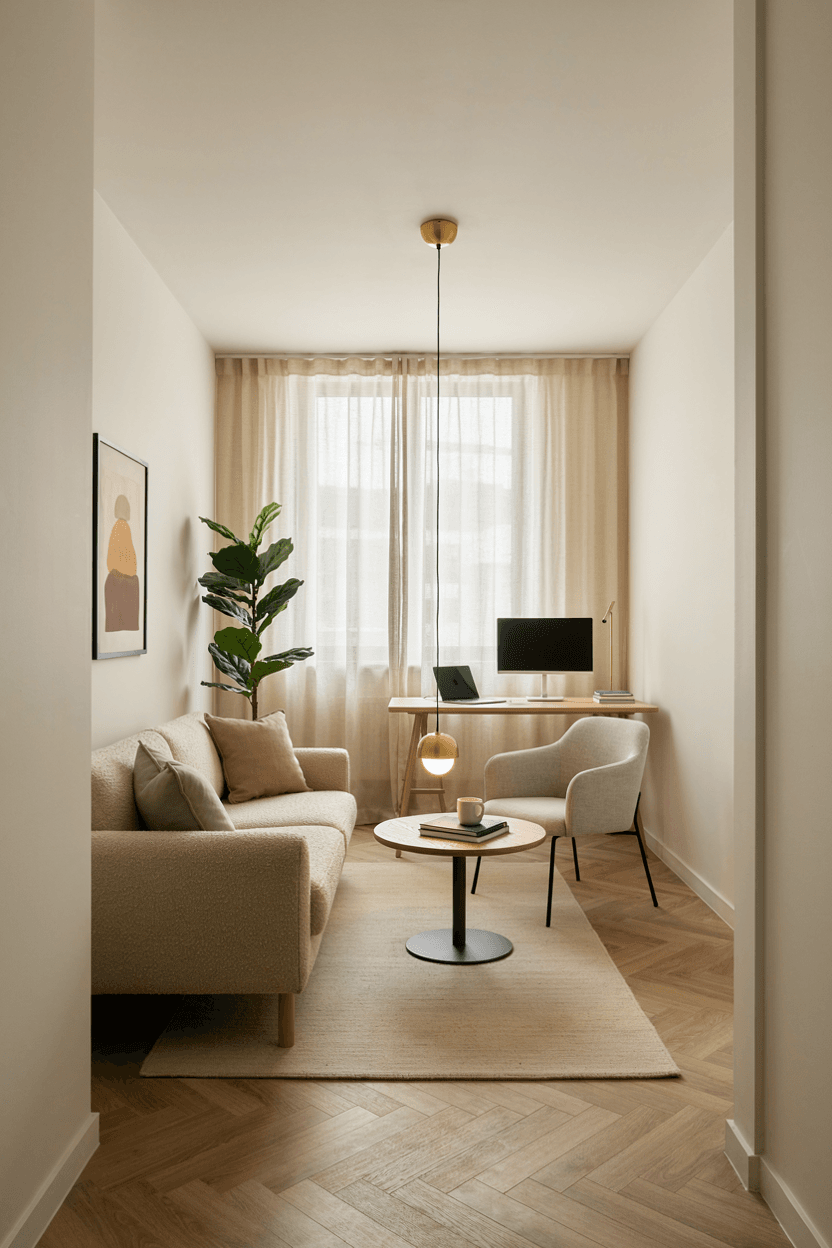
An office lounge area creates a comfortable and informal zone within the workplace where employees can relax, think, have casual conversations, and recharge between focused working sessions. Sofas, armchairs, low coffee tables, and warm lighting create an environment that feels intentionally different from the main desk area. It signals that the organization values rest and human connection as much as productivity.
This idea works best for medium to large offices where space allows for a dedicated relaxation and informal meeting zone separate from the main working floor. Choose comfortable upholstered seating in a warm fabric, add a coffee table with books and plants, and use a pendant light to distinguish the lounge zone visually. Positioning the lounge near a kitchen or refreshment area creates a natural social hub within the office.
Best For: Medium to large offices that want a dedicated relaxation and informal social zone for their team
Pro Tip: Use a distinctive rug beneath the lounge furniture to clearly define the zone within the wider office space
17. Small Office Interior Design
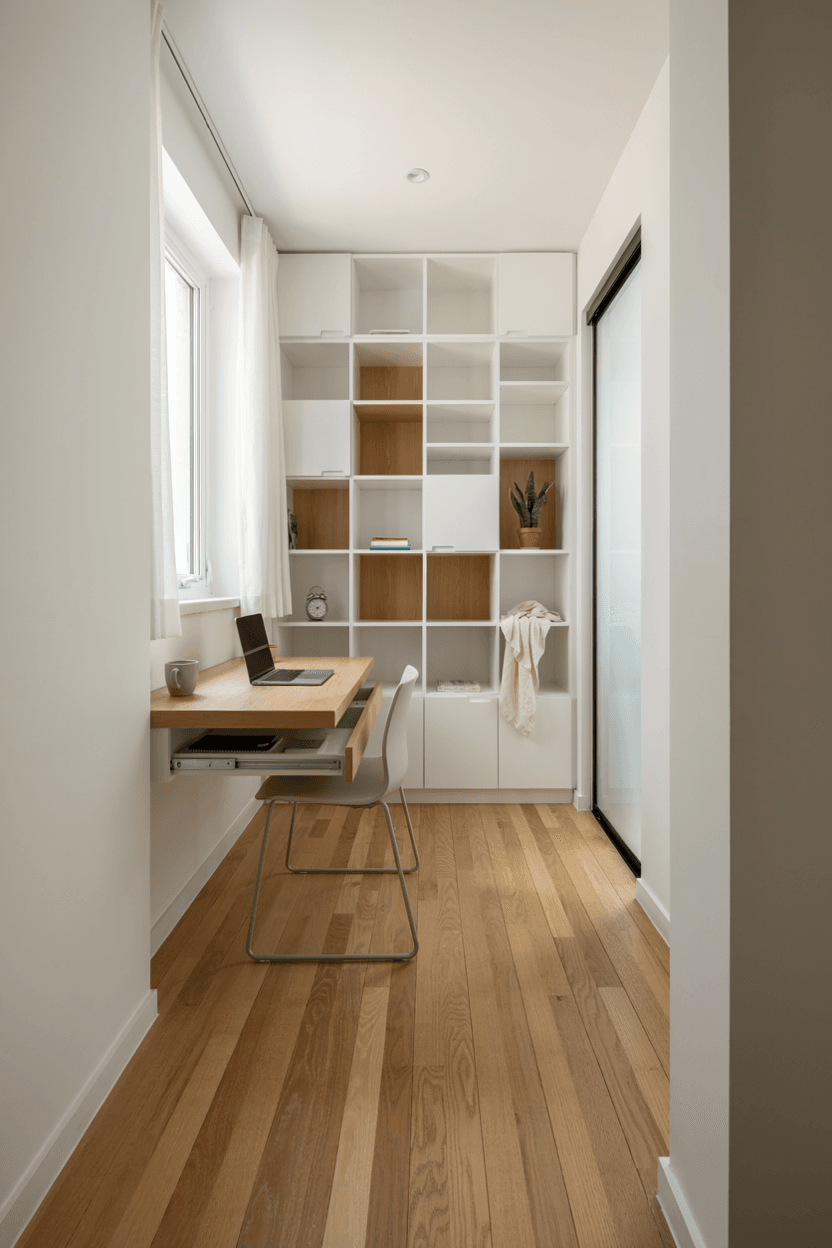
A small office interior requires exceptionally smart design choices to maximize every available square metre without the space ever feeling cramped, cluttered, or visually overwhelming. Vertical storage, built-in furniture, multi-functional pieces, and a light color palette all work together to create a compact workspace that punches well above its physical size. Good small office design is about clever decisions, not compromises.
This idea works best for small business premises, home-based professional studios, and compact commercial units where space efficiency is the primary design constraint. Use floor-to-ceiling shelving, wall-mounted desks, and glass partitions to maximize the sense of openness within a limited footprint. Choosing furniture in light tones and keeping surfaces clear prevents the small office from feeling tight or oppressive.
Best For: Small business premises and compact offices that need maximum function within a limited footprint
Pro Tip: Use glass partitions instead of solid walls to maintain openness and light flow in a small office
18. Office with Feature Wall
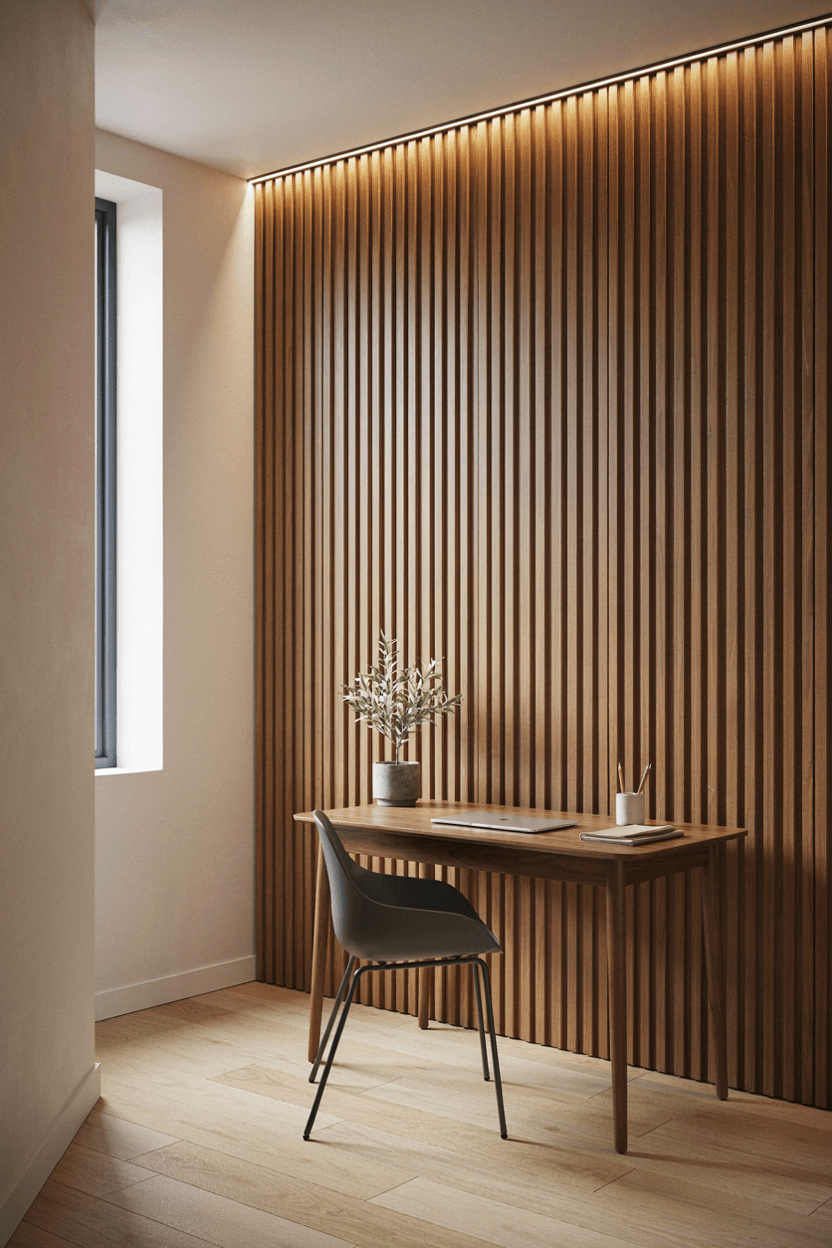
A feature wall in an office creates an immediate and powerful focal point that anchors the entire interior design and gives the space a strong visual identity. Whether achieved through bold paint, textured wall cladding, branded graphics, a living plant wall, or dramatic wallpaper, the feature wall sets the tone for the entire office environment. It makes even the simplest office feel thoughtfully and professionally designed.
This idea works best for reception areas, boardrooms, and open-plan offices where one wall can be dedicated to creating a strong and lasting visual impression. Choose a feature wall treatment that reflects the brand personality, such as a brand color in a premium finish, a nature-inspired mural, or a wall of backlit branded signage. Keeping the remaining three walls simple and neutral allows the feature wall to dominate confidently.
Best For: Reception areas and boardrooms where a strong and instantly impressive visual focal point is needed
Pro Tip: Keep all surrounding walls simple and neutral so the feature wall reads with maximum visual power and clarity
19. Dark and Moody Office
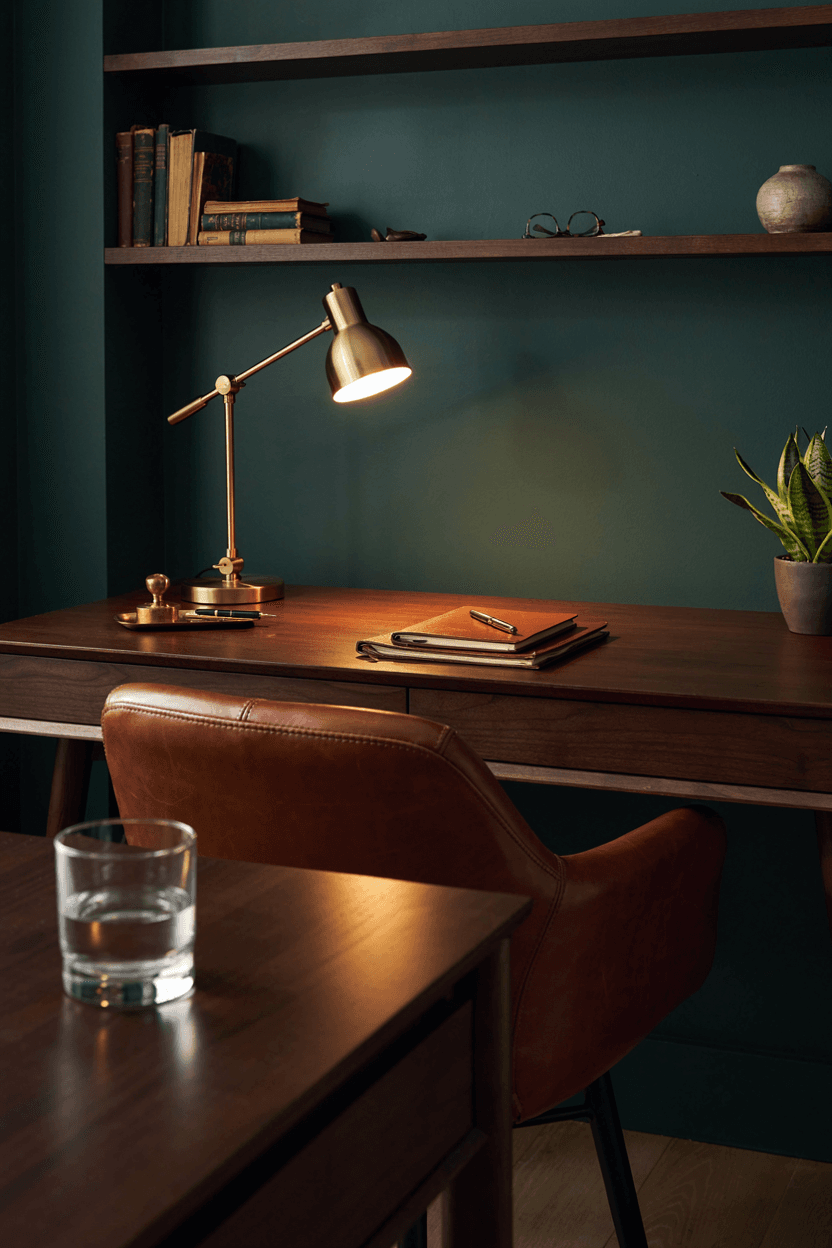
A dark and moody office uses deep wall colors, rich materials, and warm atmospheric lighting to create a workspace that feels intimate, focused, and powerfully sophisticated. Deep navy, charcoal, forest green, and slate create a cocoon-like environment that minimizes distraction and promotes deep concentration. It makes serious professional work feel appropriately serious and considered.
This idea works best for law firms, financial services companies, private members clubs, and any professional environment where gravitas, authority, and quiet sophistication are important brand qualities. Pair dark walls with warm brass lighting, rich leather furniture, and dark wood accents for a cohesive and luxuriously atmospheric result. Ensuring adequate task lighting at every desk position prevents the dark palette from becoming a visual strain.
Best For: Law firms and financial offices that want a gravitas-rich and atmospherically sophisticated interior
Pro Tip: Ensure excellent task lighting at every desk to prevent the dark palette from causing visual fatigue
20. Office with Branded Interior
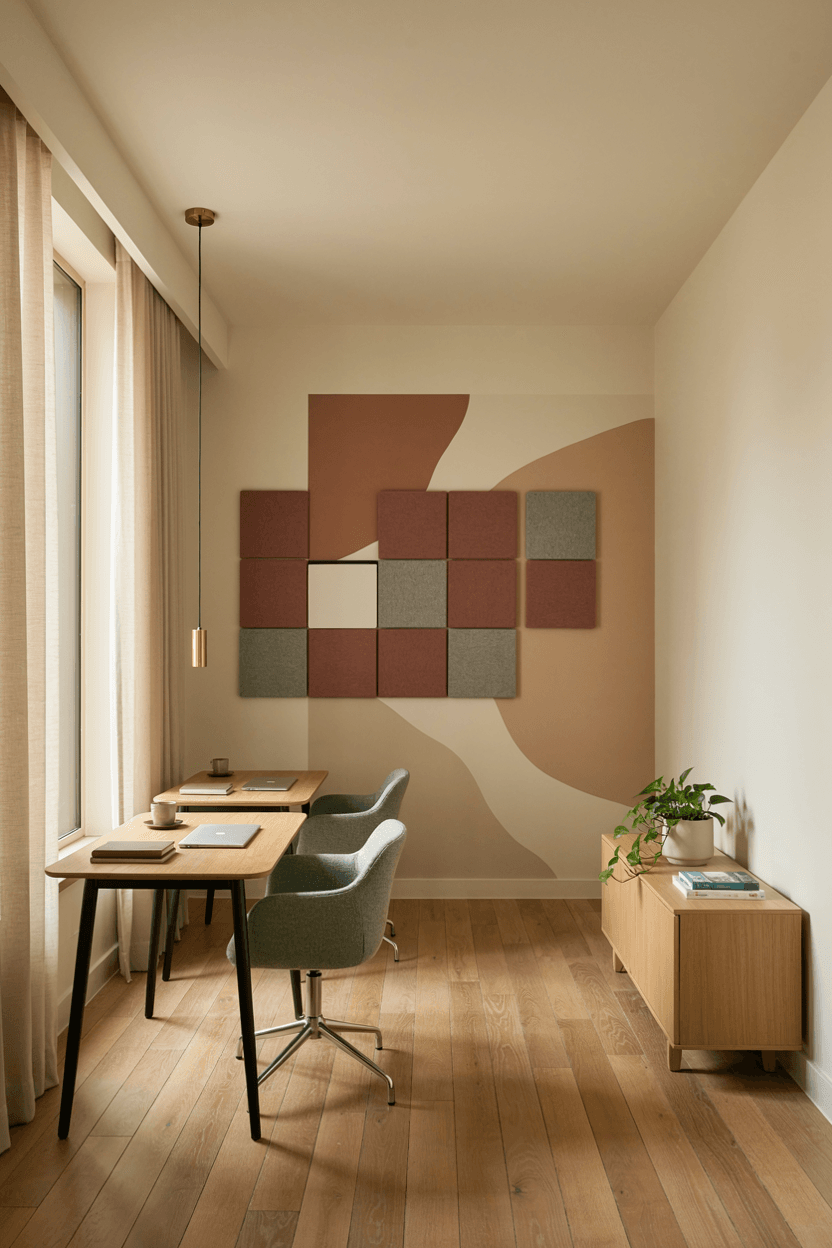
A branded office interior uses the company’s colors, materials, typography, values, and visual identity to create a workspace that is a living expression of the brand itself. From reception signage to desk accessories, every element of the office tells the brand story and reinforces company culture for employees, clients, and visitors alike. It transforms the office from a generic workspace into a genuinely immersive brand experience.
This idea works best for established businesses, growing startups, and any company that wants its physical office environment to communicate brand values as powerfully as its marketing and products do. Apply brand colors strategically through feature walls, upholstery, acoustic panels, and branded graphics rather than overwhelming every surface. Balancing brand expression with visual comfort ensures the office remains a pleasant daily working environment.
Best For: Established businesses that want their office to be a living and immersive expression of their brand
Pro Tip: Apply brand colors to focal points only, rather than every surface to keep the office visually comfortable
21. Office with Flexible Furniture
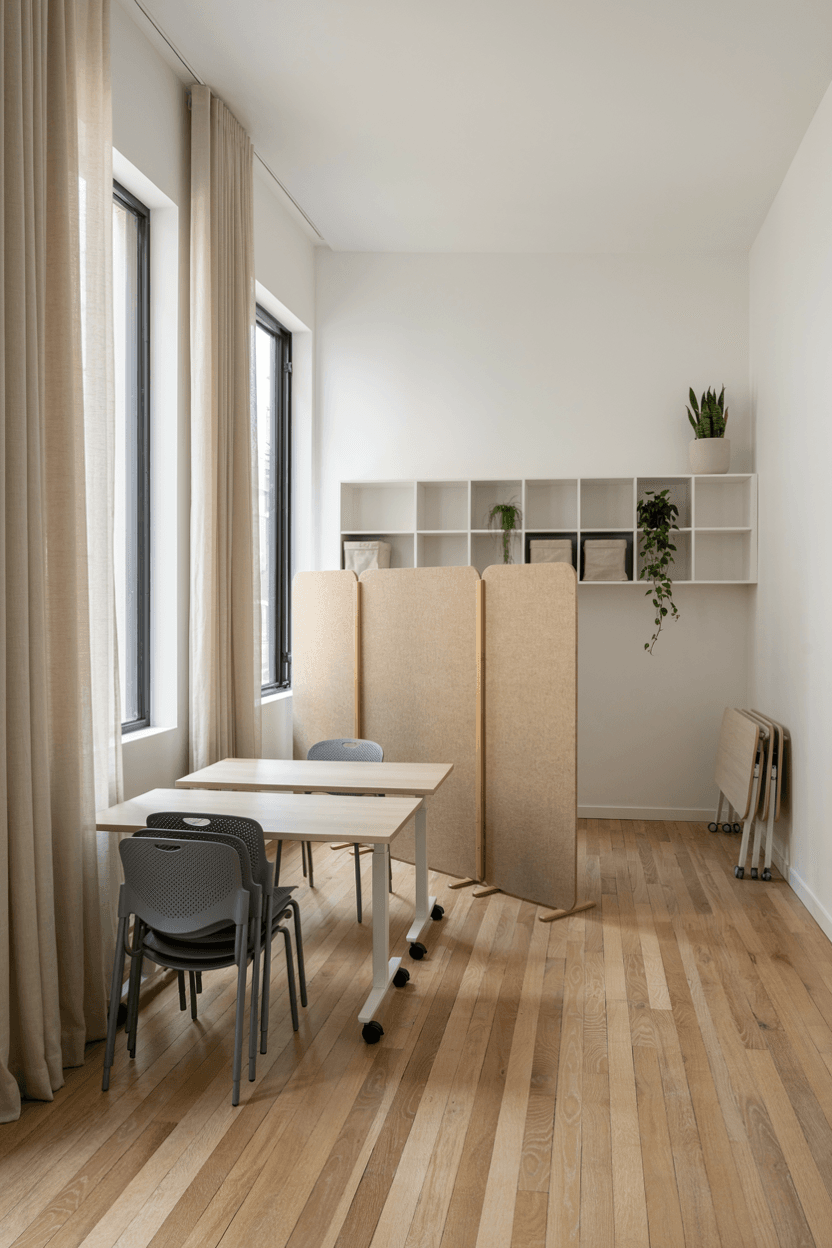
An office with flexible furniture uses modular, movable, and multi-purpose pieces that can be quickly reconfigured to suit different team sizes, working styles, and daily operational needs. Lightweight desks on castors, stackable chairs, movable partition screens, and foldable meeting tables give the office a dynamic and responsive quality that fixed furniture can never achieve. The office adapts to the work rather than forcing the work to adapt to the office.
This idea works best for hybrid working environments, hot-desking offices, and any business where the number and type of daily workspace users vary significantly from day to day. Select furniture with a consistent finish so that even when reconfigured, the office maintains a cohesive and professional appearance. Providing clear storage for unused furniture pieces ensures the space never looks cluttered or disorganized during transitions.
Best For: Hybrid and hot-desking offices that need a workspace capable of rapid and frequent reconfiguration
Pro Tip: Choose all flexible furniture in one consistent finish so the office looks cohesive in any configuration
22. Office with Outdoor Connection
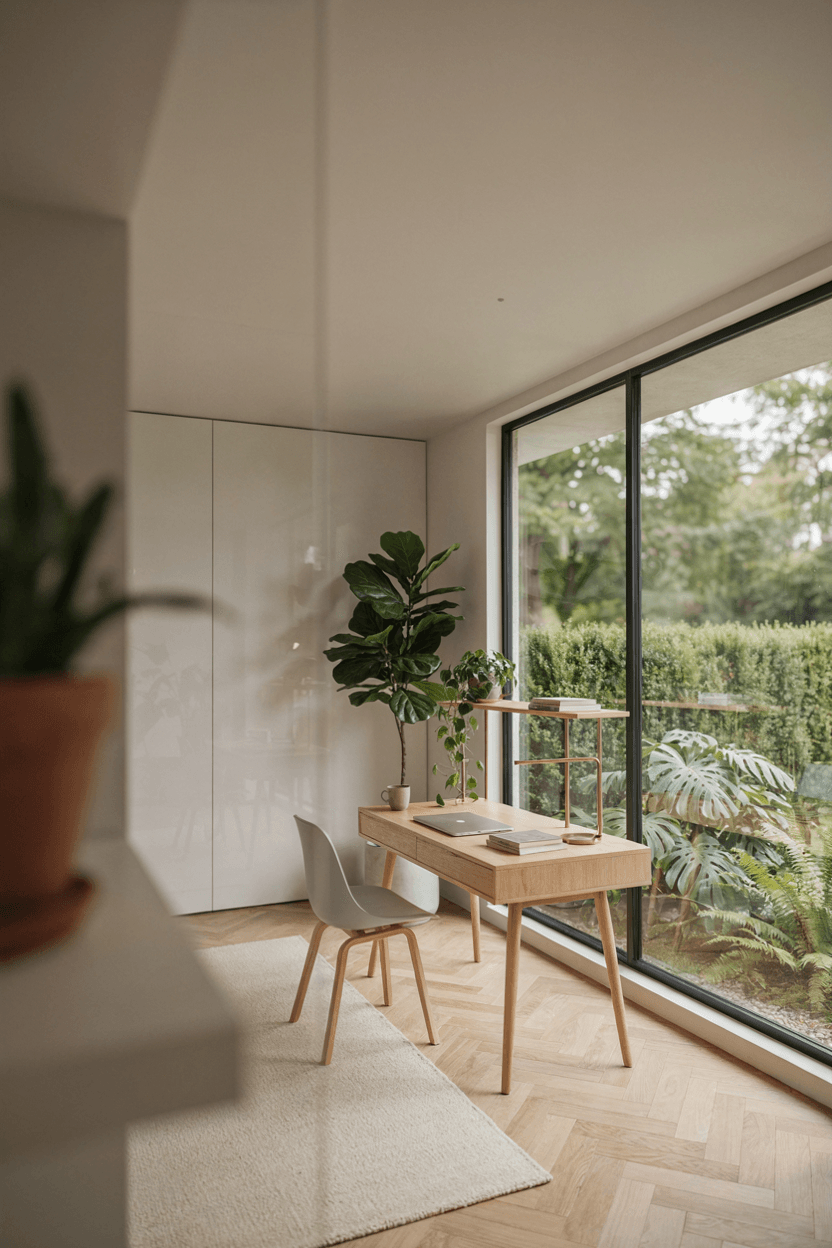
An office designed with a strong connection to the outdoors uses large windows, glazed doors, outdoor terraces, and interior planting to blur the boundary between the built workspace and the natural environment outside. The visual and physical access to nature reduces stress, improves mood, and creates a sense of openness and freedom that enclosed offices fundamentally cannot provide. It makes the office feel genuinely alive and connected.
This idea works best for offices with access to gardens, terraces, courtyards, or significant exterior views that can be maximized through architectural glazing and thoughtful interior planning. Position desks to face outward toward the exterior view and use glazed partition walls rather than solid ones to maintain visual connection throughout the entire floor. Adding an outdoor terrace with weatherproof working furniture extends the usable office space in good weather.
Best For: Offices with garden or terrace access that want a strong and restorative connection to the natural outdoors
Pro Tip: Position at least some desks directly facing the exterior view to give team members a daily natural outlook
23. Multi-Zone Office Interior
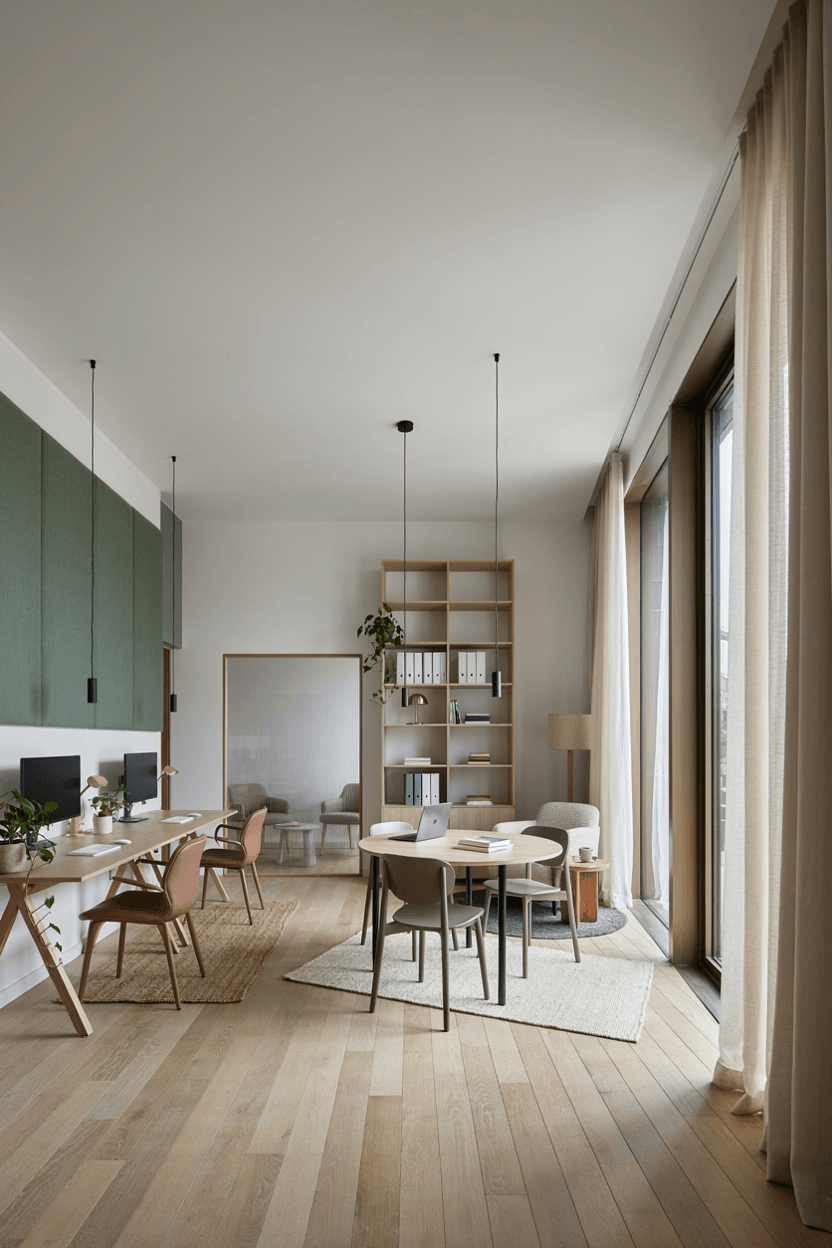
A multi-zone office interior divides the workspace into clearly defined areas for focused individual work, collaborative team activity, informal relaxation, private meetings, and social interaction. Each zone is designed with its own distinct furniture, lighting, and acoustic treatment to perfectly support the specific type of work or behavior intended for that area. It gives every employee the right environment for every type of task throughout the working day.
This idea works best for medium to large offices where a diverse workforce undertakes a wide variety of different work activities that require genuinely different physical environments to perform at their best. Use consistent materials and a unified color palette across all zones to ensure the office presents a cohesive interior rather than a collection of disconnected spaces. Clearly signposting each zone helps employees quickly navigate to the right environment for their current task.
Best For: Medium to large offices that need distinct and purpose-designed zones for every type of daily work activity
Pro Tip: Use a consistent material palette across all zones so the entire office reads as one unified and cohesive interior
Final Thoughts
A thoughtfully designed office interior has the power to transform productivity, boost morale, and communicate your brand values to everyone who walks through the door. These 23 office interior design ideas show how the right combination of layout, materials, lighting, and design philosophy can create a workspace that genuinely performs at the highest level.
Whether you prefer a clean minimalist environment, a bold industrial aesthetic, or a richly biophilic natural workspace, the right office interior design will make your team happier, more focused, and more inspired every single working day.

One Comment