20 Japandi Bedroom Ideas for Calm and Minimal Living
Introduction
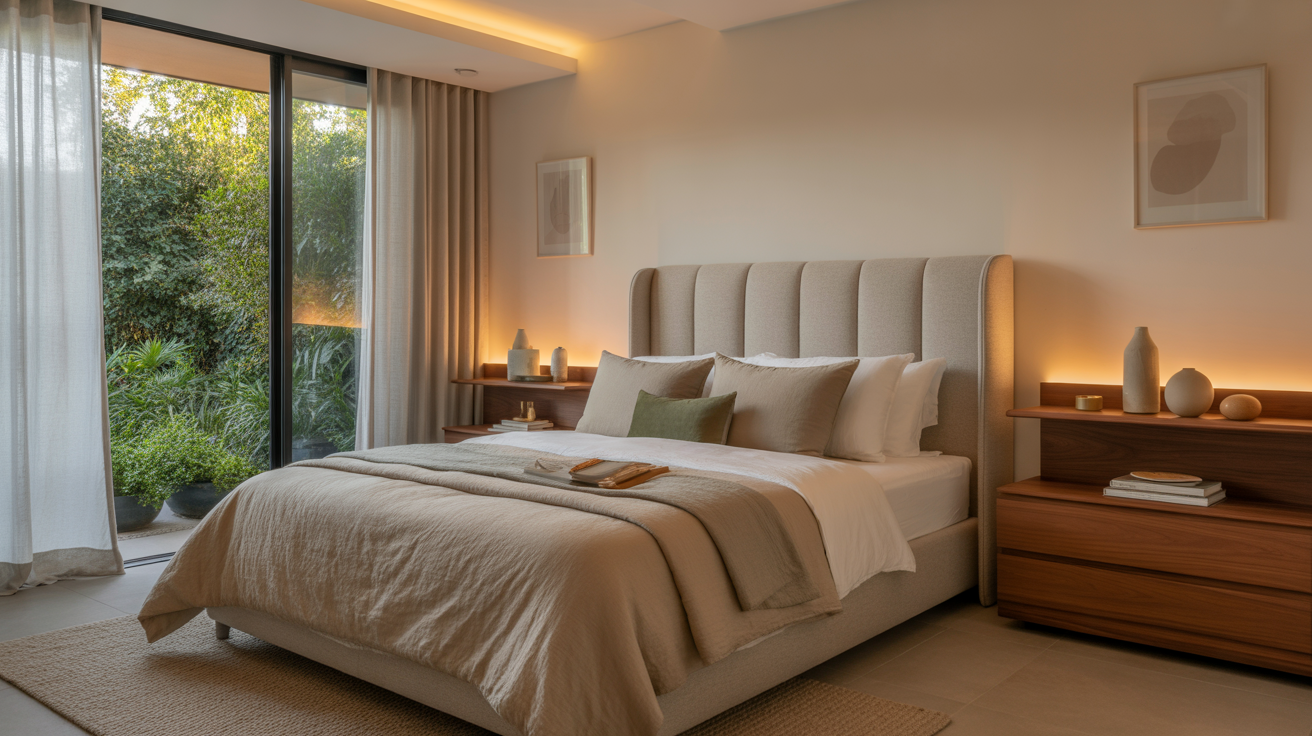
Japandi bedroom design is a perfect blend of Japanese minimalism and Scandinavian warmth, creating a calm, functional, and beautifully balanced living space. It focuses on simplicity, natural materials, and neutral colors to bring peace and harmony into the bedroom. This style removes clutter and promotes a more mindful and relaxing environment.
Japandi interiors are becoming popular because they combine elegance with comfort in a very natural way. Soft textures, clean lines, and earthy tones work together to create a soothing atmosphere. In this blog, we will explore 20 Japandi Bedroom Ideas to help you design a peaceful, modern, and minimalist bedroom space.
1. Minimal Japandi Bedroom
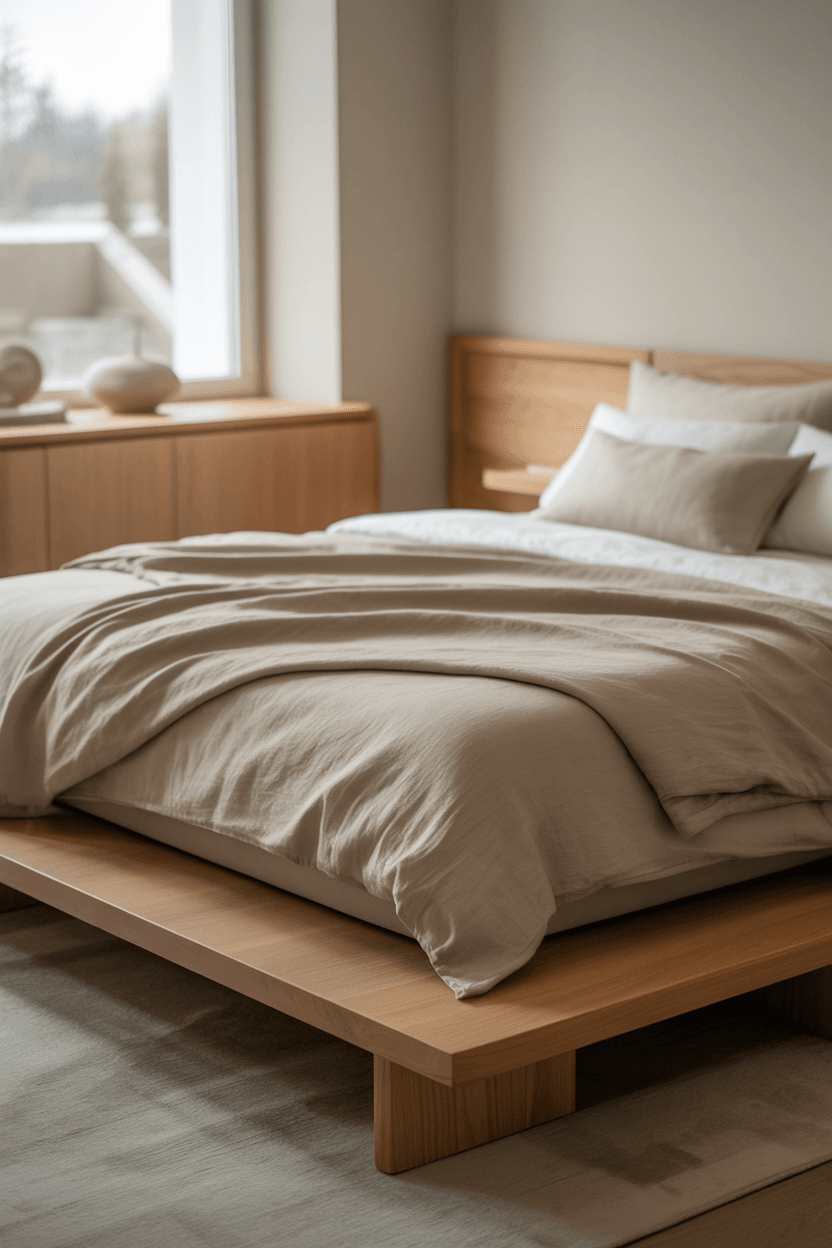
A minimal Japandi bedroom focuses on simplicity, clean layouts, and clutter-free design to create a calm sleeping environment. The use of neutral colors and simple furniture helps reduce visual noise and enhances relaxation. Every element in the room serves a purpose, keeping the space functional and peaceful.
This style works best in small and modern bedrooms where a clean and open feel is desired. It helps improve focus, comfort, and overall room balance without unnecessary decoration. A minimal Japandi bedroom feels calm, organized, and refreshing.
Best for: Small and modern bedrooms
Pro Tip: Keep only essential furniture pieces
2. Natural Wood Japandi Bedroom
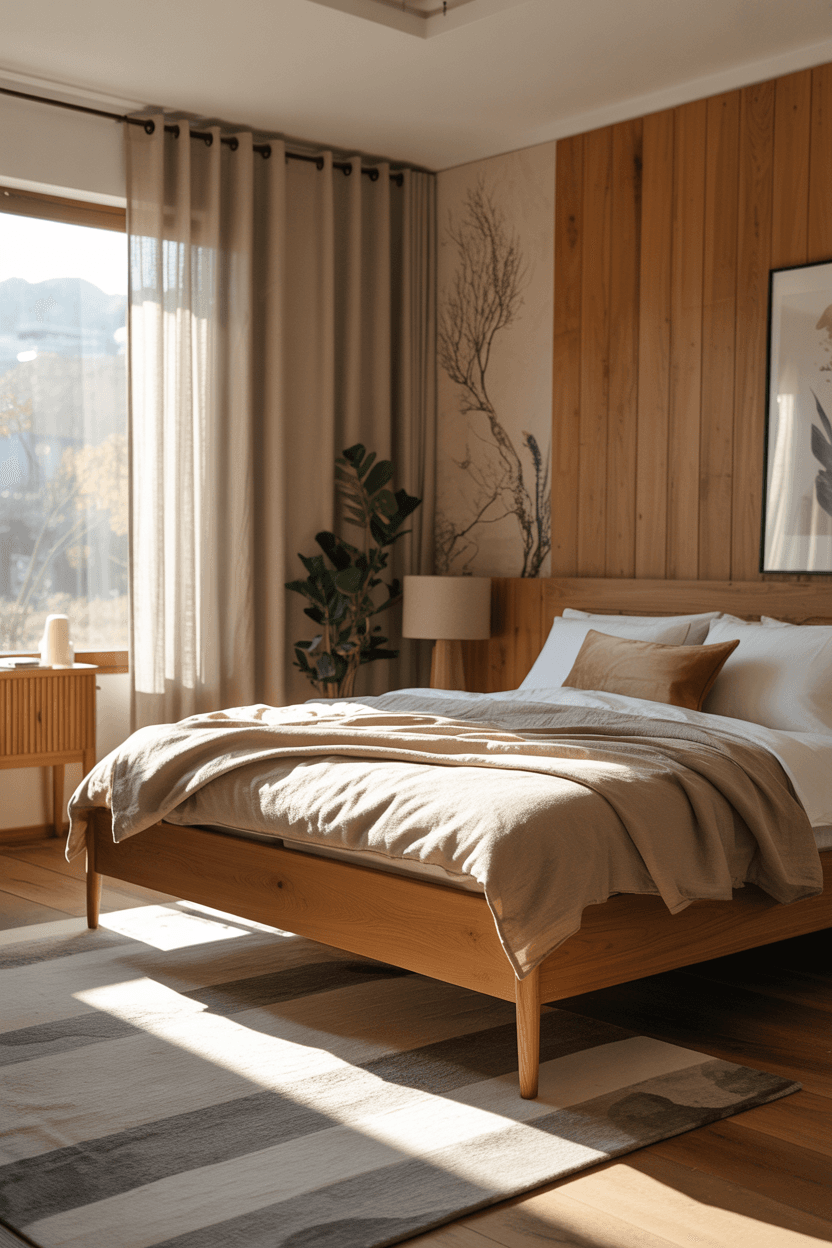
A natural wood Japandi bedroom uses light or medium-toned wooden furniture and finishes to create warmth and organic beauty in the space. The natural grain of wood adds texture and softness while keeping the overall design simple and grounded. It brings a strong connection to nature inside the room.
This style works best in bedrooms where a cozy yet minimal atmosphere is preferred. It balances the clean look of Japandi design with natural warmth, making the space feel inviting and peaceful. A wooden Japandi bedroom feels earthy, calming, and timeless.
Best for: Cozy and natural-inspired interiors
Pro Tip: Choose oak or ash wood for a soft aesthetic
3. Neutral Color Japandi Bedroom
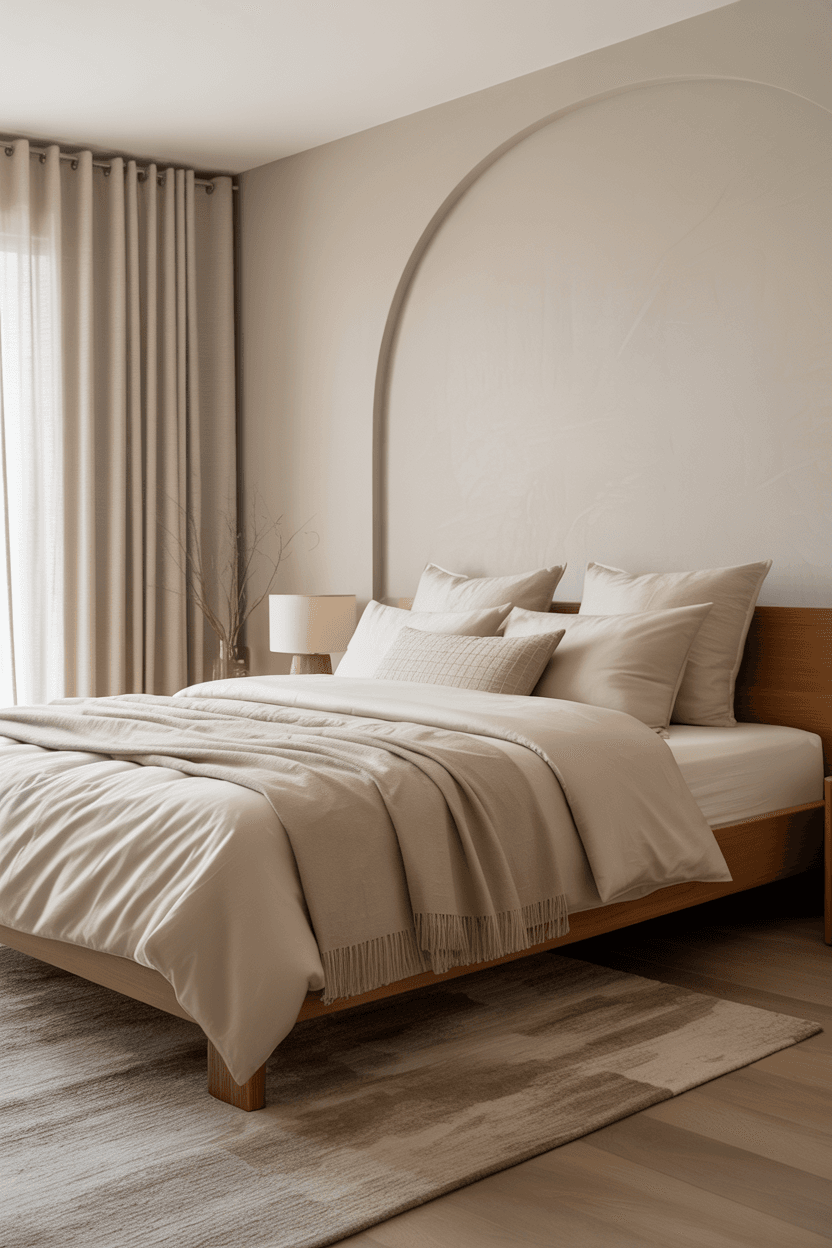
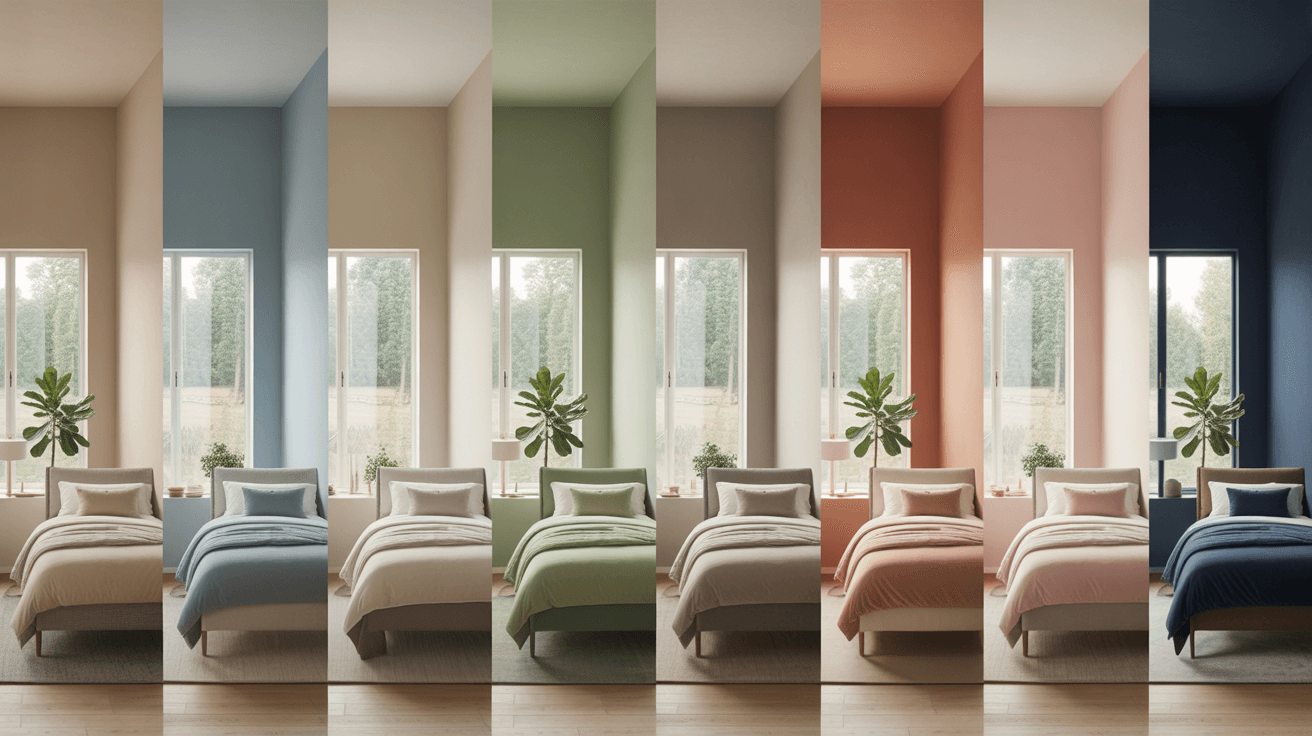
A neutral color Japandi bedroom uses soft shades like beige, cream, white, and light gray to create a calm and balanced atmosphere. These muted tones help reduce visual distractions and make the space feel more open, airy, and peaceful. The simplicity of the color palette enhances the minimalist Japandi style.
This design works best in bedrooms where relaxation and mental clarity are priorities. It creates a soothing environment that promotes rest and comfort without overwhelming the senses. A neutral Japandi bedroom feels clean, harmonious, and deeply calming.
Best for: Calm and minimalist interiors
Pro Tip: Stick to 2–3 neutral shades for consistency
4. Low Platform Bed Japandi Bedroom
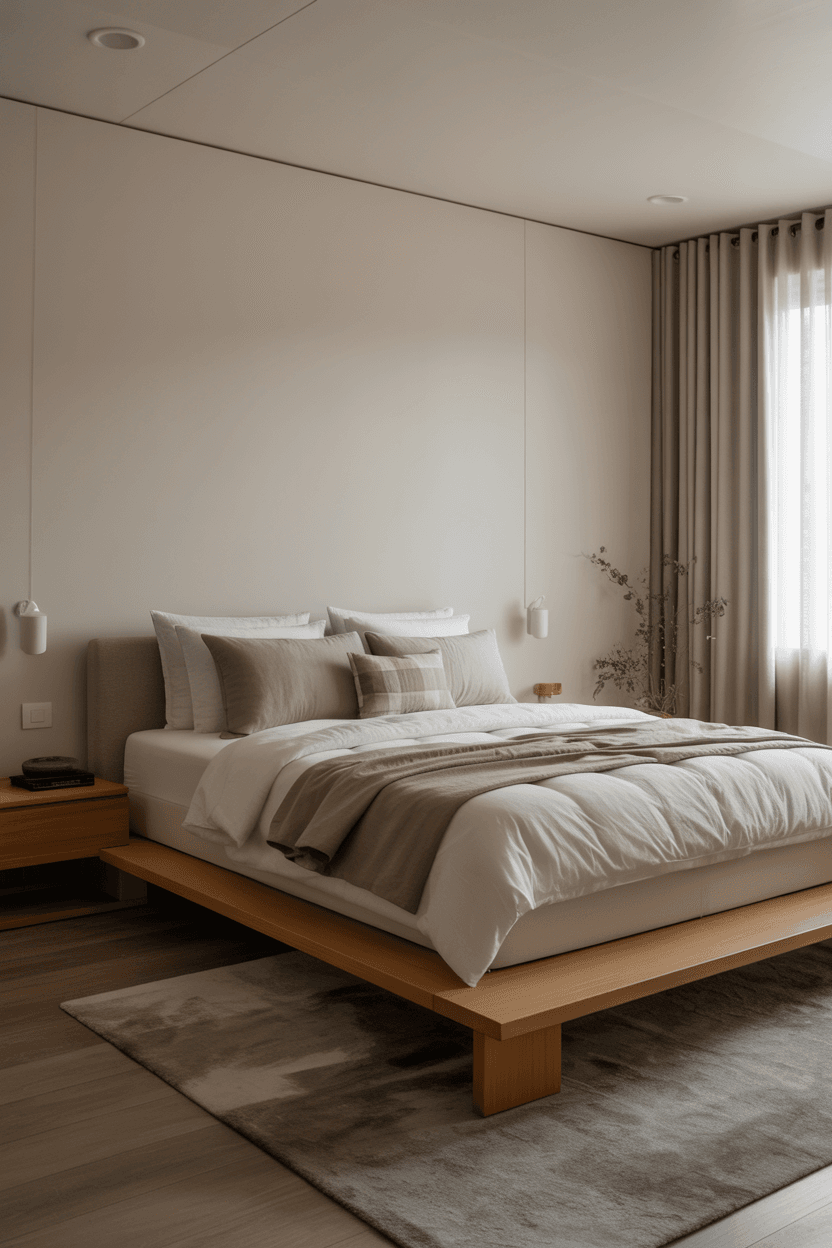
A low platform bed Japandi bedroom focuses on keeping furniture close to the ground to create a grounded and spacious feel. The low bed design reduces visual heaviness and aligns with traditional Japanese interior principles, promoting simplicity and balance. It makes the room feel more open and calm.
This style works best in small and medium bedrooms where maximizing space and maintaining minimalism is important. It enhances comfort while keeping the overall layout clean and uncluttered. A low platform bed Japandi bedroom feels modern, peaceful, and well-balanced.
Best for: Small and minimalist bedrooms
Pro Tip: Keep bedding simple and natural in texture
5. Japandi Bedroom with Natural Light
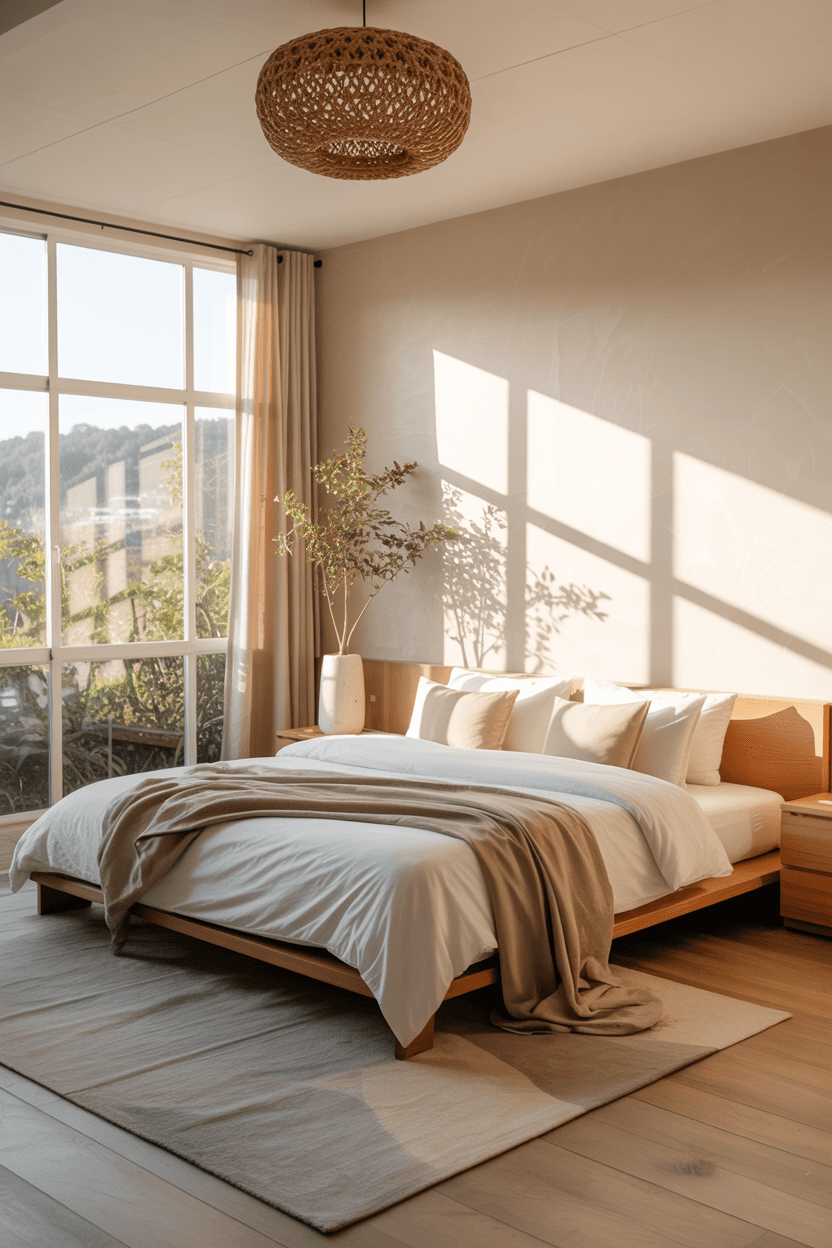
A Japandi bedroom with natural light focuses on maximizing sunlight through large windows, sheer curtains, and open layouts. Natural light enhances the soft color palette and highlights the simplicity of Japandi design. It creates a bright, airy, and refreshing atmosphere that feels connected to nature.
This style works best in rooms with good window access where daylight can be fully utilized. It improves mood, makes the space feel larger, and supports a healthy living environment. A naturally lit Japandi bedroom feels peaceful, open, and rejuvenating.
Best for: Bright and airy bedroom spaces
Pro Tip: Use sheer curtains to soften sunlight
6. Zen-Inspired Japandi Bedroom
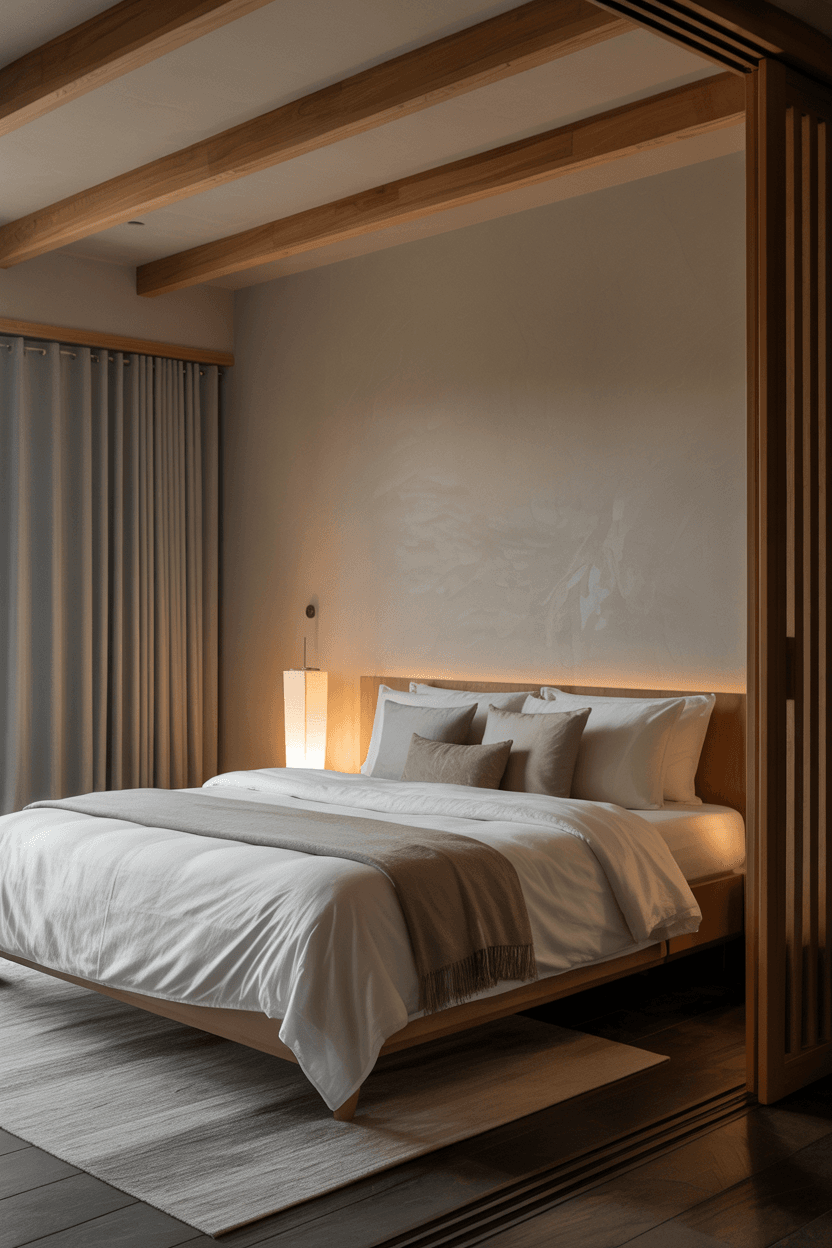
A Zen-inspired Japandi bedroom focuses on creating a deeply calming and balanced environment influenced by Japanese Zen philosophy. It uses minimal décor, soft textures, and natural elements to encourage relaxation and mindfulness. The space is intentionally simple to promote mental peace and clarity.
This style works best in bedrooms designed for rest and stress relief, where tranquility is the main goal. It removes unnecessary items and focuses on harmony between furniture, space, and light. A Zen Japandi bedroom feels peaceful, meditative, and emotionally soothing.
Best for: Relaxation-focused and mindful living
Pro Tip: Keep decor minimal and avoid visual clutter
7. Japandi Bedroom with Sliding Doors
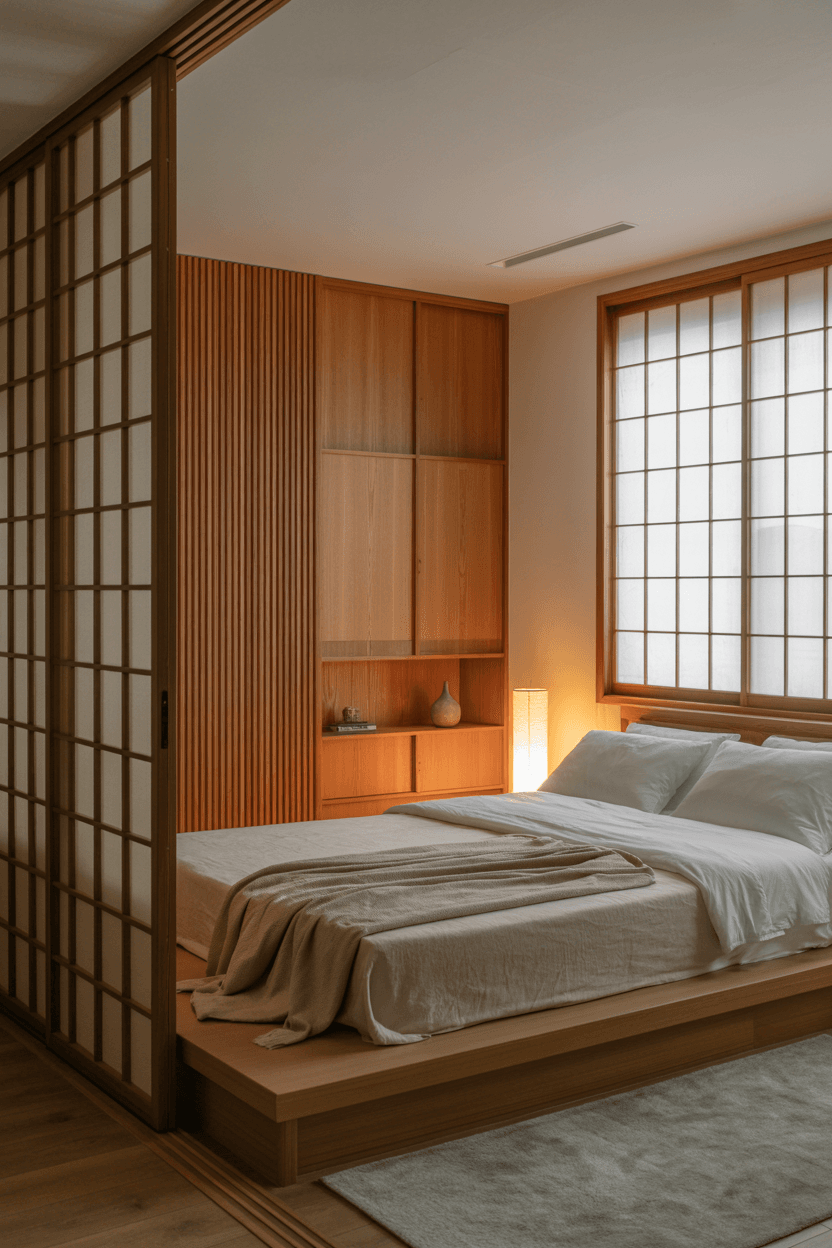
A Japandi bedroom with sliding doors uses simple wooden or paper-style sliding panels to save space and maintain a clean, seamless look. These doors replace traditional hinged doors, helping reduce clutter and improving movement within the room. They also enhance the minimalist and functional Japandi aesthetic.
This style works best in compact bedrooms or apartments where space efficiency is important. It creates a smooth, open flow between areas while keeping the design elegant and practical. A sliding door Japandi bedroom feels modern, organized, and space-conscious.
Best for: Small apartments and compact rooms
Pro Tip: Use light wood or neutral tones for harmony
8. Japandi Bedroom with Tatami Influence
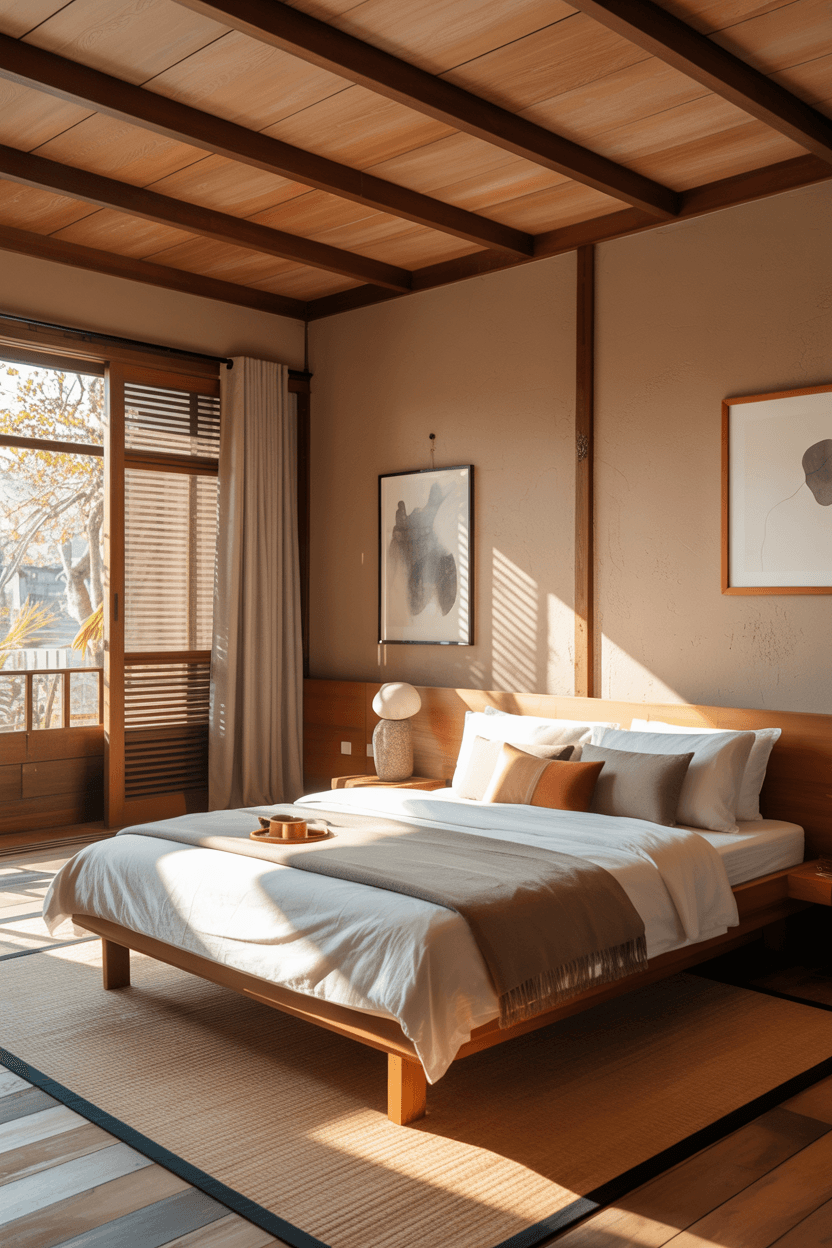
A Japandi bedroom with tatami influence brings traditional Japanese floor styling into a modern minimalist space. It often includes low furniture, natural straw-like textures, and a grounded layout that promotes simplicity and calmness. The design focuses on balance and a strong connection to nature.
This style works best in bedrooms where cultural authenticity and minimal living are appreciated. It creates a peaceful atmosphere that feels disciplined yet comfortable. A tatami-inspired Japandi bedroom feels serene, natural, and deeply balanced.
Best for: Traditional minimalist interiors
Pro Tip: Keep floor space open and uncluttered
9. Japandi Bedroom with Built-in Storage
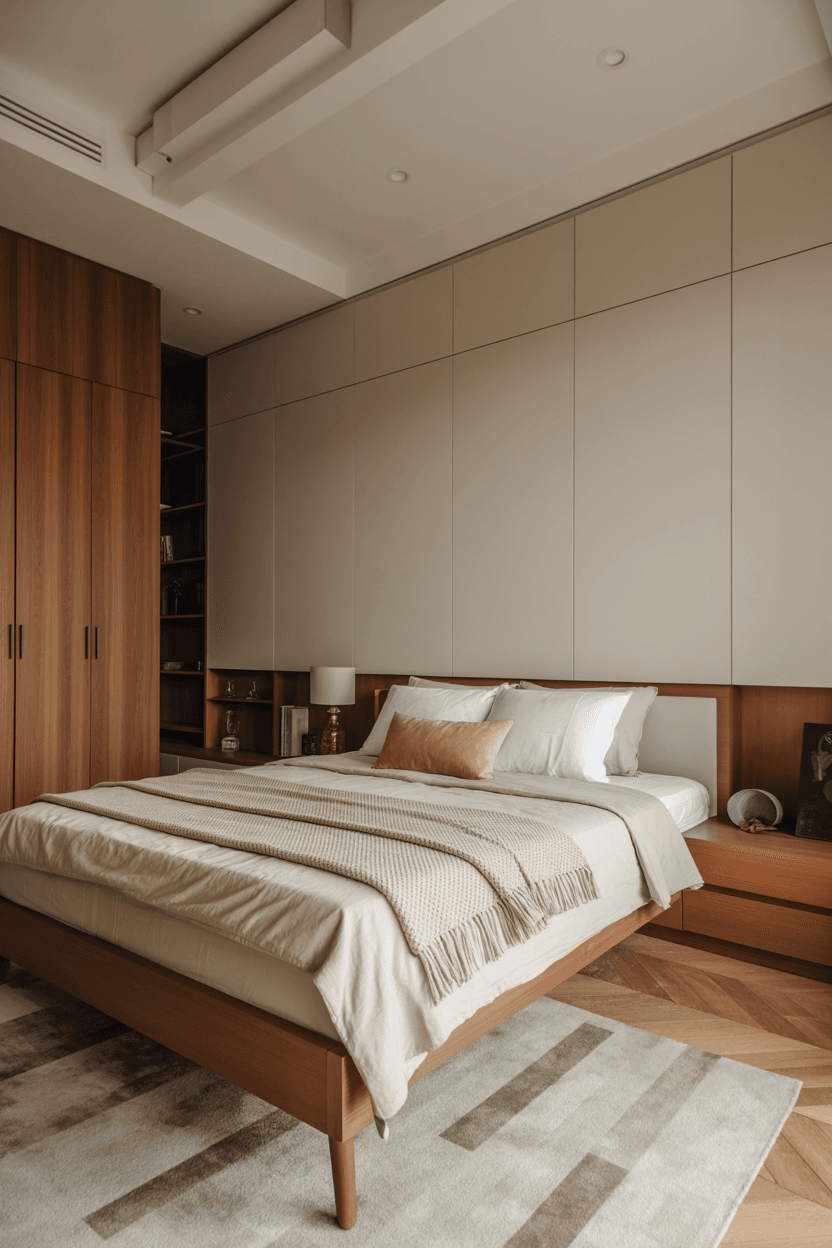
A Japandi bedroom with built-in storage focuses on smart space utilization by integrating cabinets, shelves, and drawers directly into the walls or bed structure. This keeps the room visually clean while ensuring everything has a proper place, which is a core principle of Japandi design. It helps maintain a clutter-free and peaceful environment.
This style works best in small or medium bedrooms where organization and simplicity are essential. It maximizes functionality without disturbing the minimal aesthetic of the space. A built-in storage Japandi bedroom feels tidy, efficient, and beautifully balanced.
Best for: Space-saving and organized bedrooms
Pro Tip: Use handle-less designs for a seamless look
10. Japandi Bedroom with Soft Lighting
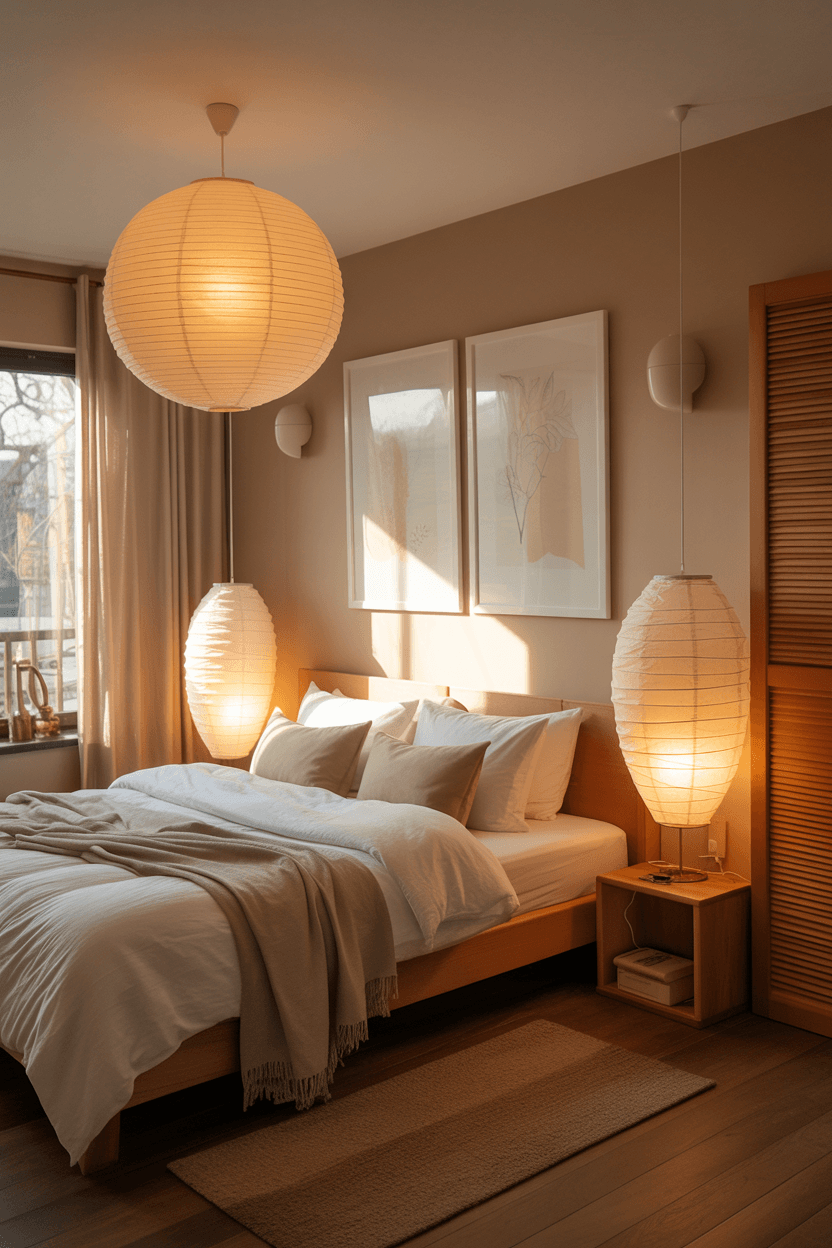
A Japandi bedroom with soft lighting uses warm, diffused light sources like paper lamps, hidden LEDs, or warm bulbs to create a calm and relaxing atmosphere. The gentle glow reduces harsh shadows and enhances the natural textures and neutral tones of the room. It supports a peaceful and cozy mood.
This style works best in bedrooms designed for relaxation and unwinding after a long day. It improves comfort while maintaining the minimalist and natural feel of Japandi interiors. A softly lit Japandi bedroom feels warm, soothing, and inviting.
Best for: Cozy and relaxing bedroom spaces
Pro Tip: Use warm white light instead of bright white
11. Japandi Bedroom with Indoor Plants
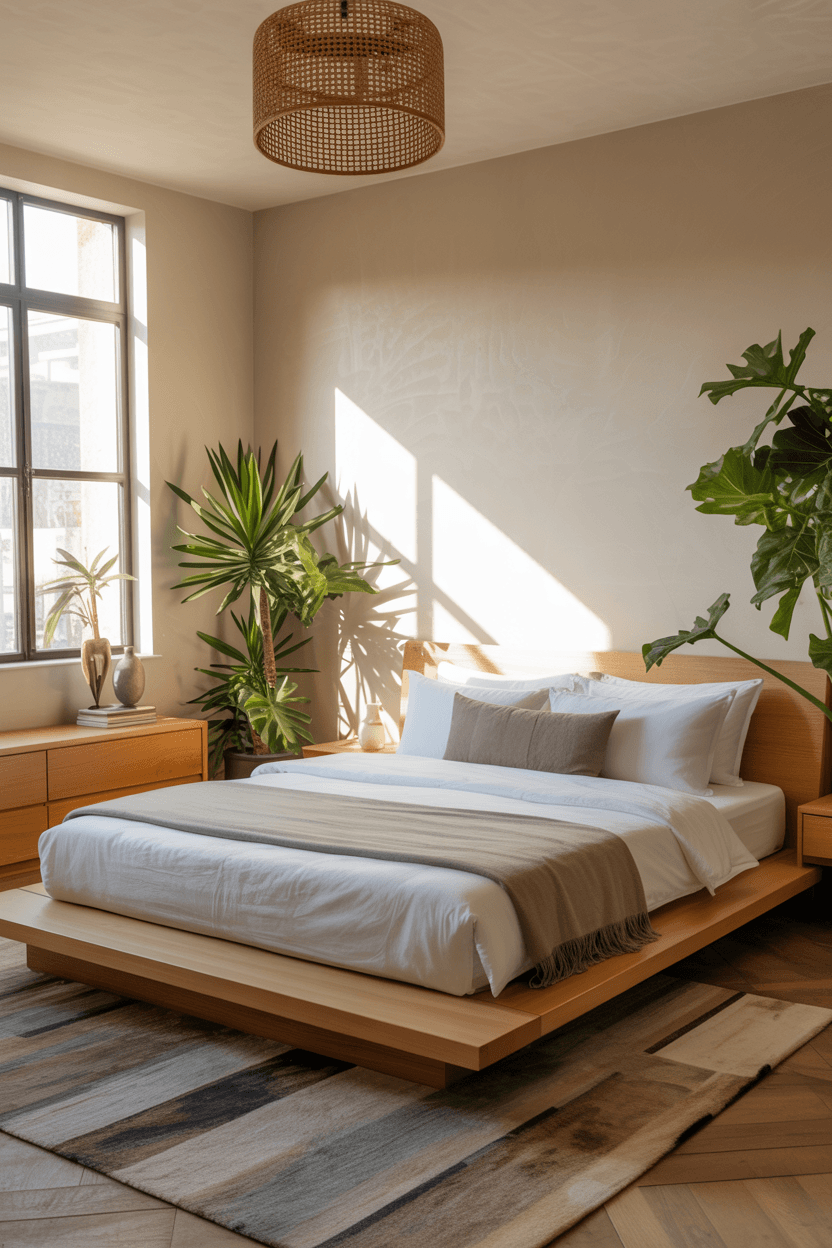
A Japandi bedroom with indoor plants brings natural freshness into the space by adding greenery in a minimal and balanced way. Plants like bonsai, snake plants, or peace lilies enhance the calm atmosphere while keeping the design clean and uncluttered. They improve air quality and connect the room with nature.
This style works best in minimalist bedrooms where natural elements are used to add life without overwhelming the space. It creates a peaceful and refreshing environment that feels both modern and organic. A plant-filled Japandi bedroom feels calm, alive, and naturally beautiful.
Best for: Nature-inspired minimalist interiors
Pro Tip: Use a few carefully placed plants instead of many
12. Japandi Bedroom with Tatami Mat Flooring
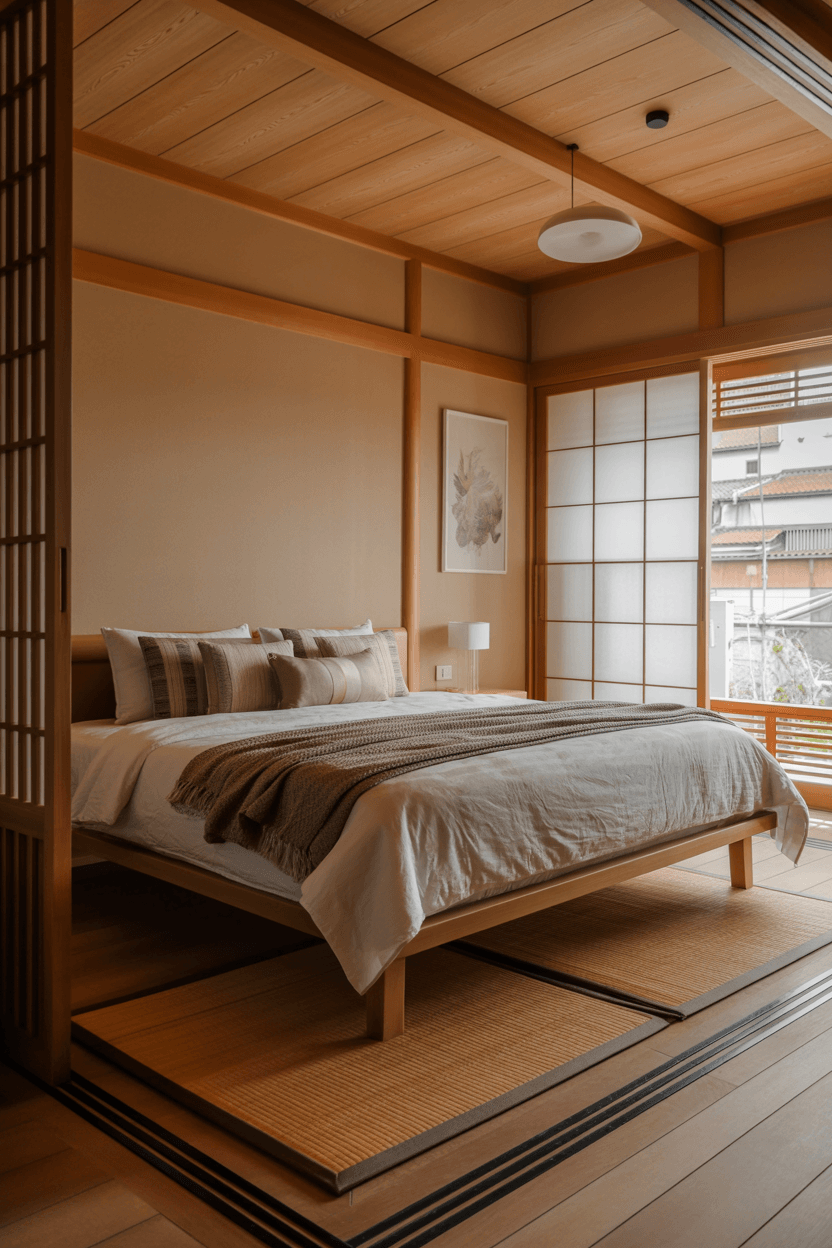
A Japandi bedroom with tatami mat flooring uses traditional woven mats to create a grounded, natural, and minimalist sleeping environment. The texture of tatami adds warmth and authenticity while maintaining a simple and uncluttered aesthetic. It encourages a calm and mindful lifestyle.
This style works best in bedrooms inspired by Japanese tradition and minimalist living principles. It creates a soft and natural base that enhances relaxation and balance. A tatami flooring Japandi bedroom feels peaceful, cultural, and deeply serene.
Best for: Traditional and Zen-inspired bedrooms
Pro Tip: Keep furniture low to match tatami aesthetics
13. Japandi Bedroom with Accent Wall
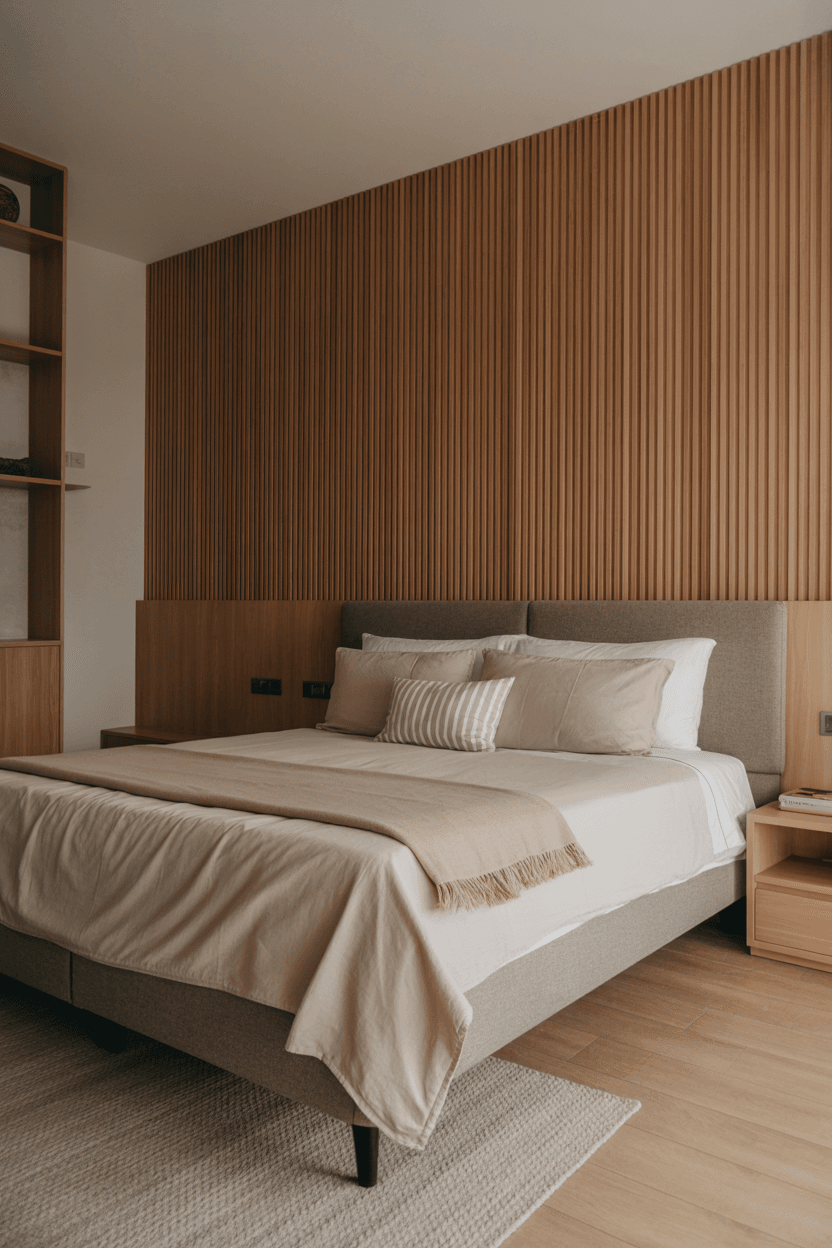
A Japandi bedroom with an accent wall uses a single subtle yet impactful wall treatment to create visual focus while maintaining a minimalist aesthetic. This could be achieved with natural wood panels, soft earthy paint tones, or textured plaster that adds depth without overwhelming the space. It helps define the bedroom’s character simply and elegantly.
This style works best in bedrooms where a touch of contrast is needed without disturbing the calm Japandi vibe. It creates balance by highlighting one area while keeping the rest of the room neutral and clean. An accent wall Japandi bedroom feels refined, modern, and thoughtfully designed.
Best for: Modern minimalist bedrooms
Pro Tip: Use muted earth tones for a natural look
14. Japandi Bedroom with Minimal Decor
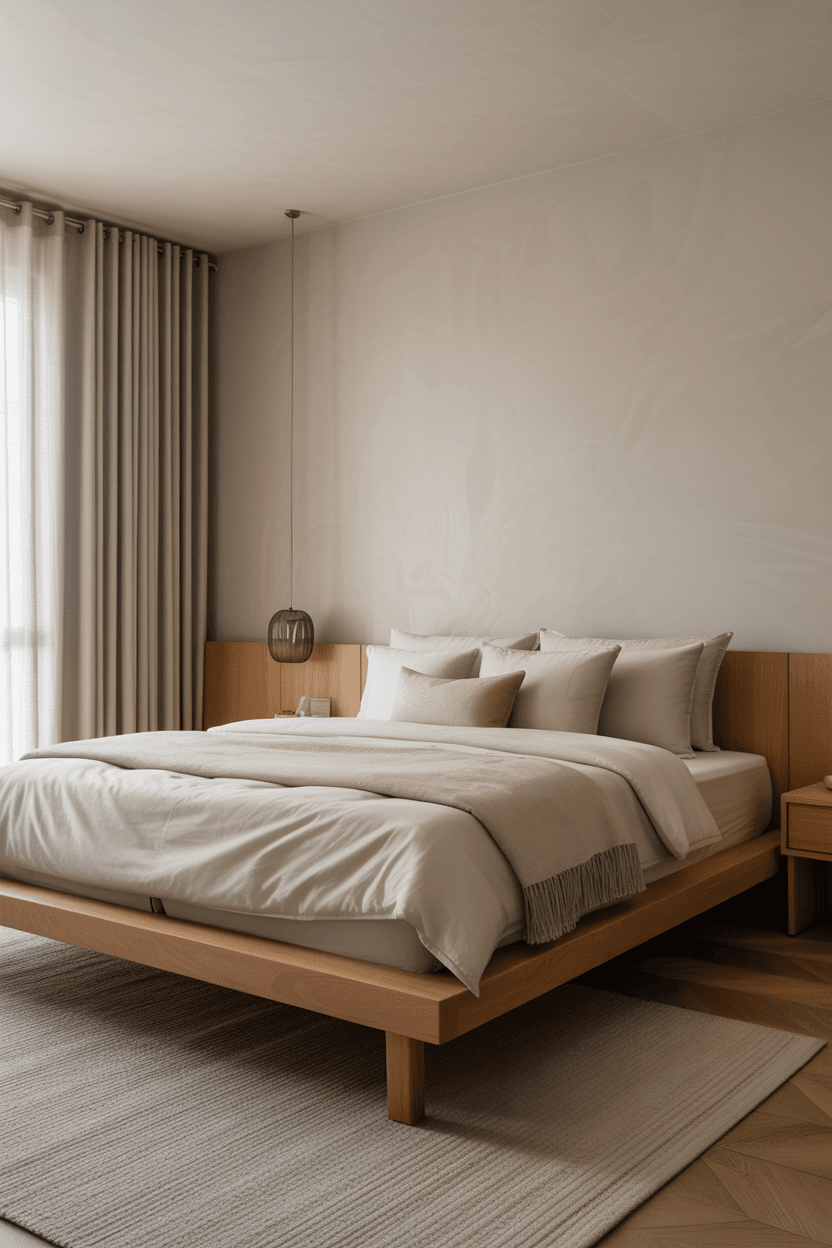
A Japandi bedroom with minimal decor focuses on keeping only essential and meaningful items in the space to maintain a clean and peaceful environment. Every decorative element is carefully chosen to serve both function and beauty, avoiding unnecessary clutter. This creates a calm and visually balanced atmosphere.
This style works best in bedrooms where simplicity and mental clarity are the main priorities. It allows the architecture, light, and materials to stand out without distraction. A minimal decor Japandi bedroom feels spacious, calming, and effortlessly elegant.
Best for: Clean and clutter-free interiors
Pro Tip: Follow a “less but meaningful” decor approach
15. Japandi Bedroom with Natural Textures
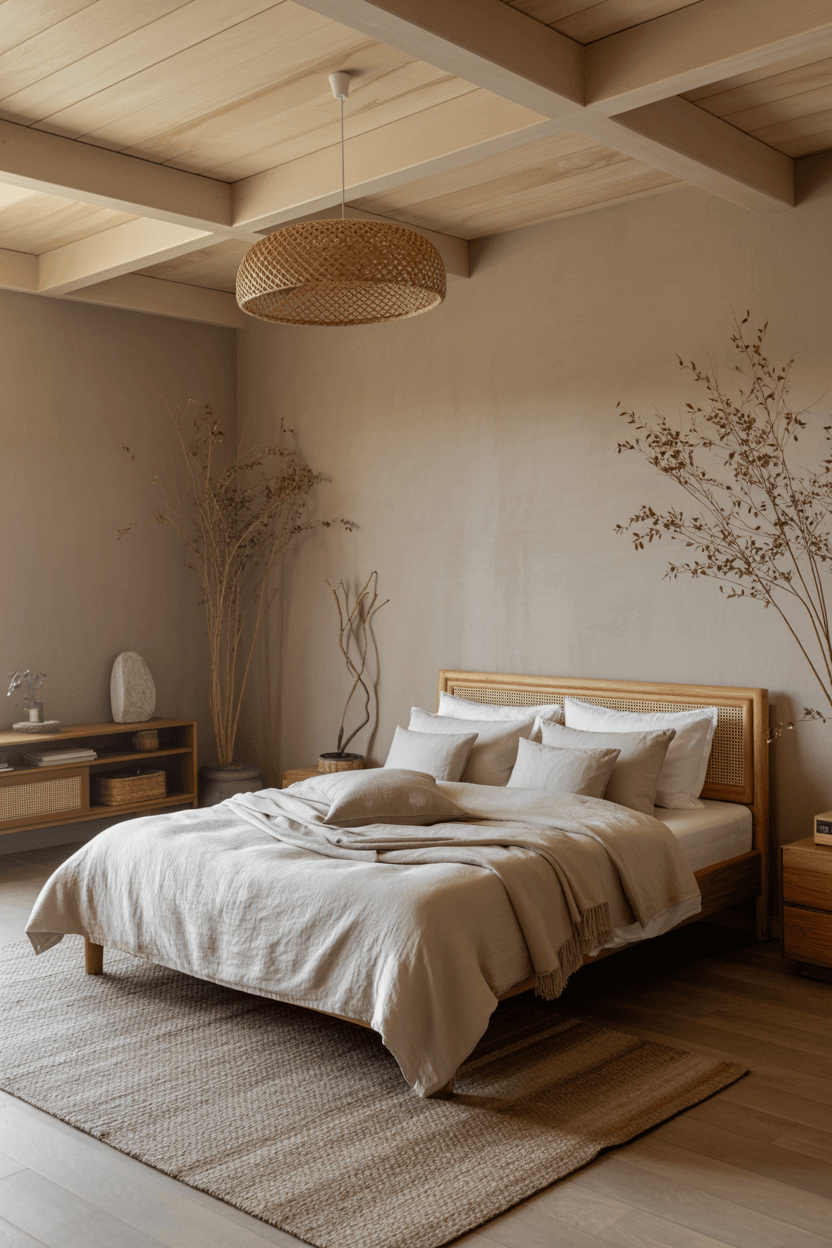
A Japandi bedroom with natural textures uses materials like linen, cotton, wool, wood, and stone to create a warm and organic atmosphere. These textures add subtle depth and comfort while maintaining the simplicity that Japandi design is known for. The mix of soft and raw materials creates a balanced and grounded space.
This style works best in bedrooms where comfort and natural living are prioritized over heavy decoration. It enhances the sensory feel of the room while keeping everything visually calm and cohesive. A naturally textured Japandi bedroom feels warm, peaceful, and connected to nature.
Best for: Organic and cozy minimalist interiors
Pro Tip: Combine 2–3 natural materials for harmony
16. Japandi Bedroom with Neutral Bedding Layers
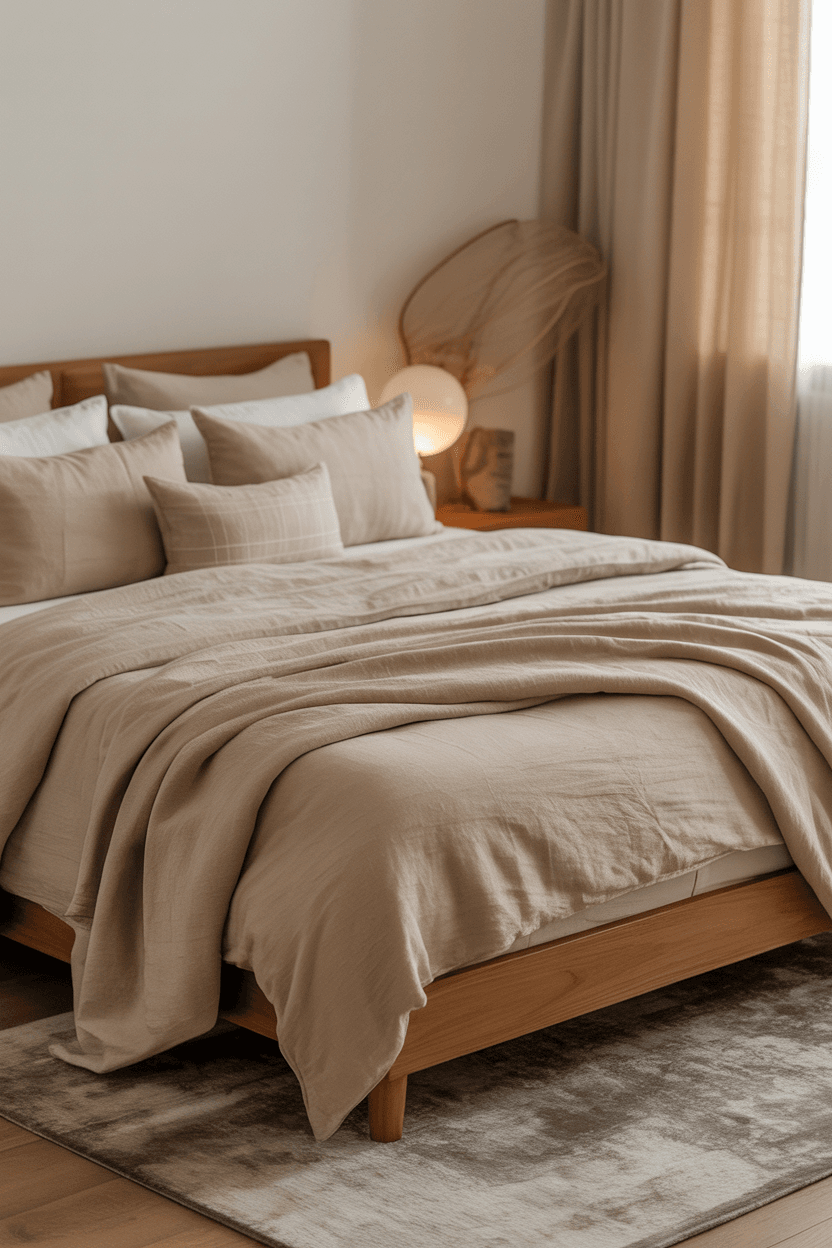
A Japandi bedroom with neutral bedding layers focuses on soft, layered textiles in calming shades like beige, cream, gray, and off-white. The layered bedding adds comfort and warmth while maintaining a clean and minimal aesthetic. It enhances coziness without making the bed look heavy or cluttered.
This style works best in bedrooms where comfort and simplicity are equally important. It creates a soft, inviting sleeping space that feels calm and well-balanced. A neutral layered Japandi bedroom feels cozy, elegant, and perfectly minimal.
Best for: Cozy minimalist bedrooms
Pro Tip: Use breathable natural fabrics like linen or cotton
17. Japandi Bedroom with Wooden Ceiling Beams
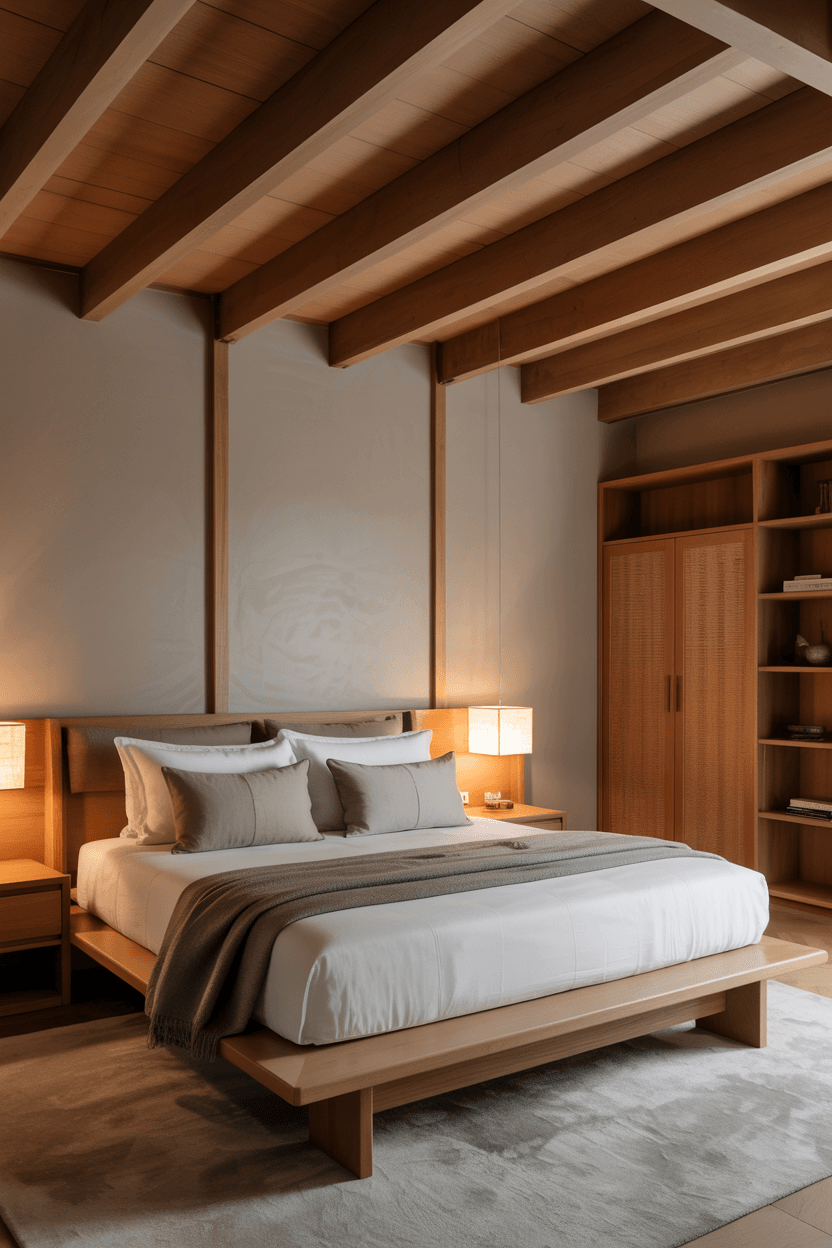
A Japandi bedroom with wooden ceiling beams highlights structural wood elements to add warmth, depth, and natural character to the space. The exposed beams create a strong architectural feature while still maintaining the simplicity and balance of Japandi design. It brings a cozy, organic feel to the room.
This style works best in spacious bedrooms or attic-style interiors where ceiling details can be emphasized. It enhances the natural aesthetic while adding a subtle rustic charm. A wooden beam Japandi bedroom feels grounded, warm, and architecturally beautiful.
Best for: Rustic-modern and spacious bedrooms
Pro Tip: Keep wood tones consistent for a unified look
18. Japandi Bedroom with Floor Cushions Seating
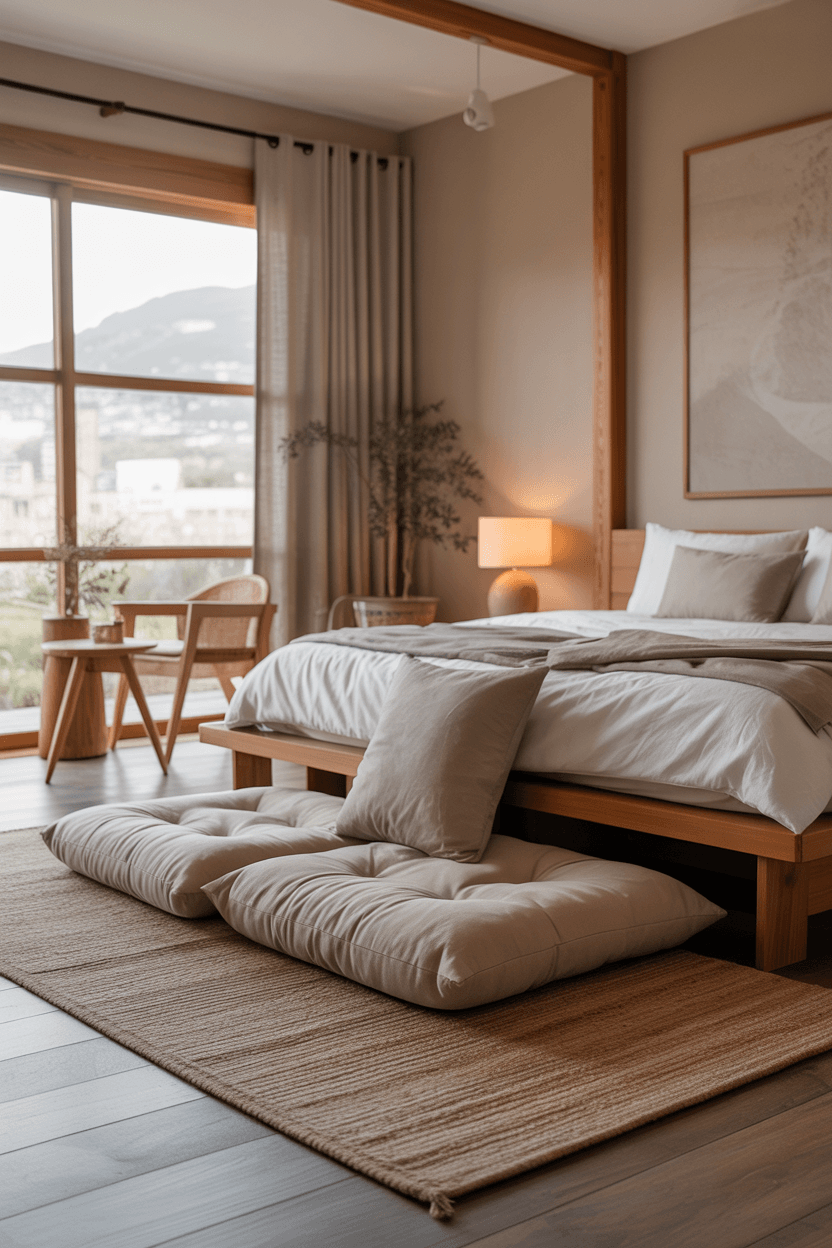
A Japandi bedroom with floor cushions seating creates a relaxed and low-profile lounging area that matches the simplicity of the design style. Soft cushions, poufs, and minimal rugs are placed on the floor to form a comfortable corner for reading, relaxing, or meditating. It keeps the space open and uncluttered.
This style works best in bedrooms where flexibility and comfort are important without adding bulky furniture. It enhances the peaceful atmosphere while maintaining a grounded and casual feel. A floor seating Japandi bedroom feels calm, flexible, and cozy.
Best for: Relaxed and multifunctional bedrooms
Pro Tip: Use neutral-toned cushions for visual harmony
19. Japandi Bedroom with Paper Lantern Lighting
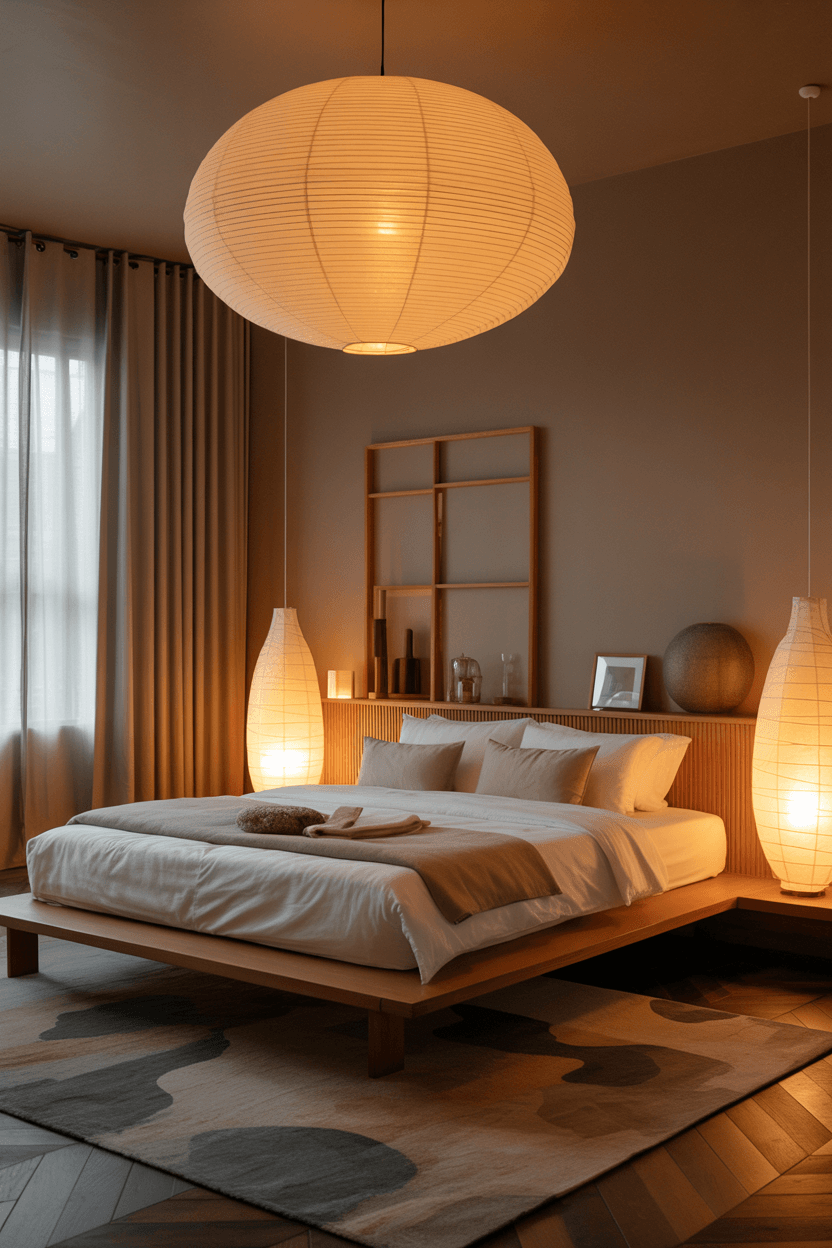
A Japandi bedroom with paper lantern lighting uses soft, diffused light fixtures inspired by traditional Japanese design. These lanterns spread gentle light across the room, reducing harsh shadows and creating a calm, peaceful atmosphere. The simple design fits perfectly with the minimal Japandi aesthetic.
This style works best in bedrooms where relaxation and warmth are the main focus. It enhances the natural materials and neutral tones in the space while keeping everything visually soft and balanced. A paper lantern Japandi bedroom feels cozy, serene, and elegant.
Best for: Calm and minimal interiors
Pro Tip: Choose warm white bulbs for a soothing glow
20. Japandi Bedroom with Statement Floor Rug
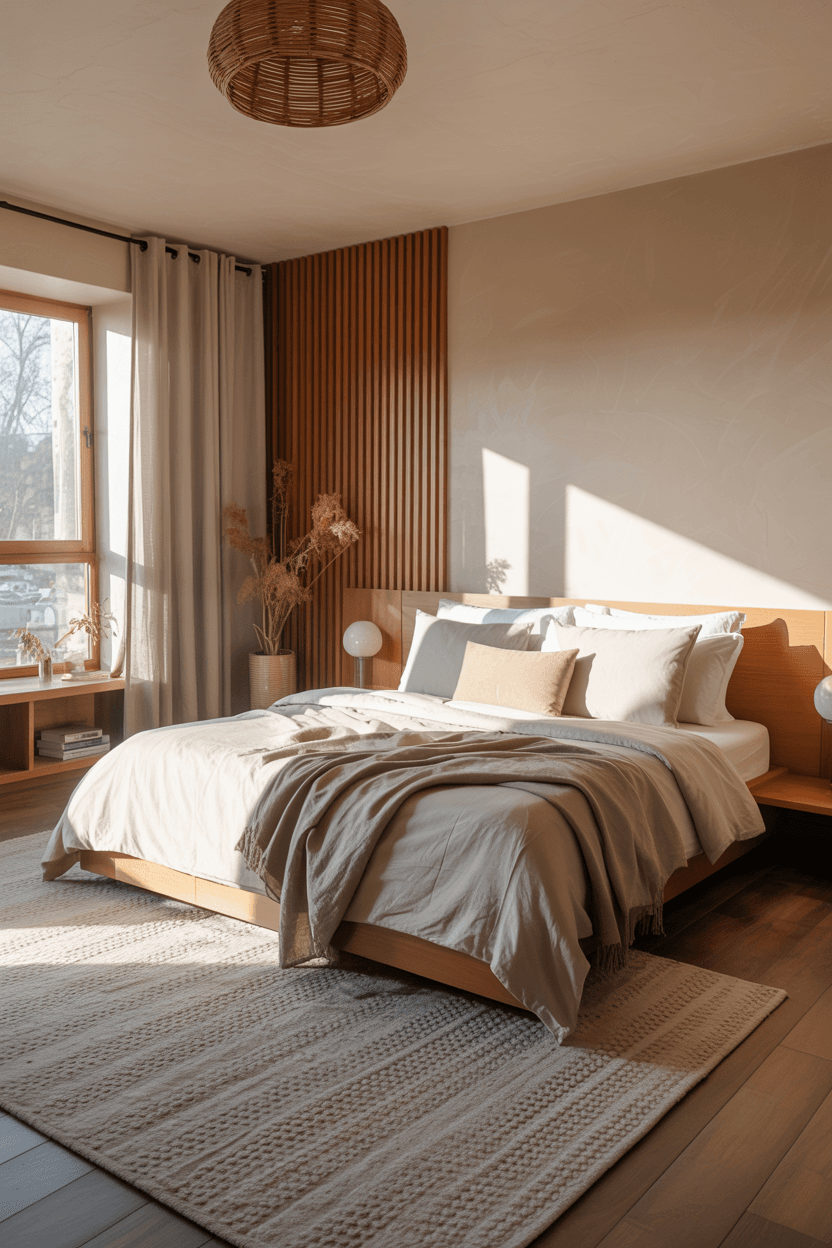
A Japandi bedroom with a statement floor rug uses a large, simple, and textured rug to define the sleeping area and add warmth to the space. The rug acts as a grounding element that brings softness underfoot while enhancing the calm and minimal Japandi aesthetic. It helps connect all furniture pieces visually.
This style works best in bedrooms where you want to add comfort without cluttering the space. It improves coziness while keeping the design clean and balanced. A statement rug Japandi bedroom feels warm, structured, and visually harmonious.
Best for: Cozy and minimalist bedrooms
Pro Tip: Choose neutral or earthy tones for balance
Final Thoughts
Japandi bedroom design is all about simplicity, natural beauty, and peaceful living. It combines Japanese minimalism with Scandinavian warmth to create spaces that feel calm, functional, and beautifully balanced. Every design element is intentional, focusing on comfort and clarity.
By using these 20 Japandi Bedroom Ideas, you can easily transform any bedroom into a serene and stylish retreat. The key is to keep things minimal, use natural materials, and maintain harmony in colors and textures.