22 Rustic Mexican Dining Room Ideas to Add Warmth and Charm

There’s something undeniably magical about rustic Mexican dining rooms. The moment you step into one, you’re greeted with warmth, earthy textures, and a sense of togetherness that makes every meal feel like a celebration. The blend of bold colors, handcrafted details, and natural materials creates an atmosphere where memories are shared as easily as the food on the table.
In this guide, we’ll explore 22 rustic Mexican dining room ideas that capture both tradition and modern style. Each idea balances authenticity with cozy comfort, helping you design a dining space that feels soulful and inviting. Whether you love bright pops of color, old-world charm, or a modern rustic mix, you’ll find inspiration that transforms your dining room into a place where family and friends gather joyfully.
1. Hand-Carved Wooden Dining Table
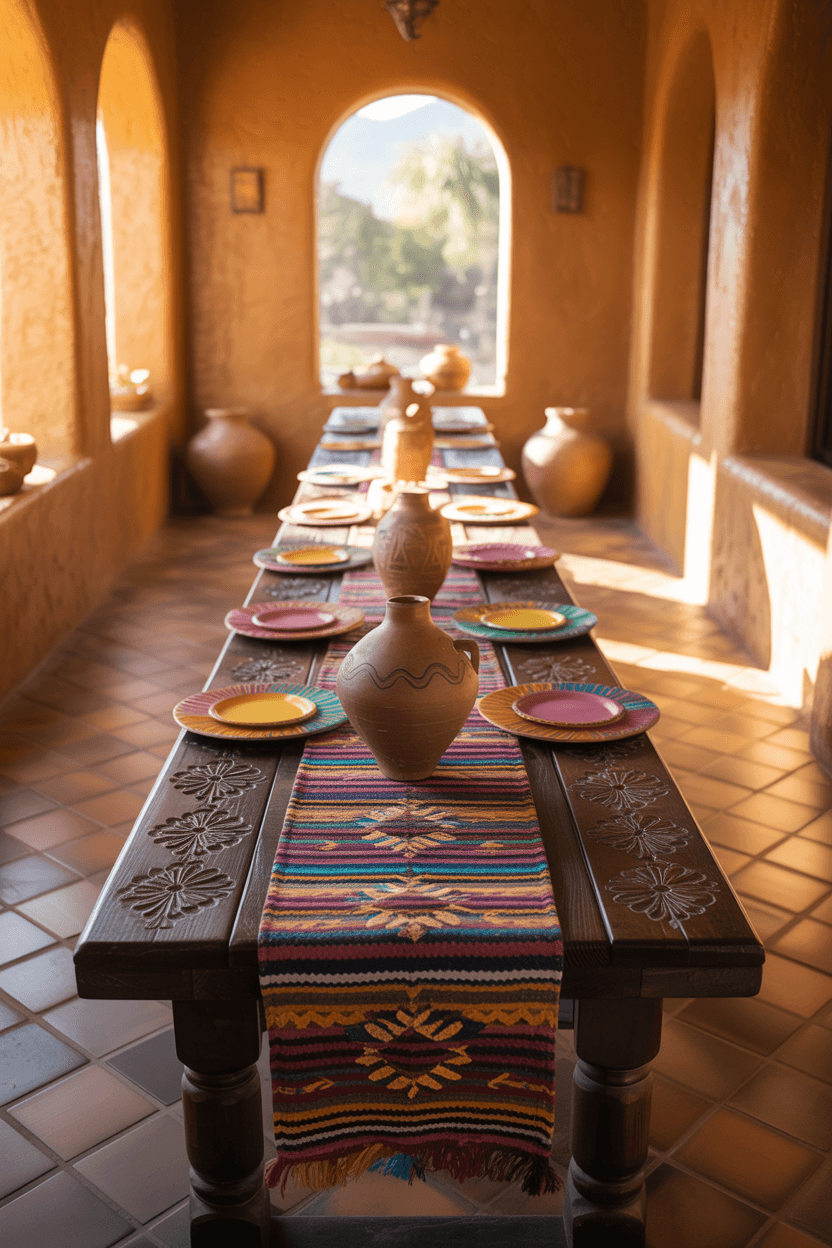
A hand-carved wooden table is the heart of a rustic Mexican dining room. The intricate patterns and artisanal detailing bring heritage into the space, turning the table into more than just a piece of furniture—it becomes a statement of culture and craftsmanship. Its solid structure also makes it perfect for large gatherings, creating a welcoming environment for family feasts and fiestas.
Pairing this kind of table with colorful woven table runners or clay pottery makes the rustic look even more authentic. The texture of the natural wood contrasts beautifully with vibrant Mexican textiles, balancing rustic simplicity with artistic flair.
Best For: Homeowners who want an authentic focal point that adds history and character.
Pro Tip: Choose a darker stain for a more traditional hacienda feel, or leave it natural for a lighter, modern rustic style.
2. Talavera Tile Accents
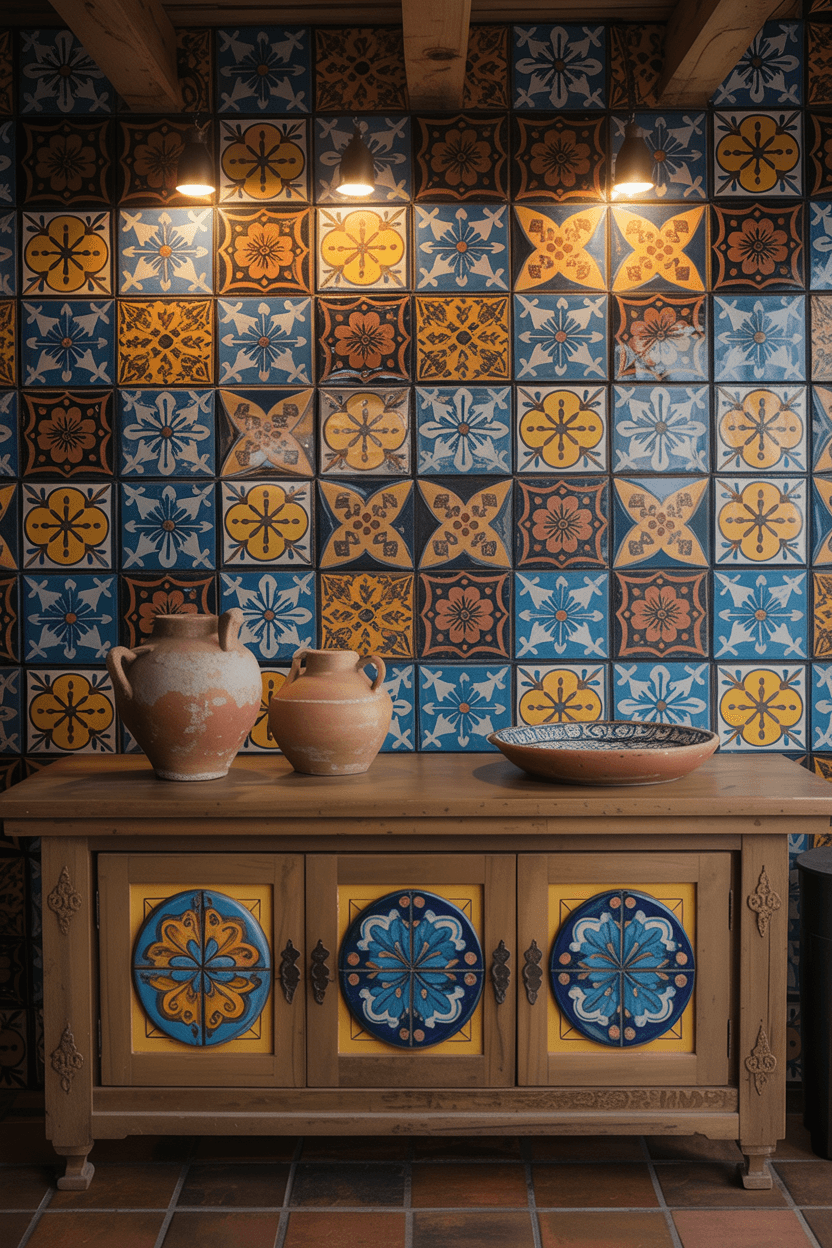
Talavera tiles bring life and energy to rustic Mexican dining spaces. Their bold patterns and vivid colors create stunning accents for walls, sideboards, or even tabletops. Adding these tiles can instantly brighten the room while keeping it grounded in cultural tradition.
They also work beautifully as a dining room backdrop, whether in a tiled accent wall or framed artwork. With designs ranging from florals to geometrics, Talavera tiles ensure no two spaces feel the same, giving your dining area a personalized, artistic charm.
Best For: Those who love bold patterns and want to highlight authentic Mexican artistry.
Pro Tip: Use Talavera tiles in small doses—like borders or tabletops—so they add vibrancy without overwhelming the entire room.
3. Wrought Iron Chandeliers
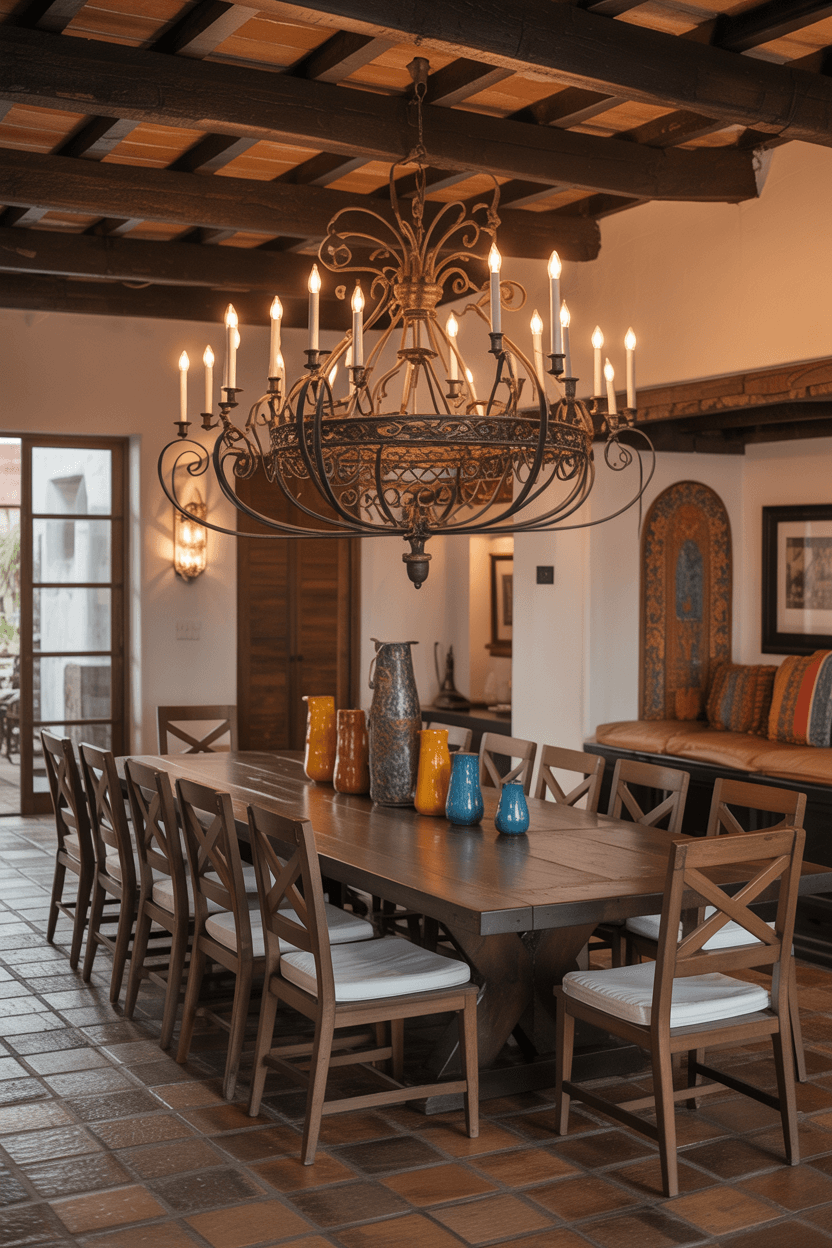
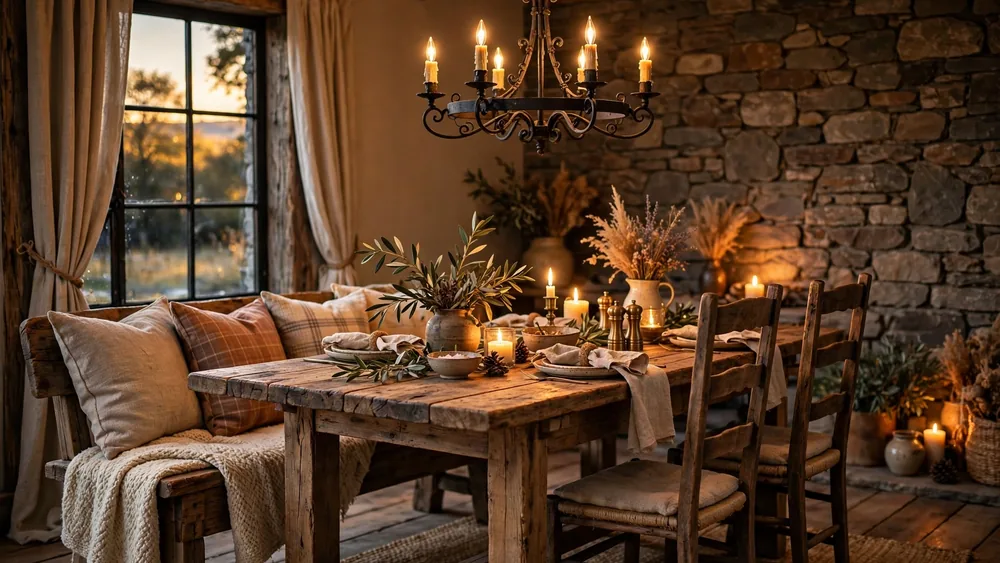
Lighting plays a huge role in rustic Mexican dining design, and wrought iron chandeliers bring the perfect blend of old-world charm and elegance. Their dark, heavy frames pair beautifully with wooden ceilings or beams, creating a striking focal point above the dining table.
Whether you choose a simple lantern-style chandelier or one with elaborate scrollwork, wrought iron lighting enhances the rustic mood of the space. Add warm-toned bulbs or candles to create a golden glow that feels cozy and inviting for every meal.
Best For: Homes with high ceilings or open dining areas that need a dramatic rustic touch.
Pro Tip: Consider pairing your wrought iron chandelier with wall sconces to balance the lighting while enhancing the hacienda vibe.
4. Brightly Painted Walls
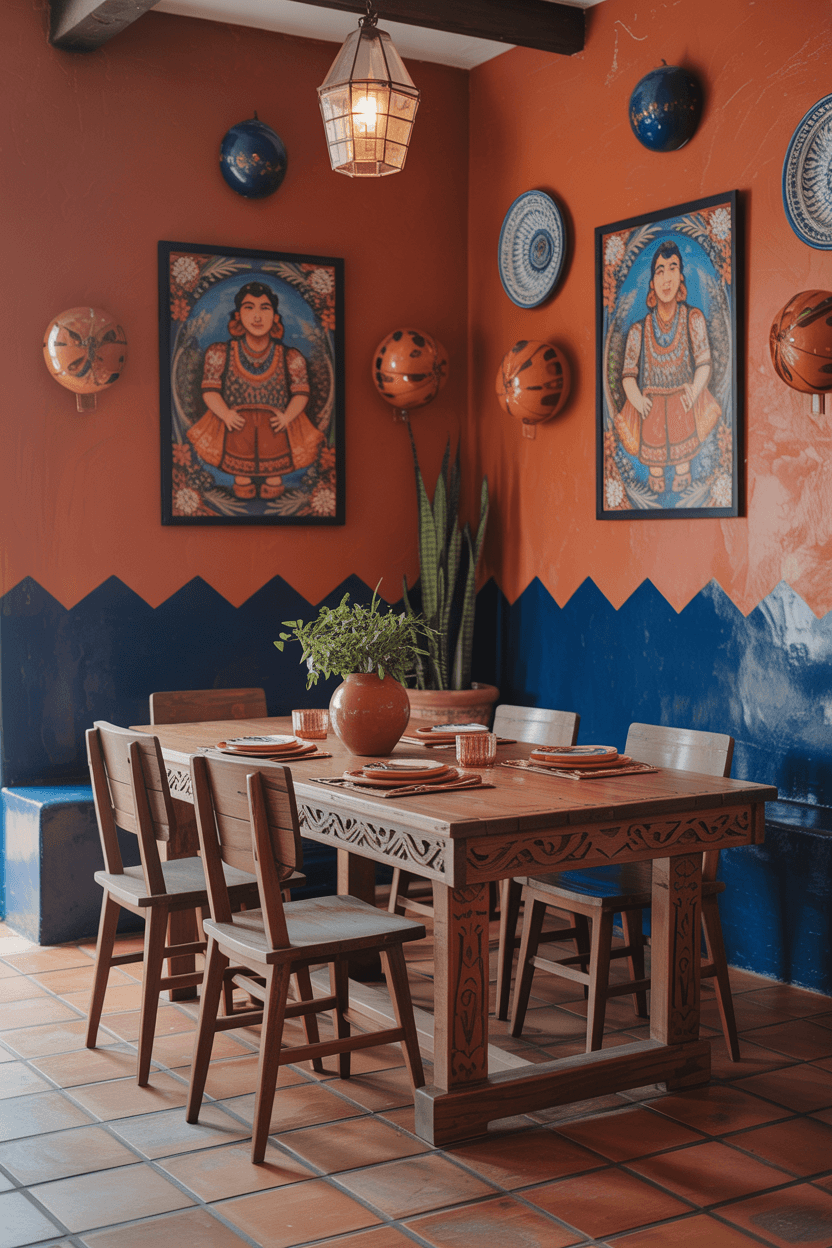
Rustic Mexican dining rooms thrive on bold, cheerful colors. Think terracotta, mustard yellow, cobalt blue, or deep red—these shades bring warmth and authenticity to the dining space. Painted walls can set the mood instantly, making your dining room feel like an extension of traditional Mexican culture.
You can also try color-blocking or using textured paint finishes to give the walls a more organic, earthy look. These vibrant tones pair beautifully with rustic wood furniture and artisanal accents, striking a balance between bold and grounded.
Best For: Families who want to create a lively, warm atmosphere that feels festive every day.
Pro Tip: If bold walls feel overwhelming, paint just one accent wall while keeping the others neutral to maintain balance.
5. Clay Pottery and Earthenware Decor
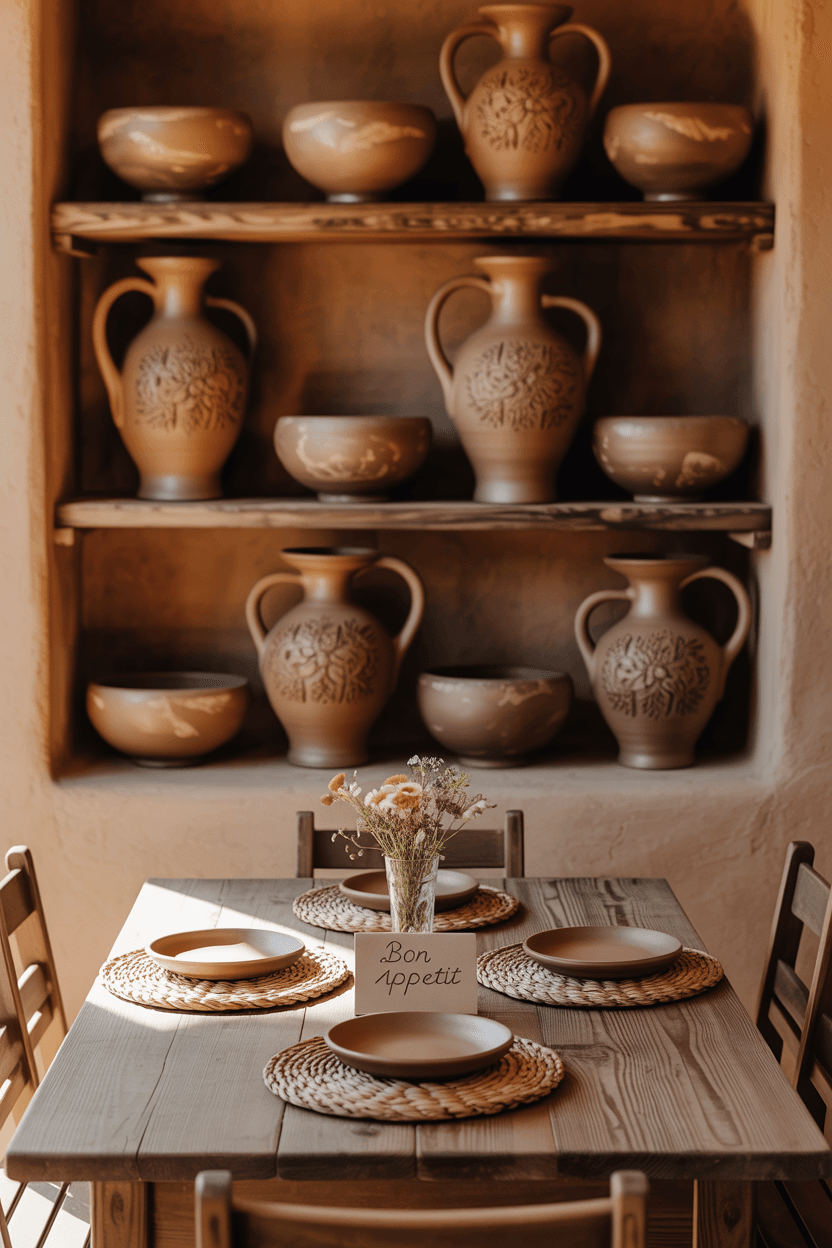
Clay pottery is a timeless element in rustic Mexican design. Handmade bowls, pitchers, and vases not only add decorative beauty but also carry cultural significance. Their earthy tones and handcrafted imperfections bring an authentic touch that makes the dining space feel grounded and welcoming.
Whether displayed on open shelving or used directly on the table, clay pottery enhances the rustic dining experience. Combined with woven placemats and colorful textiles, they create a layered, organic aesthetic that feels warm and inviting.
Best For: Anyone wanting to add authentic, affordable Mexican charm to their dining room.
Pro Tip: Mix glazed and unglazed pottery pieces for a balanced look that feels both rustic and artistic.
6. Rustic Exposed Wooden Beams
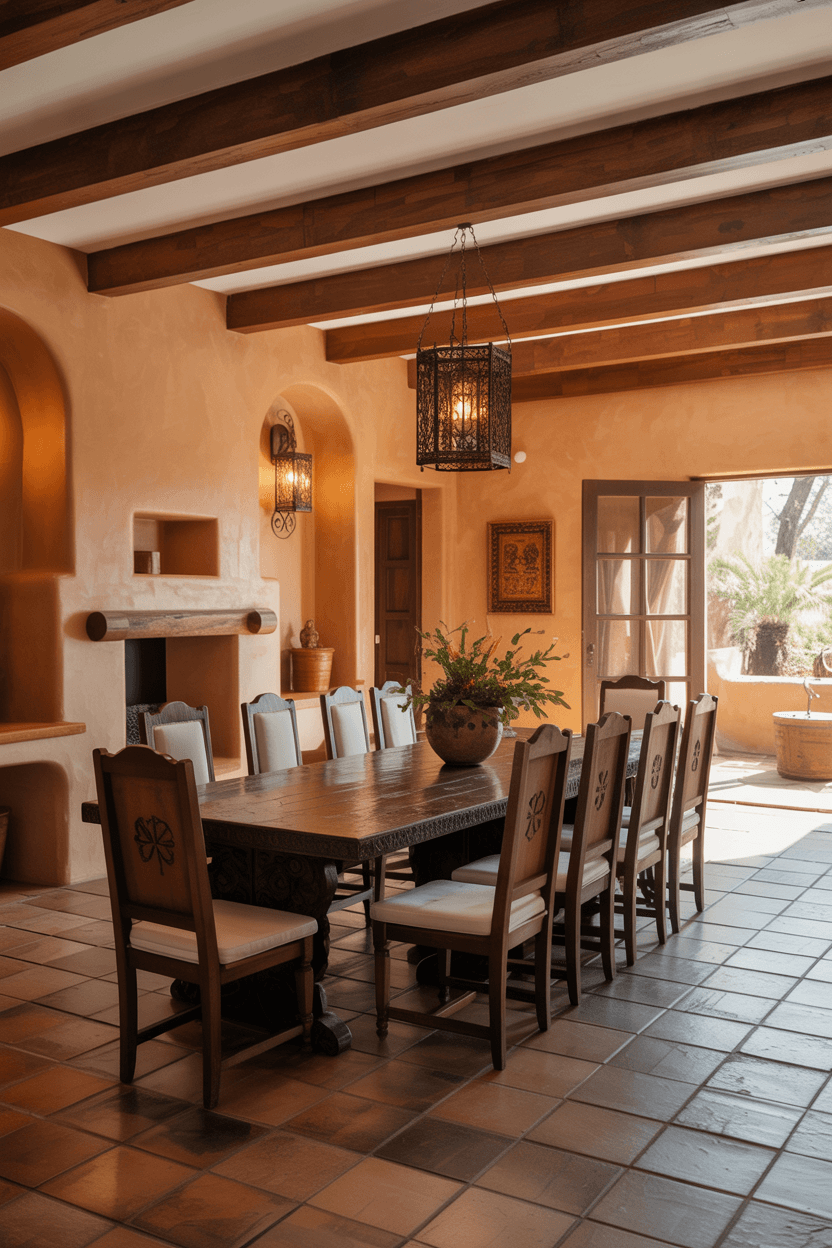
Exposed wooden beams are a hallmark of rustic Mexican interiors, and they make a dining room feel both timeless and authentic. The natural grain and weathered texture of the beams highlight the craftsmanship that defines hacienda-style homes. They instantly warm up the ceiling and give the dining space a grounded, architectural character.
Whether you choose reclaimed wood for a rugged, historic look or polished beams for a cleaner rustic vibe, the ceiling becomes a statement piece. Paired with earthy walls and wrought iron details, beams bring that cozy yet dramatic feel that Mexican design is known for.
Best For: Homes with open ceilings or dining rooms that could use architectural interest.
Pro Tip: If real beams aren’t an option, try faux wooden beams—they’re lighter, easier to install, and still deliver authentic rustic charm.
7. Leather Upholstered Chairs
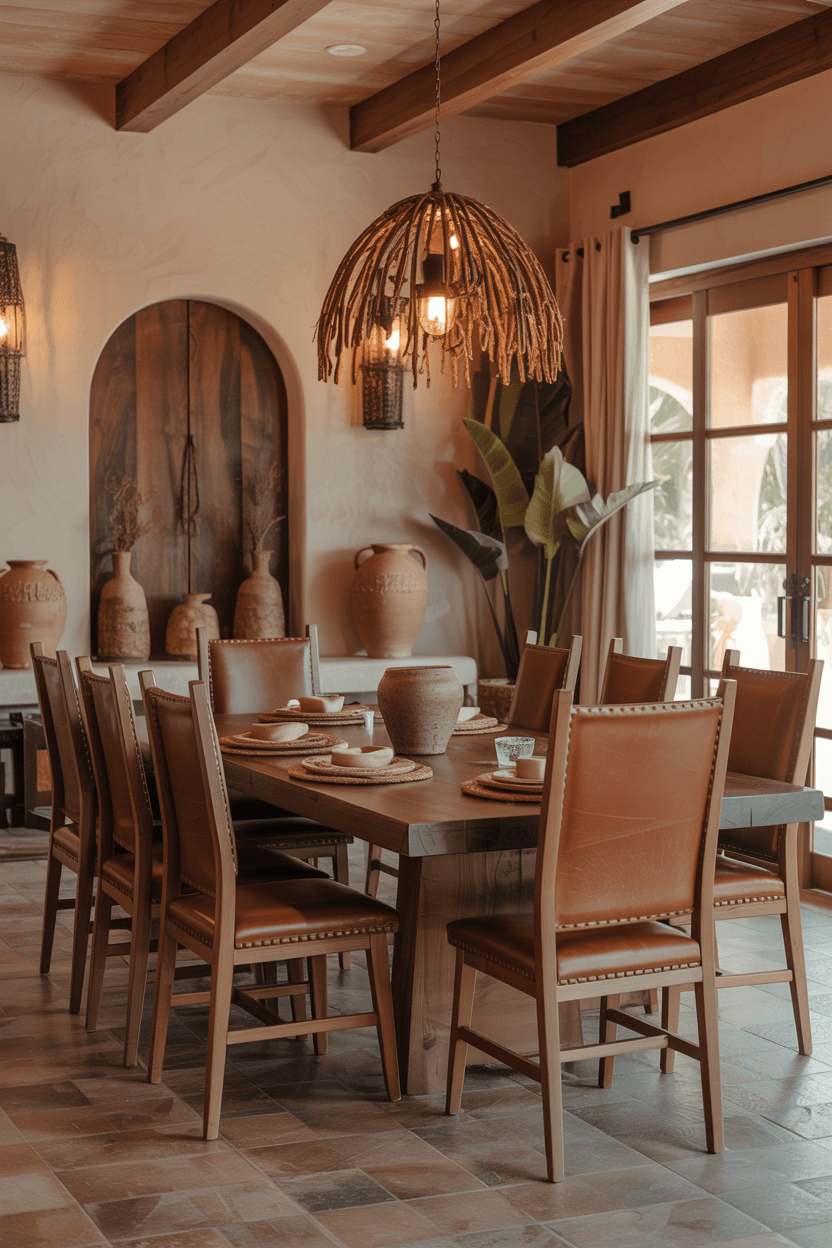
Leather dining chairs, especially those in warm tones like caramel or deep brown, add sophistication while staying true to rustic Mexican design. The durability of leather pairs perfectly with family dining, and its natural patina only gets richer with age, adding character over time.
To complete the look, opt for chairs with wooden frames and handcrafted detailing. They strike the perfect balance between rugged comfort and artisan craftsmanship, bringing both practicality and style into the dining space.
Best For: Families who want long-lasting, comfortable seating that grows more beautiful over time.
Pro Tip: Mix leather chairs with a rustic bench for a more casual, hacienda-inspired seating arrangement.
8. Colorful Woven Textiles
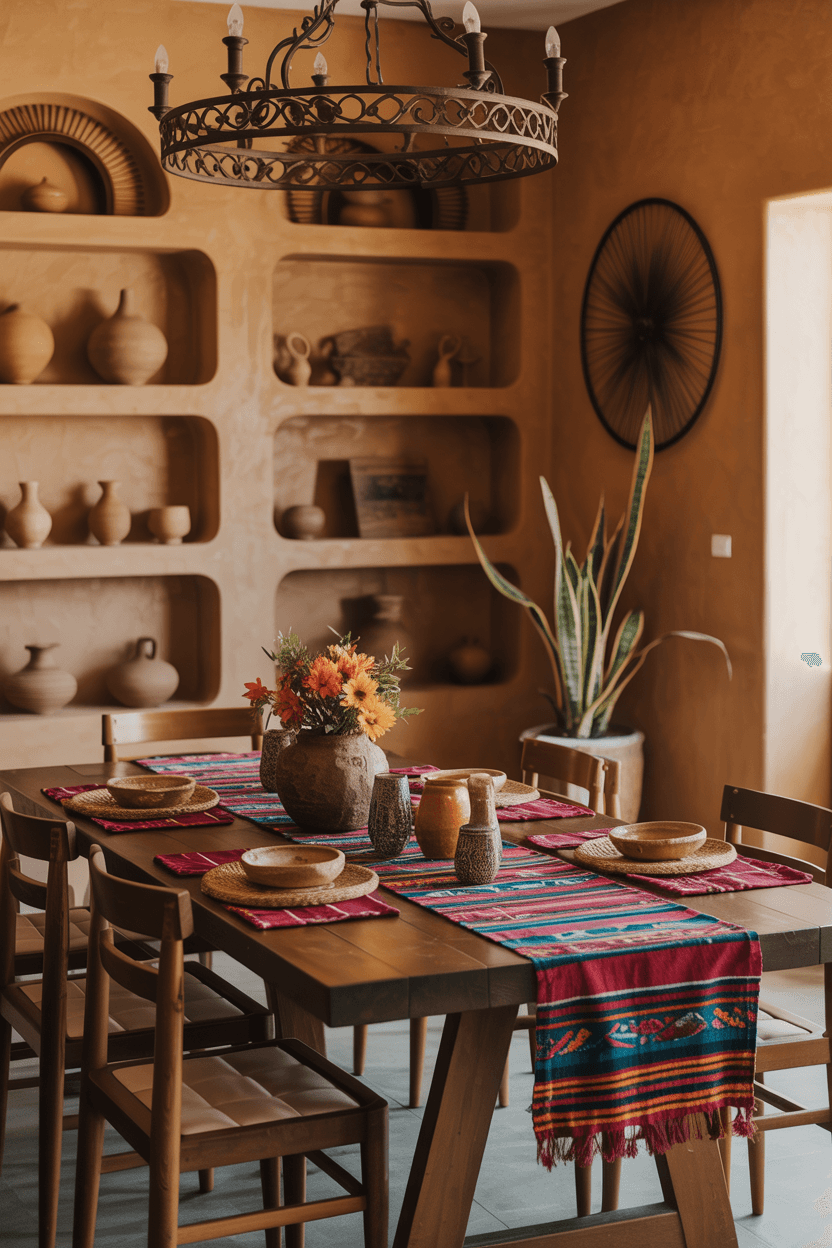
From table runners to wall hangings, woven textiles are an essential part of rustic Mexican dining decor. These handwoven pieces showcase bright colors and intricate patterns that reflect regional traditions. They add vibrancy to neutral furniture while enhancing the festive, welcoming feel of the room.
Incorporating textiles is also a flexible design choice—you can swap them seasonally or layer different patterns for a more eclectic look. Combined with pottery, wooden tables, and bold walls, they complete the sensory richness of a rustic Mexican dining room.
Best For: Homeowners who enjoy versatile, colorful accents that celebrate cultural artistry.
Pro Tip: Pair bold textiles with neutral walls or wooden furniture to let the patterns stand out without overwhelming the space.
9. Arched Doorways and Niches
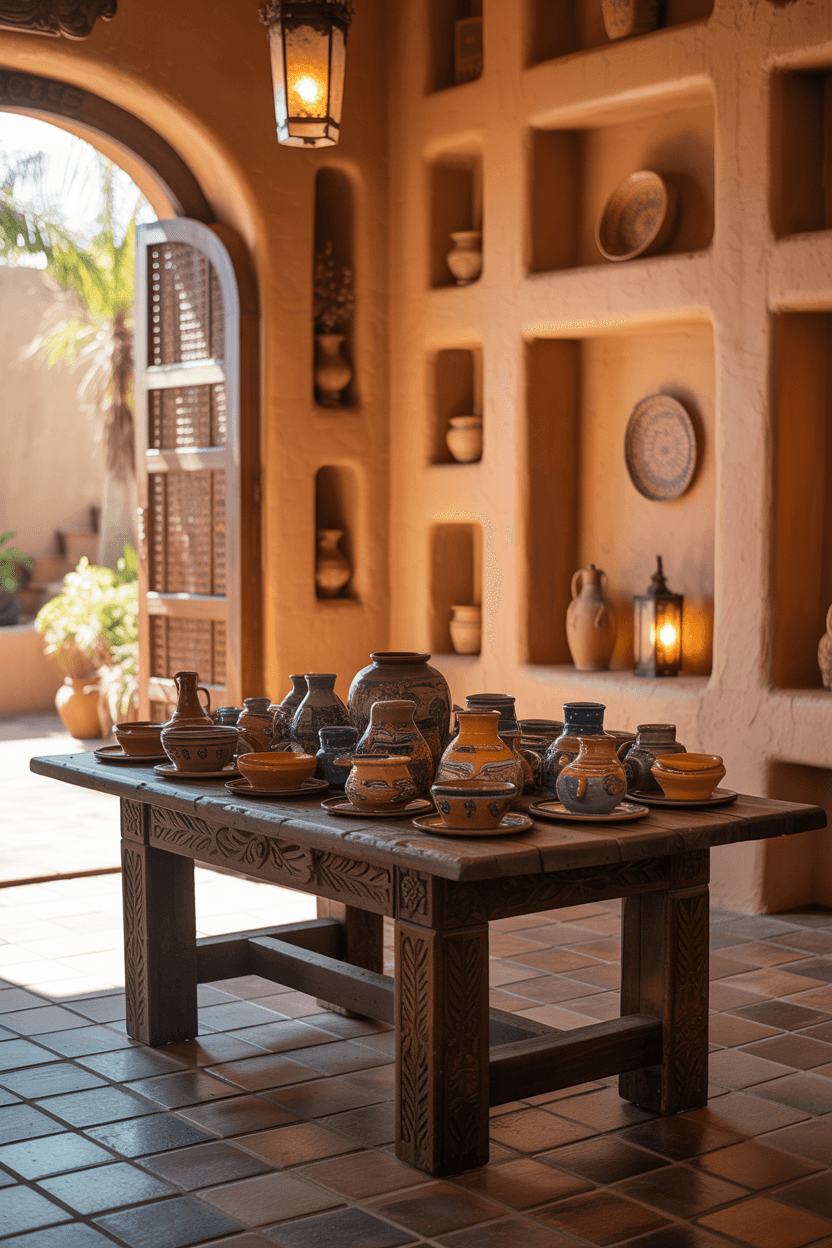
Arched architectural details are a classic element of Mexican design, bringing soft curves and old-world charm into the dining room. An arched doorway creates a sense of flow between rooms, while niches in the walls are perfect for displaying pottery, candles, or woven baskets.
These curves soften the sharp lines of furniture and create a warm, inviting aesthetic. Adding rustic stone or tile borders around the arches can further enhance their authentic Mexican character.
Best For: Homes with open layouts or those looking to add timeless architectural character.
Pro Tip: If structural arches aren’t possible, create faux arches with paint or wooden frames to capture the same rustic appeal.
10. Saltillo Tile Flooring
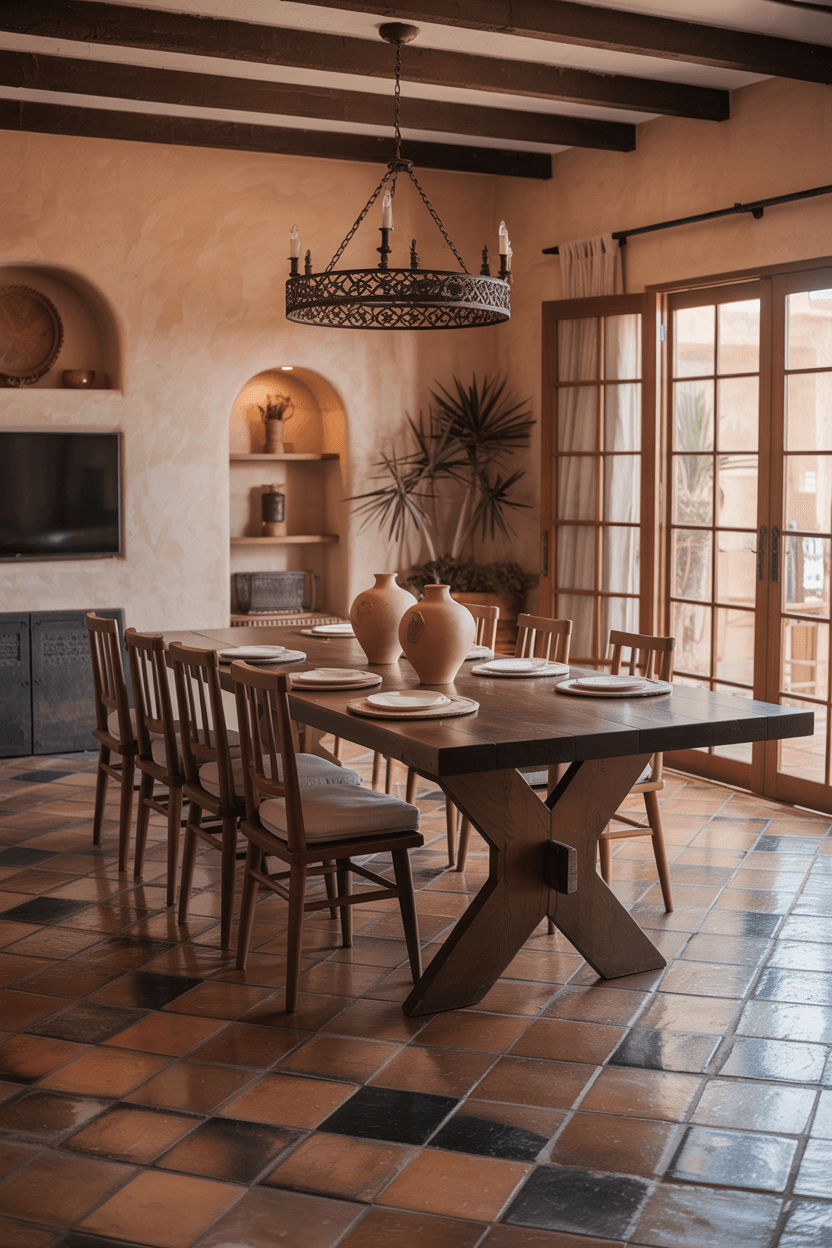
No rustic Mexican dining room is complete without the earthy glow of Saltillo tiles. These terracotta tiles, often handmade, come in warm shades of orange, red, and brown that instantly ground the space in authenticity. Their natural imperfections add charm, making each floor unique.
Saltillo tiles also stay cool underfoot, perfect for warm climates, and they pair beautifully with wooden furniture and bright walls. Adding patterned tile borders or mixing with Talavera accents can elevate the rustic style even further.
Best For: Homeowners seeking authentic, durable flooring that defines Mexican rustic charm.
Pro Tip: Seal Saltillo tiles properly to protect against stains and maintain their rich, earthy color for years to come.
11. Adobe-Inspired Walls
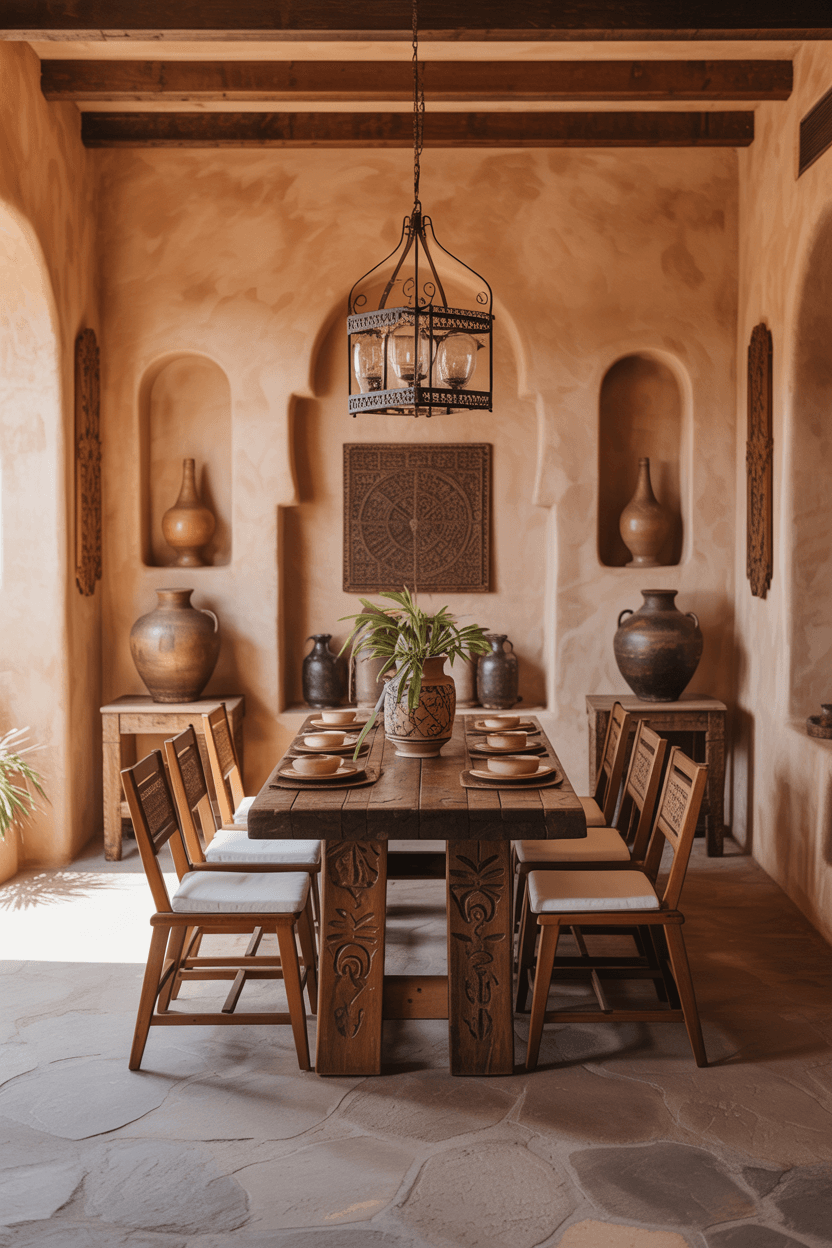
Adobe-style walls bring an earthy, organic feel to a rustic Mexican dining room. With their textured surfaces and warm tones, they reflect the natural beauty of clay and stone construction used in traditional haciendas. These walls make the dining space feel grounded, cozy, and authentically tied to Mexican culture.
You can achieve this look with plaster finishes, stucco textures, or even faux painting techniques. When paired with wooden furniture and terracotta floors, adobe-inspired walls create a timeless atmosphere that feels both rustic and inviting.
Best For: Homeowners who want to capture authentic hacienda charm in their dining spaces.
Pro Tip: Opt for neutral, earthy tones like sand, terracotta, or soft beige to enhance the warm, rustic feel of adobe walls.
12. Carved Wooden Cabinets and Buffets
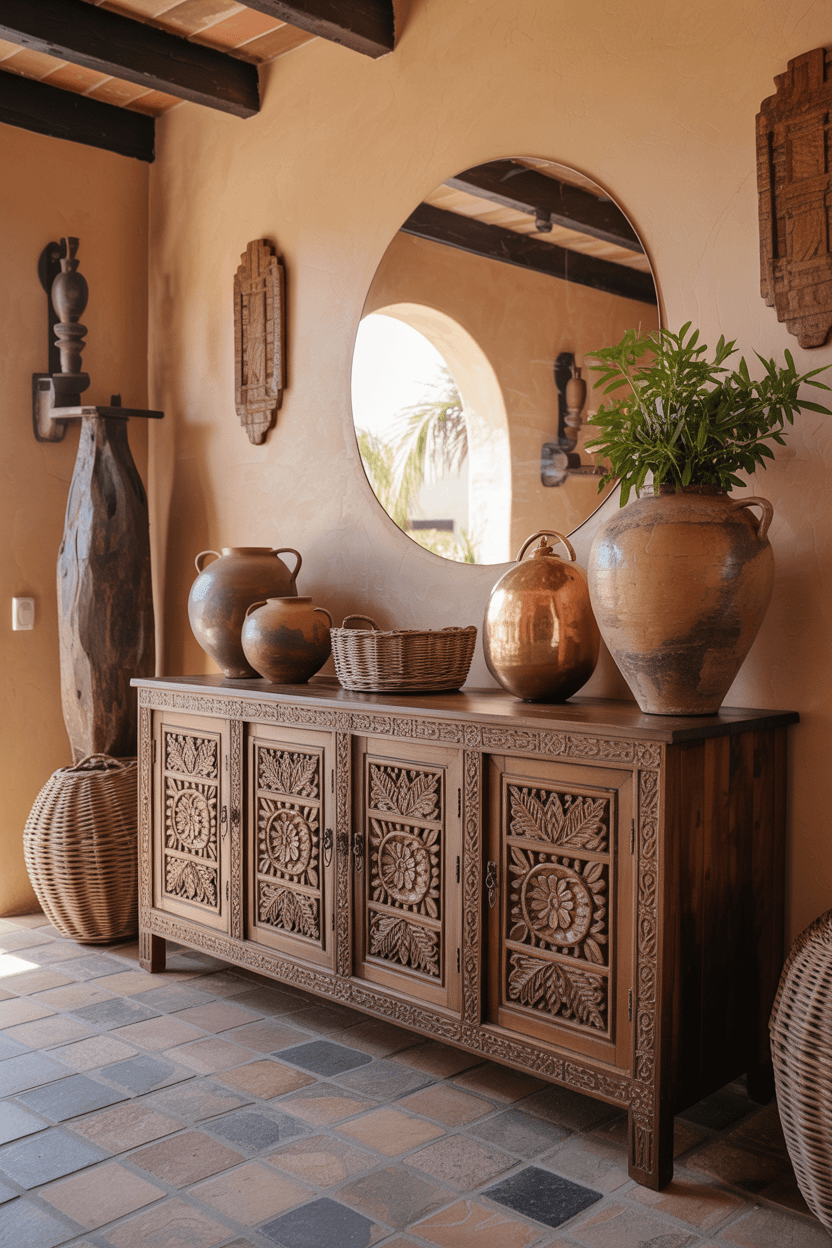
A carved wooden cabinet or buffet provides both storage and decorative appeal in a rustic Mexican dining room. These pieces often feature hand-carved details, floral motifs, or geometric patterns, making them as much works of art as functional furniture.
They’re perfect for storing tableware, displaying pottery, or showcasing woven textiles. Their rich wood tones and craftsmanship highlight the artistry central to Mexican design traditions.
Best For: Dining rooms needing both storage and decorative focal points.
Pro Tip: Style the cabinet top with pottery, candles, and plants to create a curated rustic vignette.
13. Vibrant Mexican Artwork
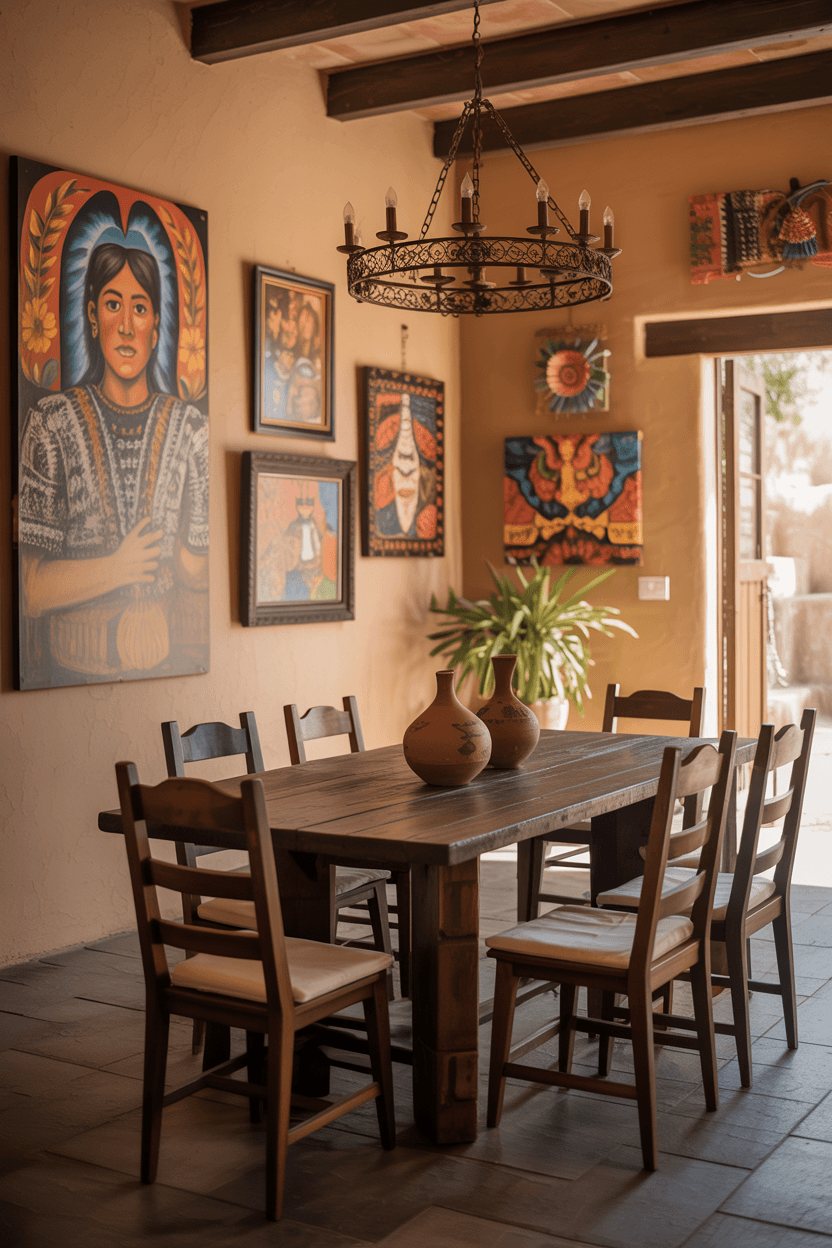
Art plays a vital role in rustic Mexican dining rooms, adding personality and storytelling to the space. Brightly colored paintings, folk art, or murals with cultural motifs create focal points that celebrate Mexican heritage.
From abstract depictions of landscapes to traditional Day of the Dead artwork, the choices are endless. Hanging large, vibrant pieces above the dining table instantly sets the tone and makes the room feel alive with cultural richness.
Best For: Families who want their dining room to reflect personality and cultural vibrancy.
Pro Tip: Choose oversized artwork for maximum impact, and balance bold colors with neutral backdrops.
14. Indoor Plants with Rustic Clay Pots
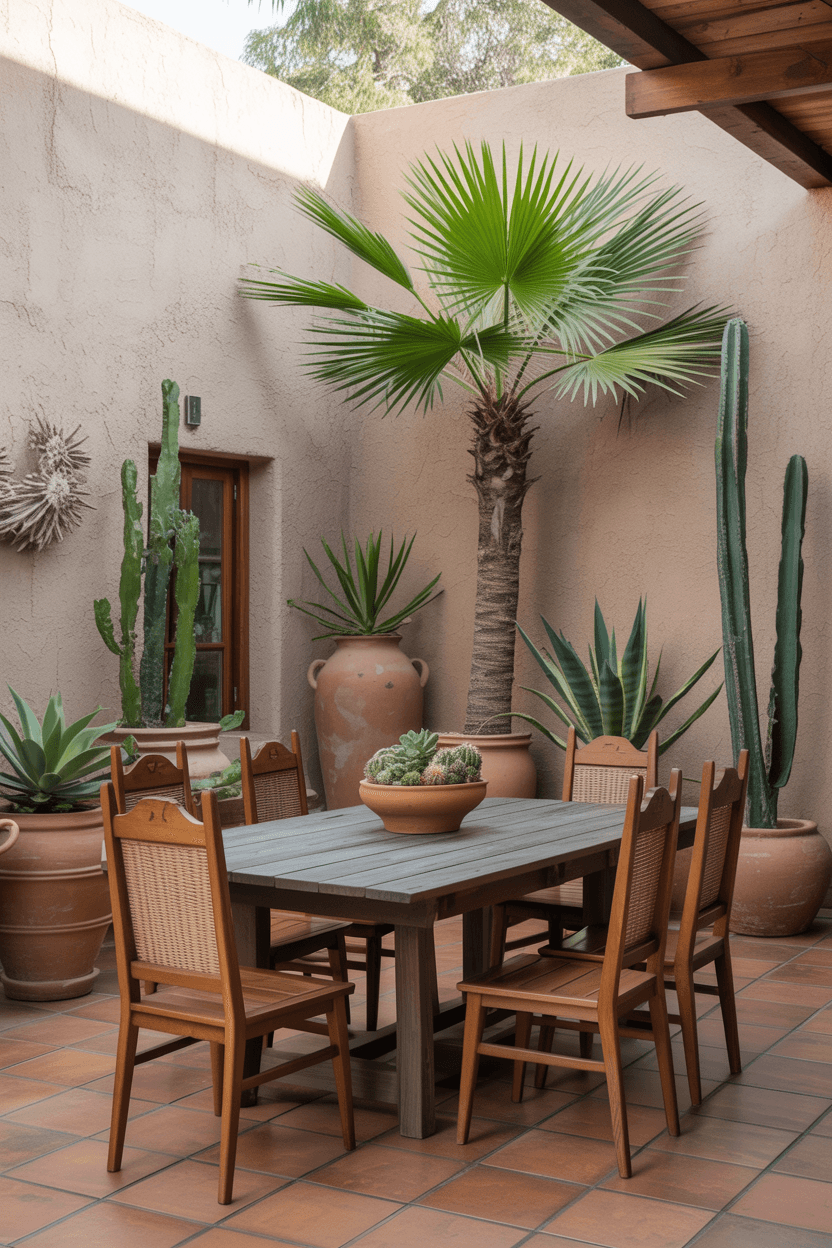
Adding greenery to a rustic Mexican dining room brings life and freshness to the earthy tones of wood and clay. Plants like succulents, palms, or cacti thrive in terracotta pots and complement the rustic textures beautifully.
Clay or stone planters add authenticity, while hanging plants or wall-mounted greenery soften the space. Together, they create a natural balance between structure and organic charm.
Best For: Homeowners who want to bring freshness and natural energy into their rustic dining room.
Pro Tip: Use clay pots in varying sizes for layering and add macramé hangers for a subtle bohemian touch.
15. Rustic Dining Benches
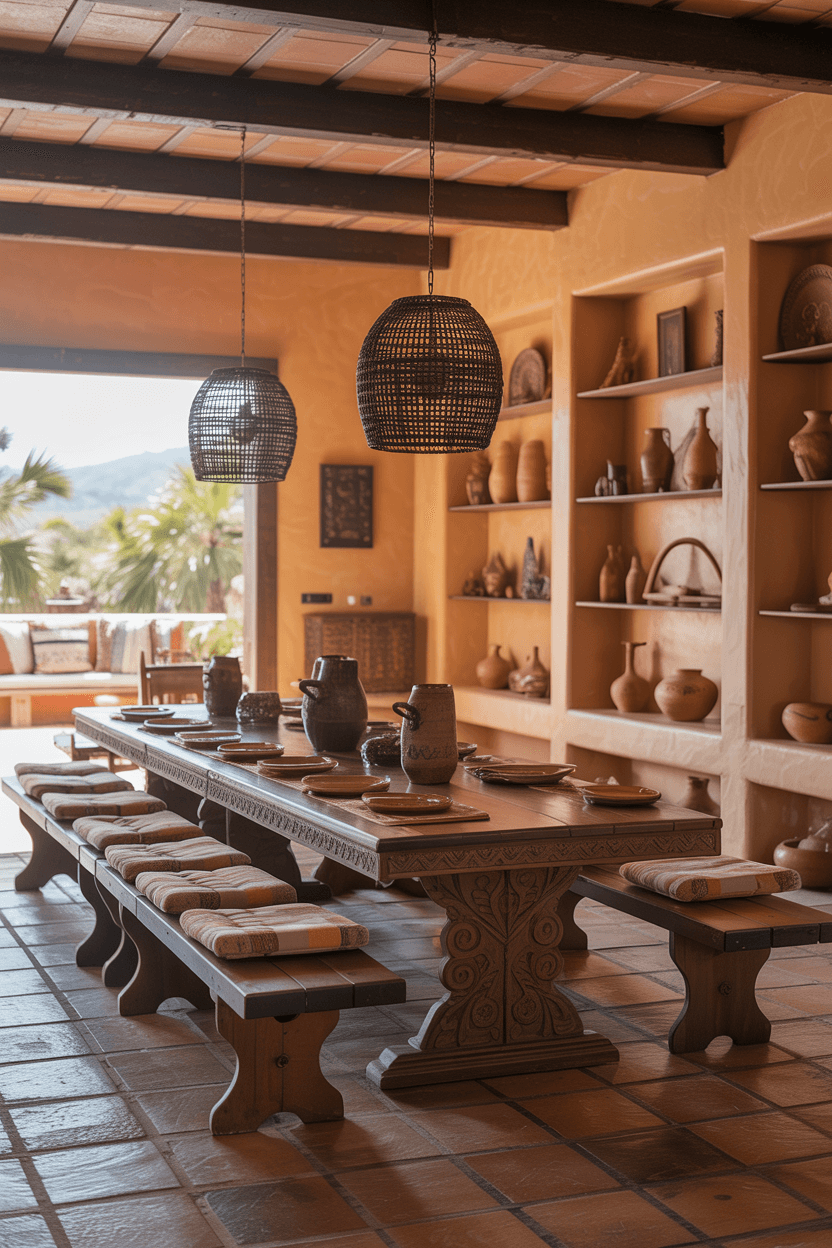
Benches are a versatile seating option that enhances the communal, welcoming vibe of rustic Mexican dining rooms. Made from sturdy wood, they add simplicity and warmth, inviting guests to gather and share meals together.
Pairing benches with a carved wooden table and colorful textiles creates an authentic hacienda look. Cushions with woven fabrics or leather upholstery add comfort without sacrificing rustic style.
Best For: Families or hosts who want flexible seating that feels casual and inviting.
Pro Tip: Use benches on one side of the table and chairs on the other for a dynamic, mixed seating arrangement.
16. Stone Accent Walls
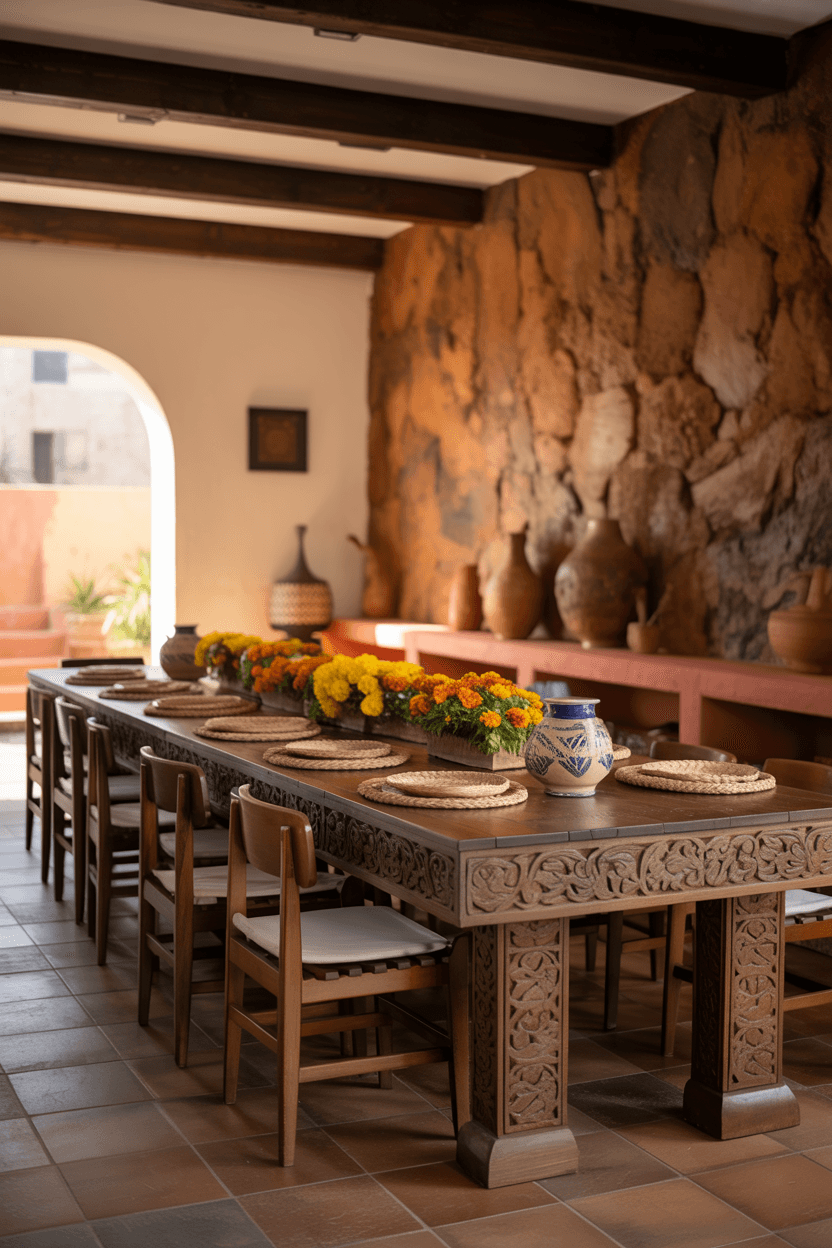
A stone accent wall instantly anchors a rustic Mexican dining room in natural beauty. Whether built with rough-hewn river stones or smoother adobe-inspired finishes, stone brings texture and history into the space. It evokes the sturdy walls of traditional haciendas and adds a sense of permanence.
Paired with wooden furniture and wrought iron details, a stone wall creates depth and visual interest. Even a single accent wall can transform a plain dining space into one that feels rich with character and cultural charm.
Best For: Homes that want to highlight rustic textures and architectural depth.
Pro Tip: Use warm-toned stones to complement terracotta floors and wood furniture for a cohesive, inviting look.
17. Niches with Candles and Lanterns
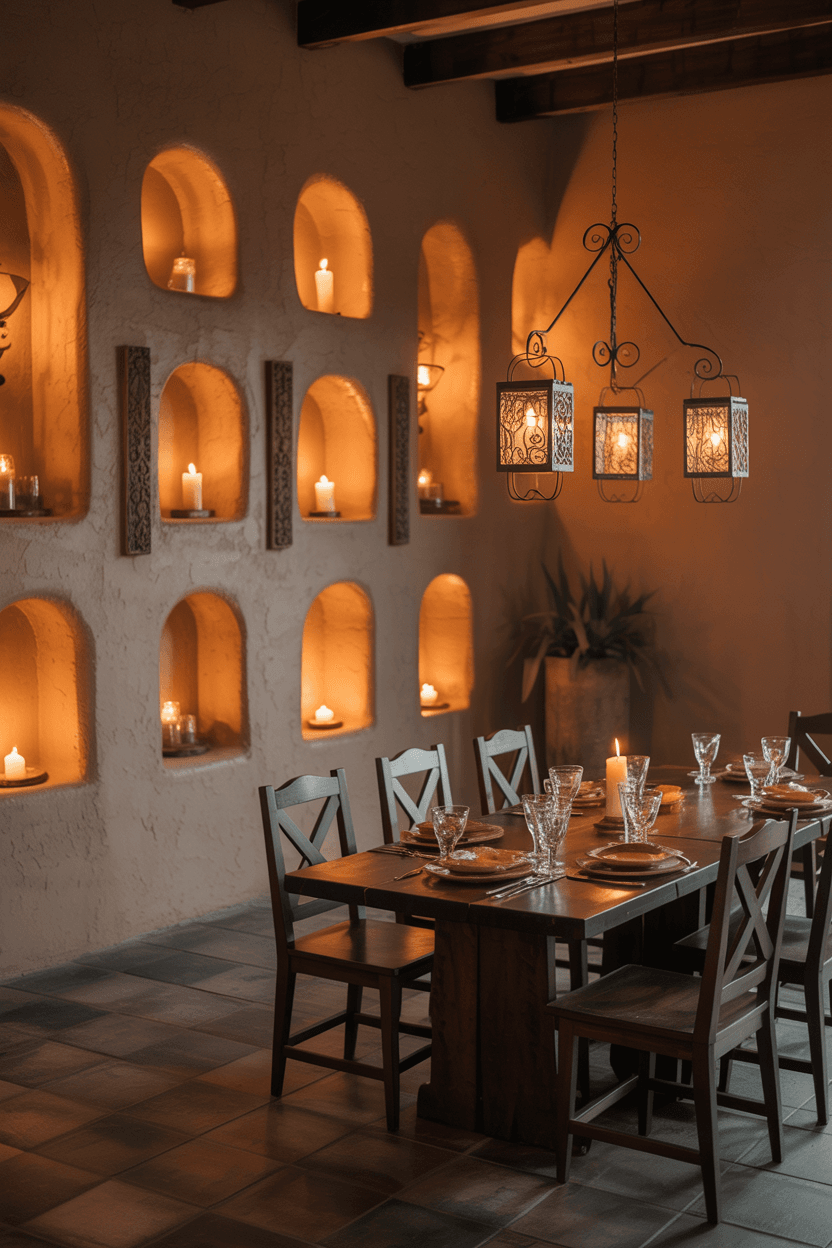
In rustic Mexican interiors, niches filled with candles or lanterns create a soft, ambient glow that feels intimate and welcoming. These architectural details not only break up plain walls but also add cultural authenticity, echoing traditional hacienda designs.
The flickering light enhances the dining atmosphere, making every meal feel cozy and special. Lanterns with wrought iron or glass details add even more rustic charm while blending seamlessly with other Mexican-inspired decor.
Best For: Creating romantic, warm lighting in dining spaces without relying solely on overhead fixtures.
Pro Tip: Mix candles of varying heights in niches for a layered, glowing effect that feels organic and timeless.
18. Rustic Buffet with Open Shelving
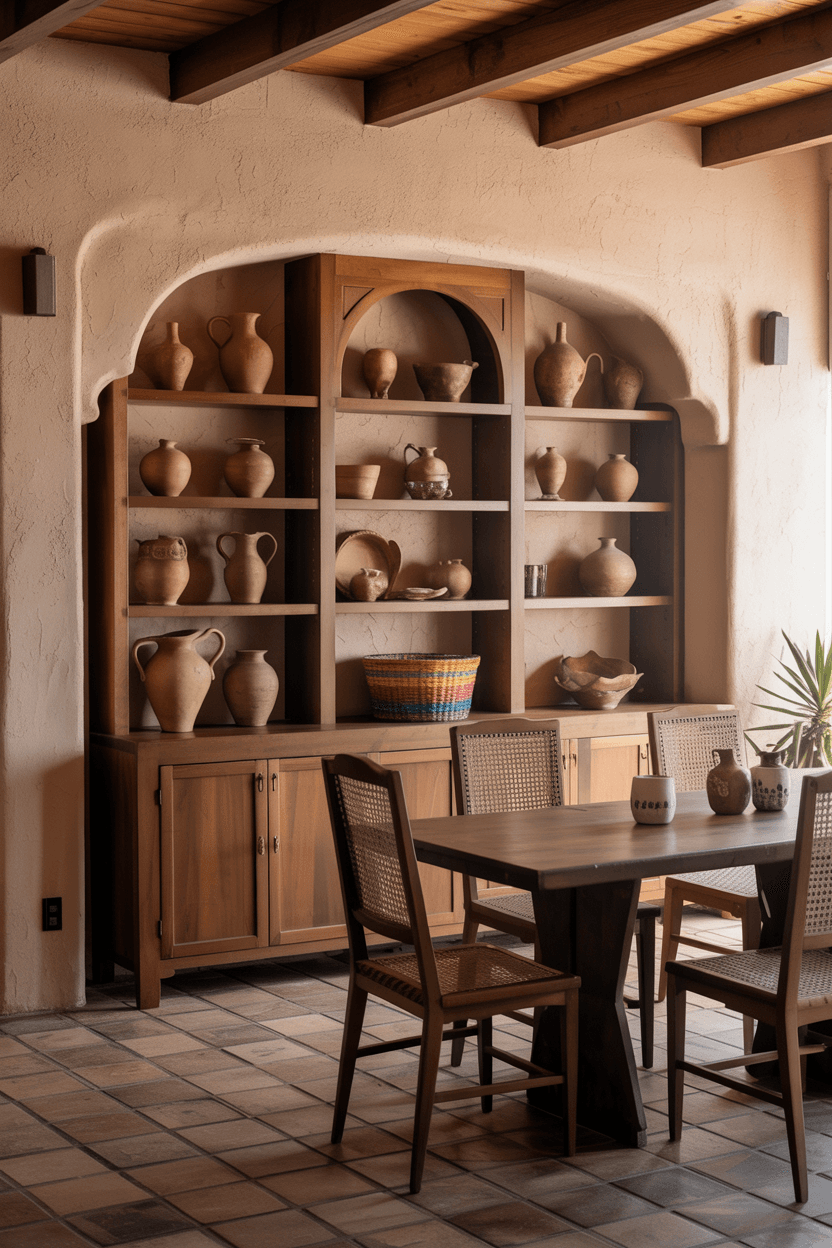
An open-shelving buffet is both practical and stylish for a rustic Mexican dining room. The shelves allow you to showcase pottery, glassware, or woven baskets, turning functional storage into decorative display.
Crafted from natural wood, these buffets often feature distressed finishes or carved details that reinforce rustic charm. They provide a casual yet curated feel, perfect for a space designed for gatherings and celebrations.
Best For: Homes that want to blend storage with rustic artistry.
Pro Tip: Rotate seasonal decor or colorful ceramics on the open shelves to keep the dining room feeling fresh and lively.
19. Textured Rugs with Bold Patterns
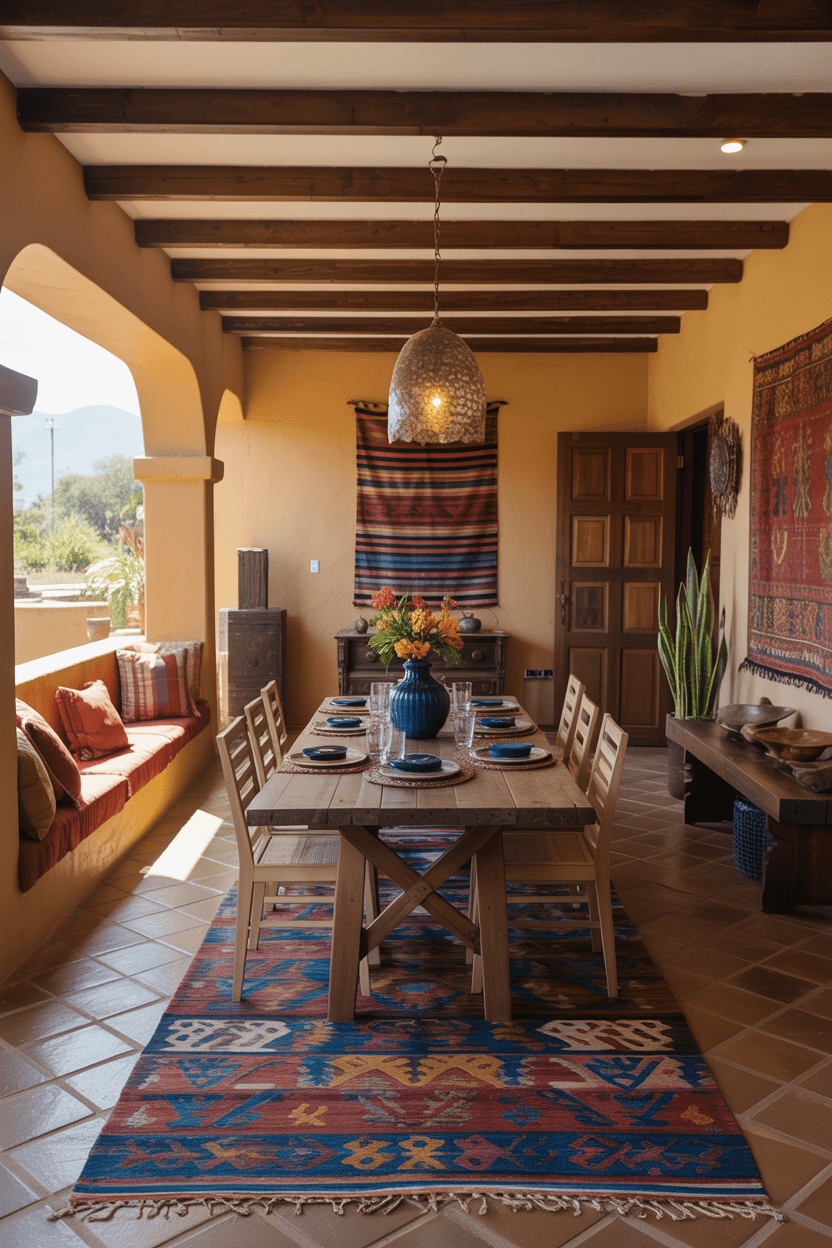
A bold, patterned rug adds softness and warmth to rustic Mexican dining rooms, balancing out the hard surfaces of tile, wood, and stone. Traditional Mexican rugs often feature geometric or floral motifs in earthy reds, blues, and yellows, creating vibrant focal points under the dining table.
Not only do rugs bring visual interest, but they also help define the dining space in open-concept layouts. When layered with rustic furniture, they enhance the cozy and festive atmosphere of the room.
Best For: Homes with open layouts or those looking to add color and warmth underfoot.
Pro Tip: Choose flat-woven rugs for easier cleaning under dining tables while still showcasing authentic patterns.
20. Copper Accents and Tableware
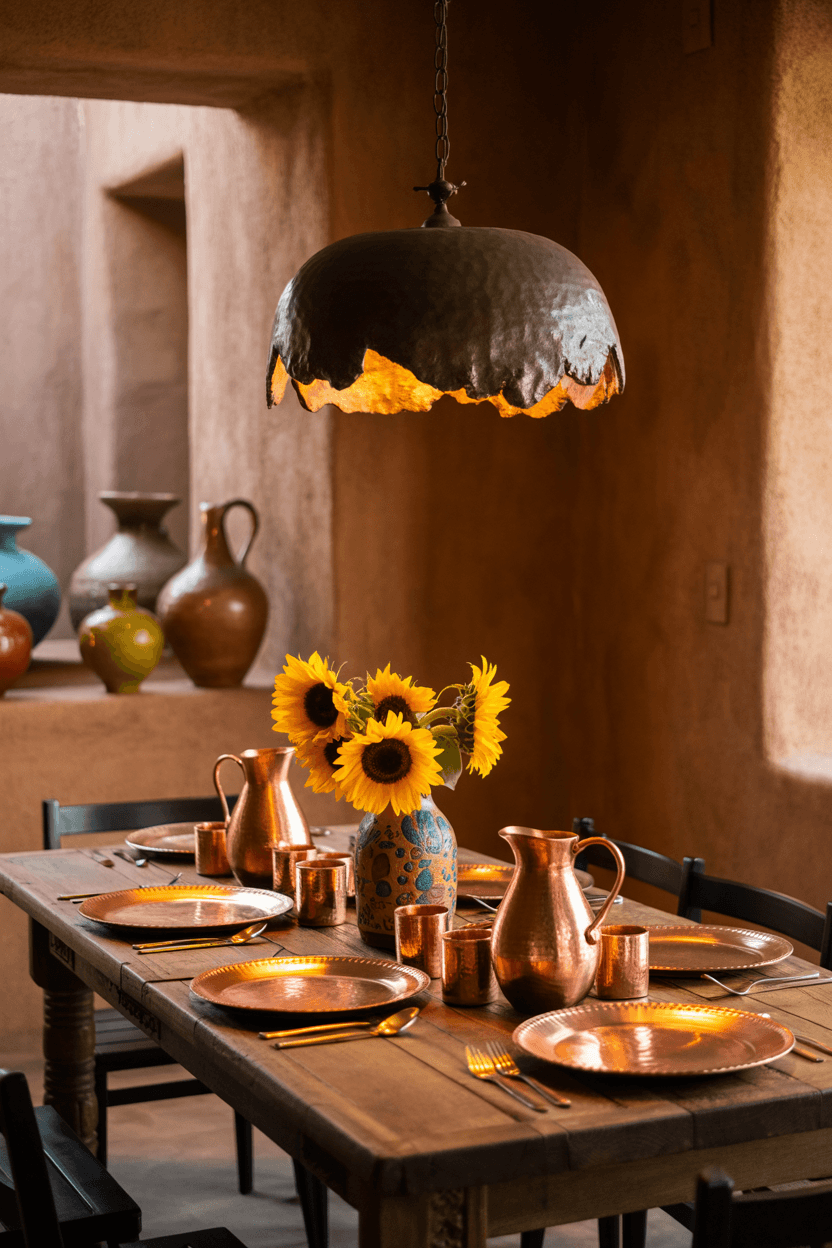
Copper is a traditional material in Mexican design, valued for its warmth and artisanal craftsmanship. In the dining room, copper chargers, pitchers, or light fixtures add a metallic glow that complements rustic wood and earthy tones.
Over time, copper develops a beautiful patina that enhances its rustic appeal. Whether used sparingly as accent decor or prominently in lighting, it brings both elegance and authenticity to the dining space.
Best For: Adding warmth and artisanal detail to rustic Mexican dining rooms.
Pro Tip: Mix polished copper pieces with aged, patinaed items for a layered, authentic look.
21. Hacienda-Style Arched Windows
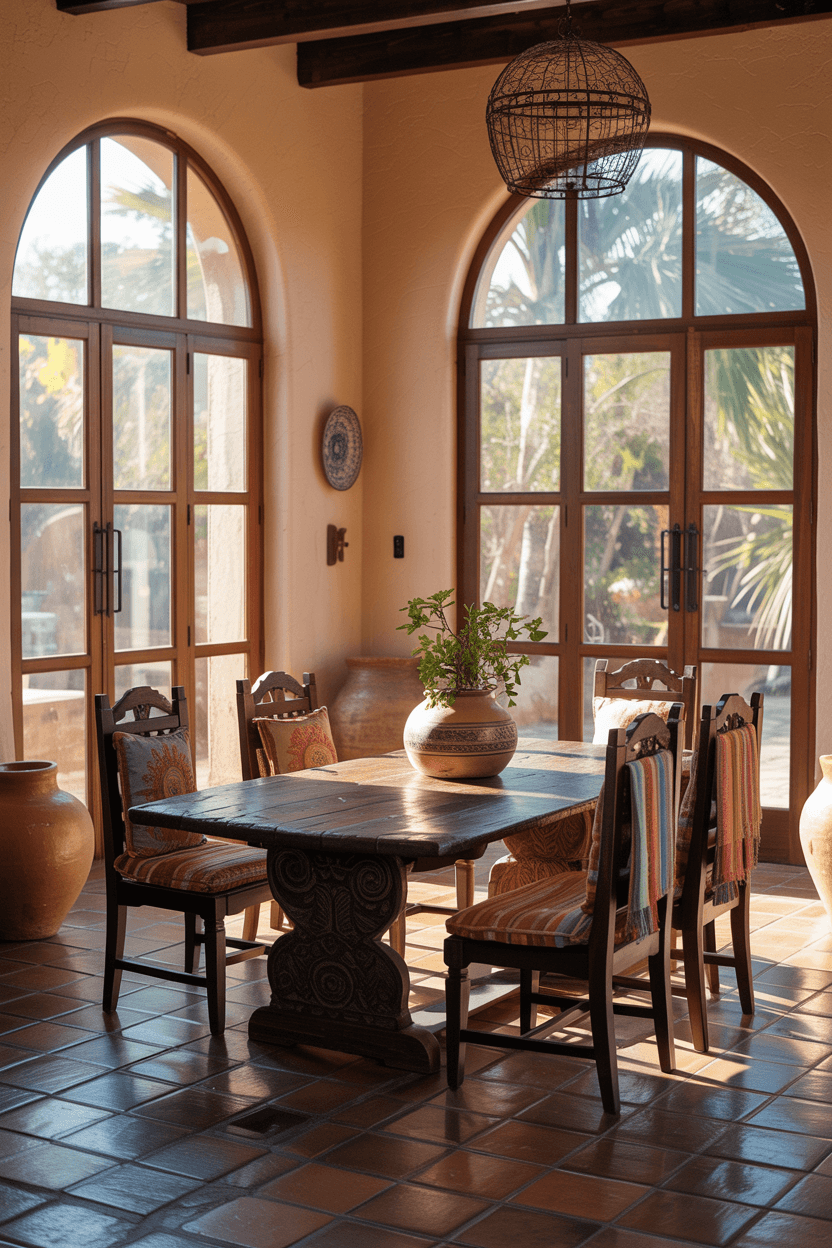
Large arched windows are a defining feature of traditional hacienda dining rooms. They allow natural light to pour in, highlighting the earthy tones and textures of rustic Mexican decor. These windows often feature wrought iron grilles or wooden frames that add both security and style.
Their soft, rounded shapes contrast beautifully with heavy wooden furniture and bold textiles. When dressed with light linen or woven curtains, they enhance the open, airy feel while maintaining the rustic character of the space.
Best For: Dining rooms that want to maximize natural light while staying true to hacienda architecture.
Pro Tip: Frame arched windows with neutral curtains to let the architecture shine without blocking the light.
22. Handcrafted Dining Accessories
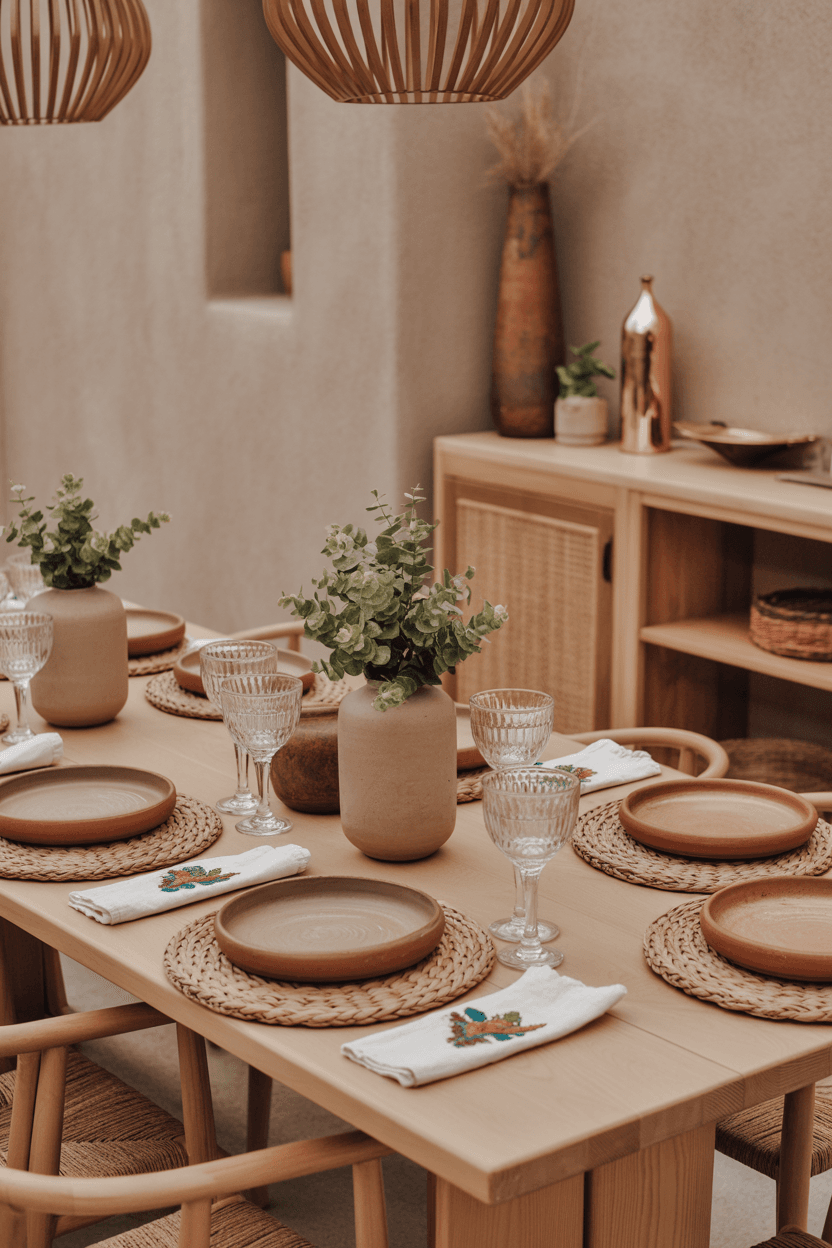
The finishing touches often define the soul of a rustic Mexican dining room. Handcrafted dining accessories—such as woven placemats, embroidered napkins, and artisanal table runners—add layers of texture and tradition. These small details make each meal feel like a celebration of heritage.
Mixing handmade pieces with pottery and copper accents enhances the overall authenticity of the room. Every accessory tells a story of craftsmanship, turning your dining space into a true reflection of Mexican culture.
Best For: Those who appreciate details that combine practicality with cultural artistry.
Pro Tip: Collect handcrafted items from local artisans or travel markets for a personal and meaningful touch.
Final Thoughts
Designing with 22 rustic Mexican dining room ideas allows you to create a space that is more than just a place to eat—it becomes a gathering hub filled with warmth, culture, and charm. From carved wooden tables to Talavera tiles and copper accents, every detail carries the heart of Mexican tradition while blending seamlessly with modern living.
A rustic Mexican dining room isn’t just about decor; it’s about creating an atmosphere where every meal feels special. By layering textures, colors, and handcrafted artistry, you can build a dining room that celebrates both family and culture in the most beautiful way.
Ready to bring these rustic dining room ideas into your home? Explore more design inspiration and discover tips to transform your dining space with timeless Mexican charm at Trendy Decor Guide!