
25 Stunning Spanish Style Kitchen Ideas for Warm & Timeless Charm

A Spanish style kitchen is more than just a cooking space—it’s the heart of the home, filled with warmth, tradition, and rustic charm. From rich terracotta tiles to hand-painted backsplashes and arched details, these kitchens evoke a timeless atmosphere that feels both inviting and elegant. Each element tells a story, blending heritage with functionality to create a space that’s as soulful as it is beautiful.
What makes Spanish kitchens truly captivating is their ability to balance character and comfort. Whether you’re drawn to wrought-iron accents, rustic wood beams, or vibrant Talavera tiles, the design carries a sense of authenticity and cultural richness. In this guide, we’ll explore 25 Spanish Style Kitchen ideas that bring warmth, charm, and timeless Mediterranean beauty into your home.
1. Rustic Terracotta Flooring
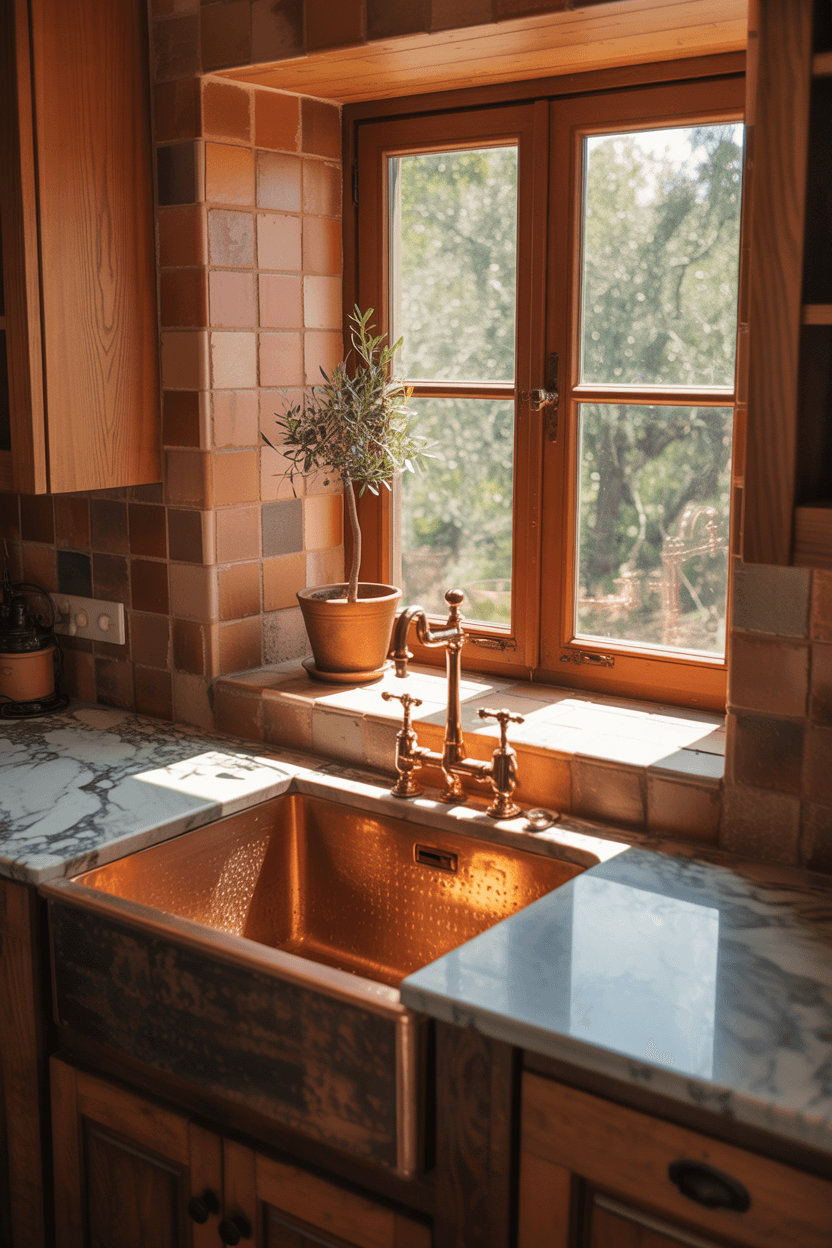
Terracotta floors are one of the most iconic elements of a Spanish style kitchen. The warm earthy tones of these clay tiles create a grounded, cozy atmosphere that feels inviting from the moment you step in. They pair beautifully with wooden cabinetry, wrought-iron lighting, and colorful backsplashes for a truly authentic Spanish vibe.
Beyond aesthetics, terracotta is durable and ages gracefully, developing a natural patina over time that adds even more character. Whether laid in a simple square pattern or a decorative herringbone, these floors instantly transport your kitchen into a Mediterranean haven.
Best For: Homeowners who want durability with timeless rustic warmth.
Pro Tip: Seal your terracotta tiles to protect against spills and enhance their rich, natural color.
2. Bold Talavera Tile Backsplash
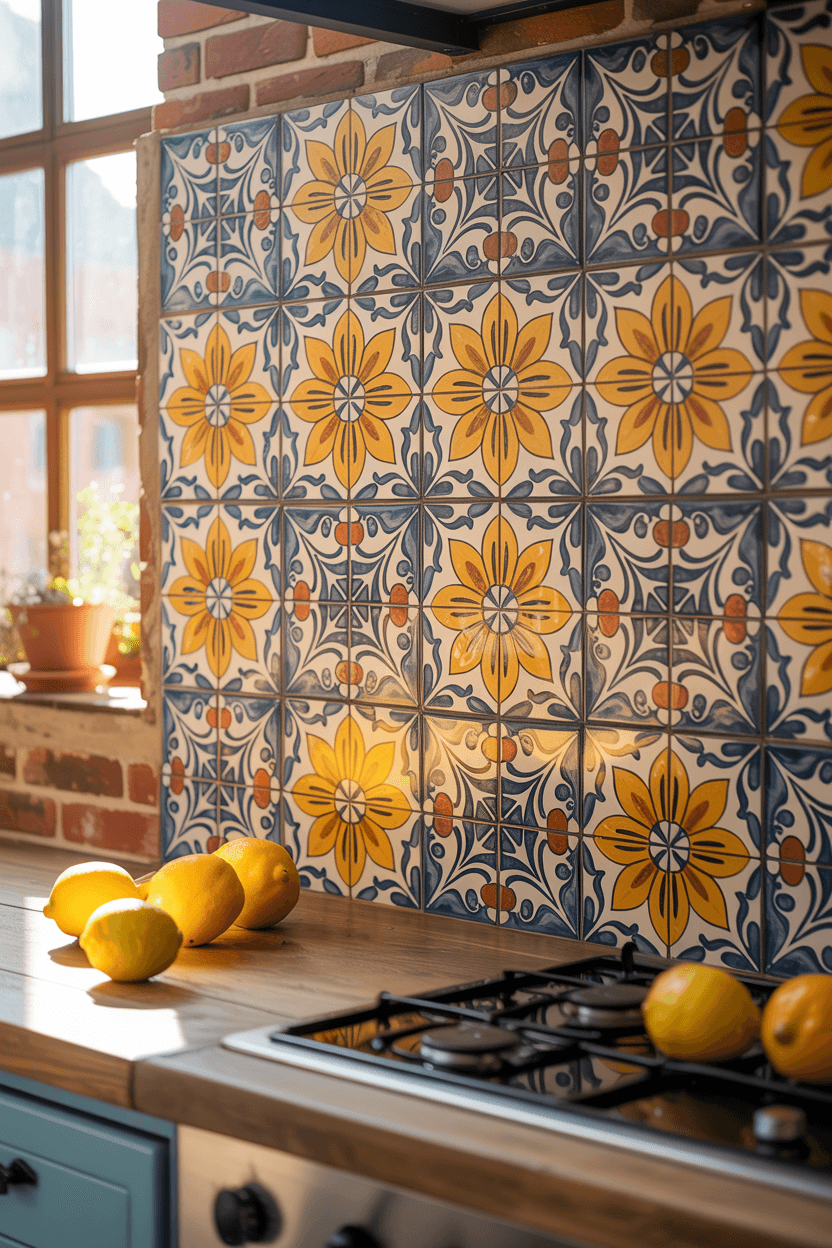
A Talavera tile backsplash is a classic statement in Spanish kitchens. Known for their vibrant colors and intricate patterns, these hand-painted tiles bring life and energy into the cooking space. The mix of blues, yellows, and terracotta tones instantly brightens up neutral cabinetry, turning the backsplash into a stunning focal point.
These tiles are more than just decorative—they embody centuries of artistry and cultural heritage. A Talavera backsplash adds personality and charm, while also being practical for easy cleanup in busy kitchens.
Best For: Those who want a colorful, lively centerpiece in their kitchen design.
Pro Tip: Pair bold Talavera tiles with simple countertops to let the patterns shine without overwhelming the space.
3. Exposed Wooden Ceiling Beams
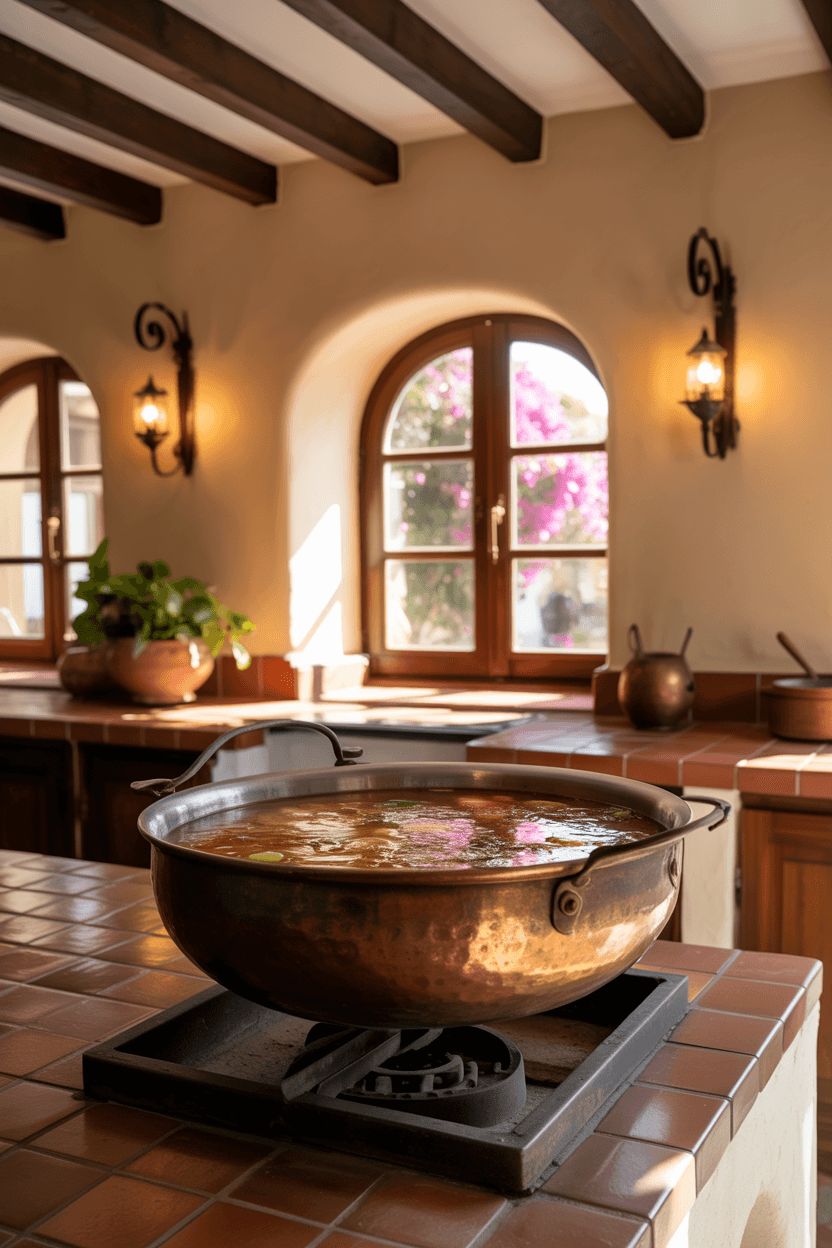
Wooden ceiling beams add warmth, dimension, and rustic beauty to any Spanish style kitchen. Their natural textures contrast beautifully with smooth plaster walls and tiled surfaces, creating a sense of depth and coziness. Whether stained dark or kept natural, beams highlight the architectural authenticity of Spanish design.
They also create a visual frame that makes the kitchen feel grounded and welcoming. Pair them with wrought-iron chandeliers or pendant lights to enhance the traditional hacienda look while balancing elegance with rustic character.
Best For: Homes with high ceilings that can benefit from added texture and charm.
Pro Tip: If real wood beams aren’t an option, consider faux beams—they’re lightweight, cost-effective, and just as striking.
4. Arched Doorways and Niches
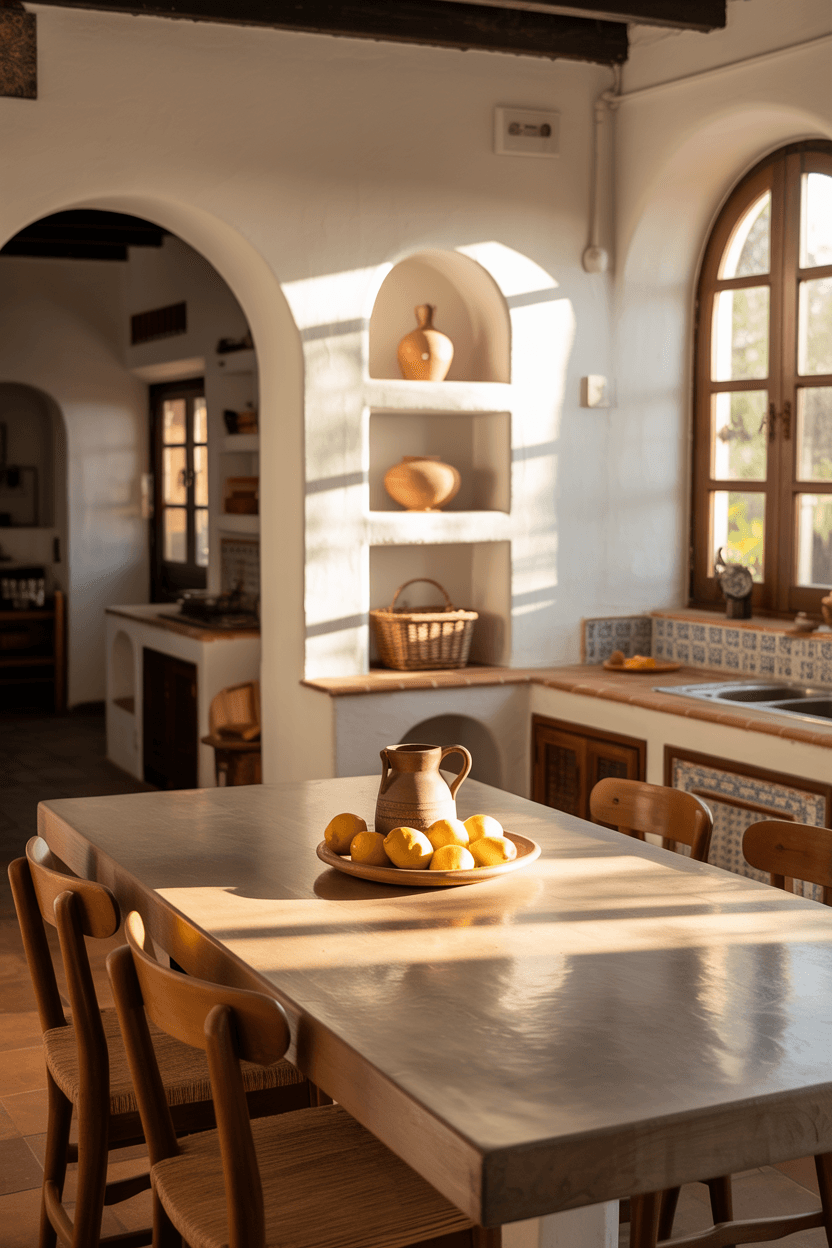
Arches are a signature feature of Spanish architecture, and they look stunning in kitchens. From arched entryways to built-in niches for shelving, this design detail softens the room and creates a timeless Mediterranean flow. It’s a subtle yet powerful way to highlight the old-world charm of your home.
These curves add a sense of elegance, breaking away from harsh straight lines and making the space feel warm and organic. An arched cooking alcove or pantry entrance instantly elevates your kitchen’s authenticity.
Best For: Those who want an architectural statement that feels both traditional and graceful.
Pro Tip: Highlight arched niches with decorative tiles or natural stone to add even more visual interest.
5. Wrought-Iron Accents
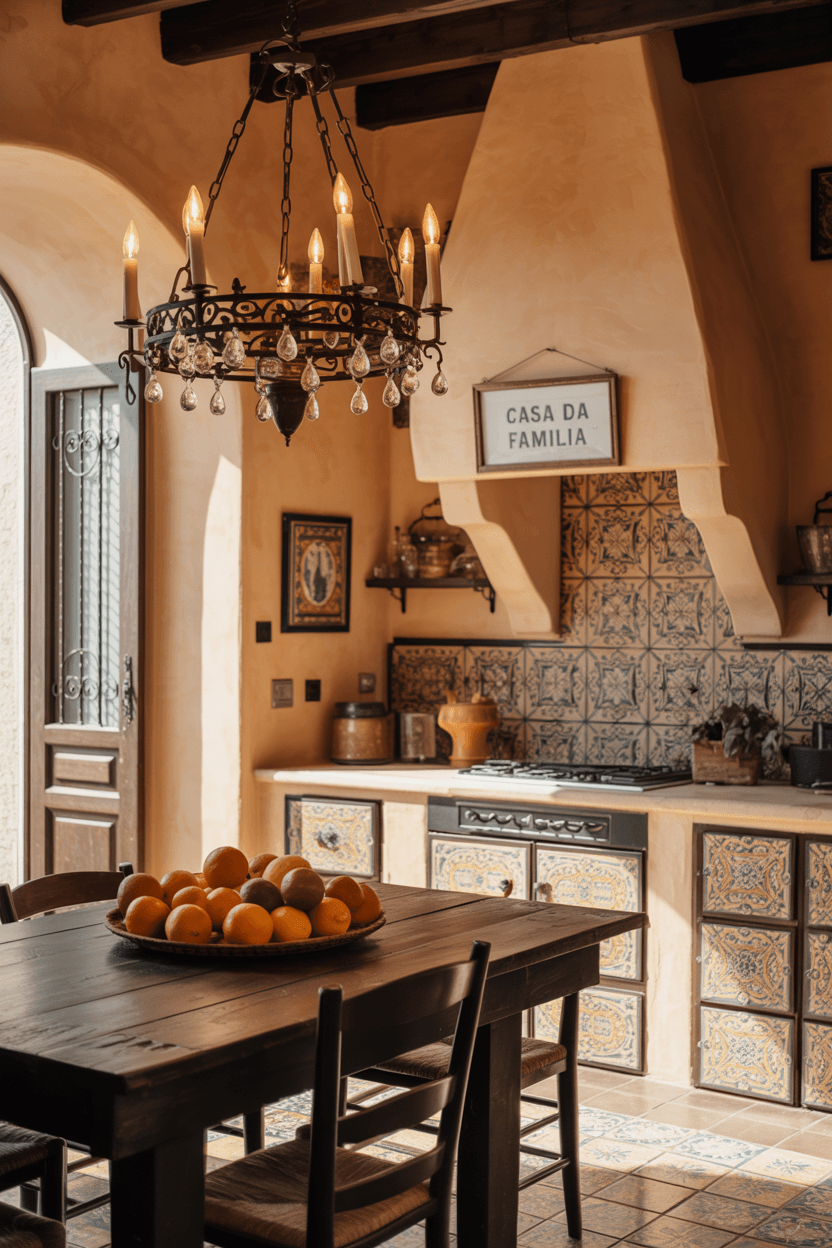
No Spanish style kitchen is complete without wrought-iron details. From cabinet handles to pot racks and chandeliers, wrought iron brings a handcrafted, rustic feel that ties the space together. Its dark tones provide striking contrast against light plaster walls and colorful tilework.
Incorporating wrought iron into lighting fixtures or shelving brackets adds texture and strength while reinforcing the kitchen’s authentic charm. These accents balance beauty and practicality, serving as both decoration and functional elements.
Best For: Homeowners who appreciate artisanal details with a bold, rustic touch.
Pro Tip: Mix wrought-iron hardware with warm wood cabinetry to create the perfect Spanish-inspired contrast.
6. Hand-Painted Ceramic Countertops
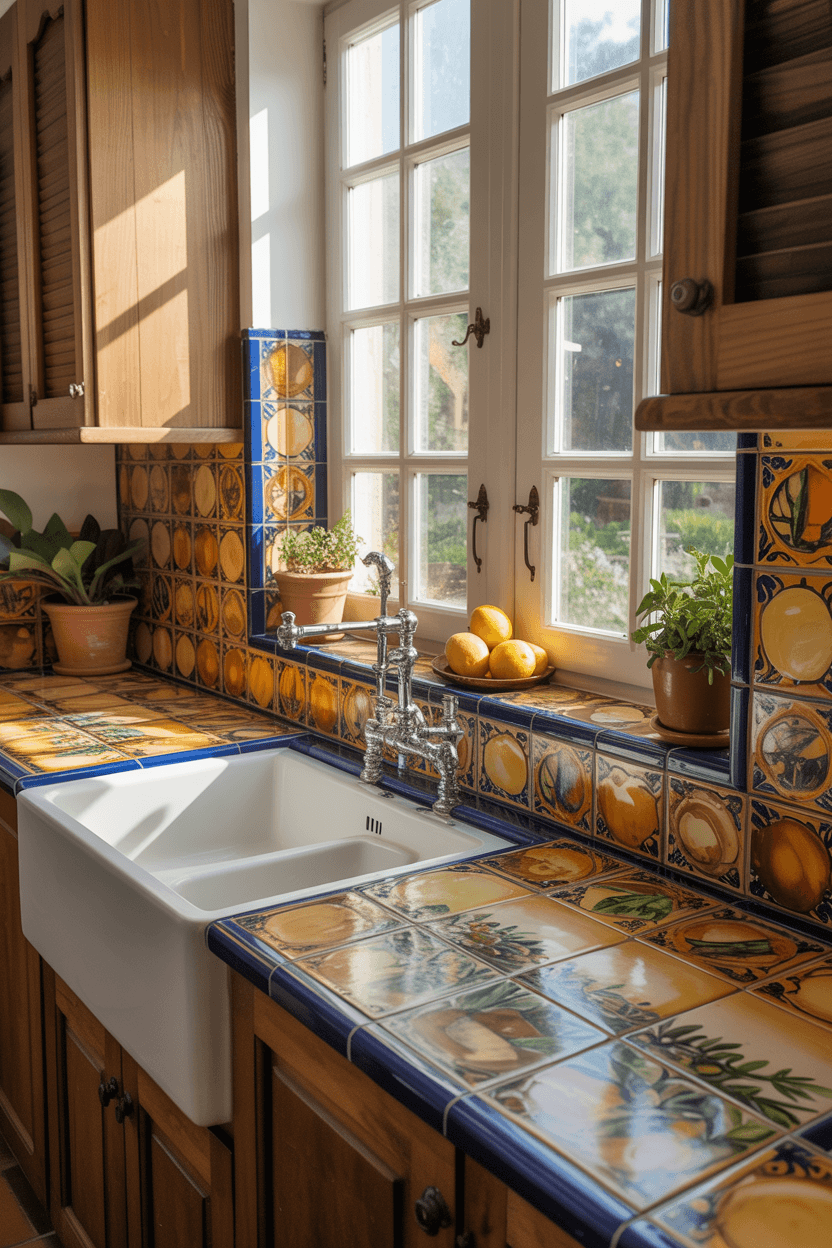
Hand-painted ceramic countertops bring a vibrant artisan touch to a Spanish style kitchen. Their unique patterns often feature floral, geometric, or Mediterranean motifs that brighten the space and make every meal preparation feel special. Unlike plain stone, ceramic surfaces create an instant focal point that showcases artistry and culture.
These countertops are not only beautiful but also practical when properly sealed, resisting heat and stains from daily cooking. The charm lies in their handcrafted imperfections, giving your kitchen an authentic, one-of-a-kind character that mass-produced materials simply can’t replicate.
Best For: Homeowners who want a bold, artistic kitchen centerpiece.
Pro Tip: Balance patterned ceramic countertops with neutral cabinetry to keep the space visually harmonious.
7. Whitewashed Plaster Walls
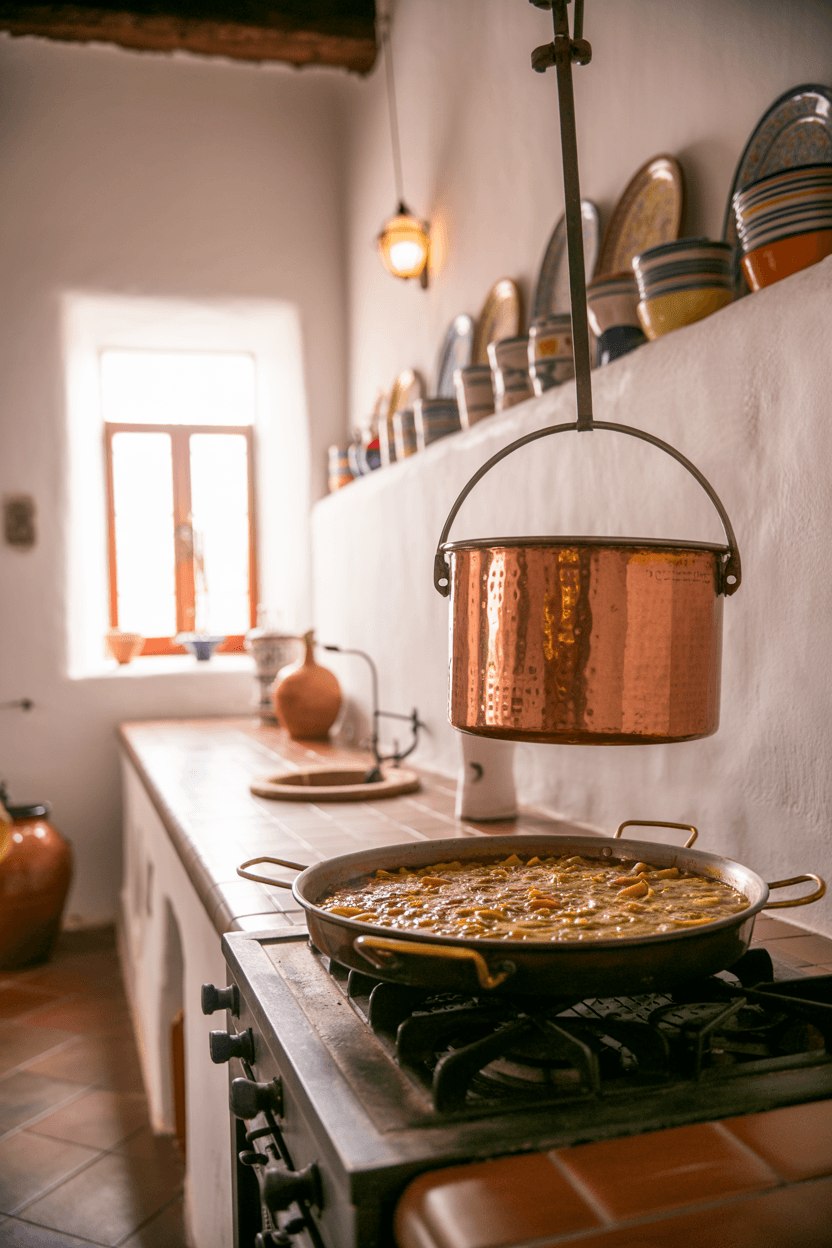
Plaster walls are a cornerstone of Spanish interiors, and a whitewashed finish creates a bright, airy backdrop for rustic details. The texture of plaster adds depth and dimension, while the soft white tones enhance natural light and make the kitchen feel spacious. This timeless look keeps the room grounded in tradition while remaining refreshingly modern.
Unlike flat paint, plaster’s subtle imperfections bring warmth and authenticity. Whitewashed walls also serve as the perfect canvas for colorful tiles, dark wood cabinetry, or wrought-iron lighting, allowing those features to truly shine in your Spanish style kitchen.
Best For: Small to medium kitchens that need light and openness without losing character.
Pro Tip: Use lime plaster for a natural, eco-friendly option that ages gracefully and resists moisture.
8. Spanish Revival Lighting
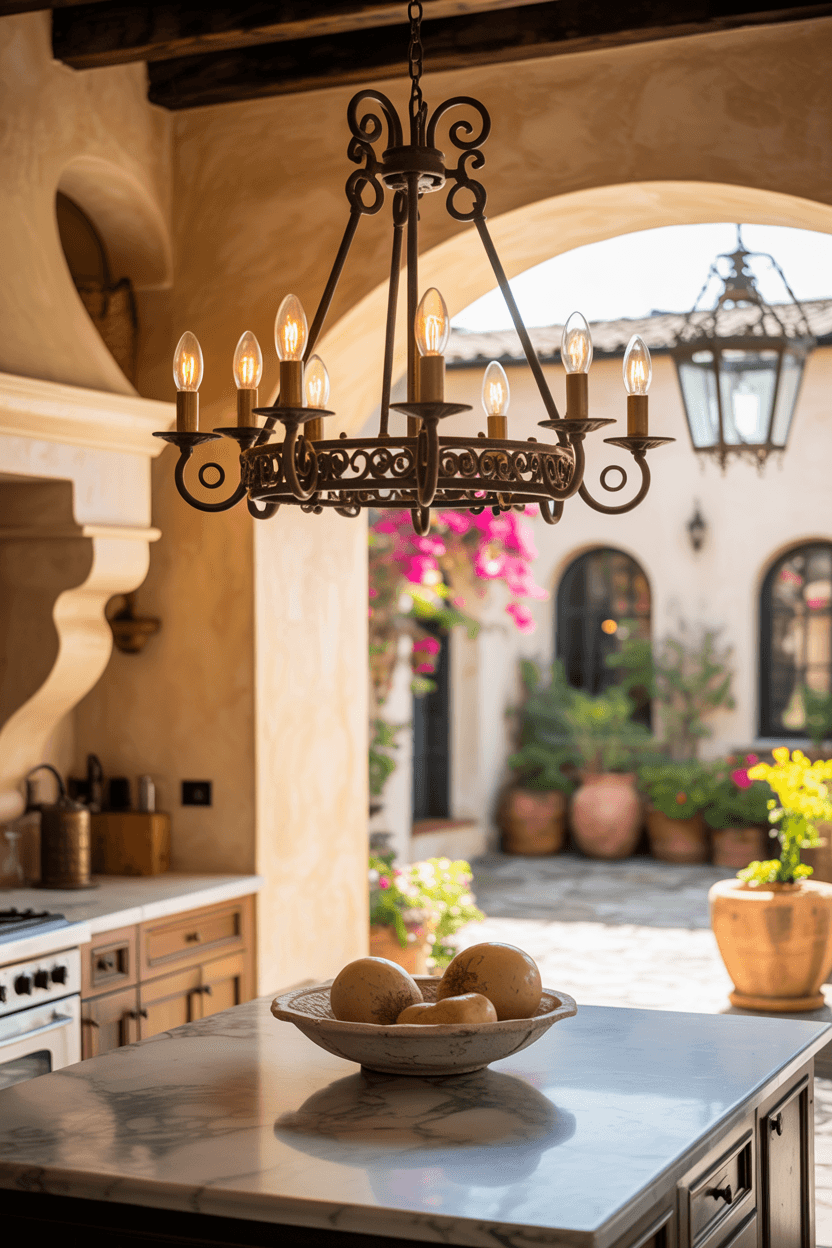
Lighting plays a crucial role in creating ambiance, and Spanish revival fixtures bring a touch of history into the kitchen. Chandeliers with wrought-iron scrollwork, lantern-style pendants, and sconces with amber glass shades all capture the essence of old-world elegance. These pieces do more than illuminate—they anchor the entire design.
By combining warm tones and intricate metalwork, Spanish lighting complements rustic elements while adding drama to the space. Whether suspended above an island or mounted on plaster walls, revival lighting creates an inviting glow that enhances both cooking and dining experiences.
Best For: Kitchens where statement lighting can double as both function and decoration.
Pro Tip: Opt for warm-toned bulbs to maintain a cozy, authentic Spanish atmosphere.
9. Decorative Range Hoods
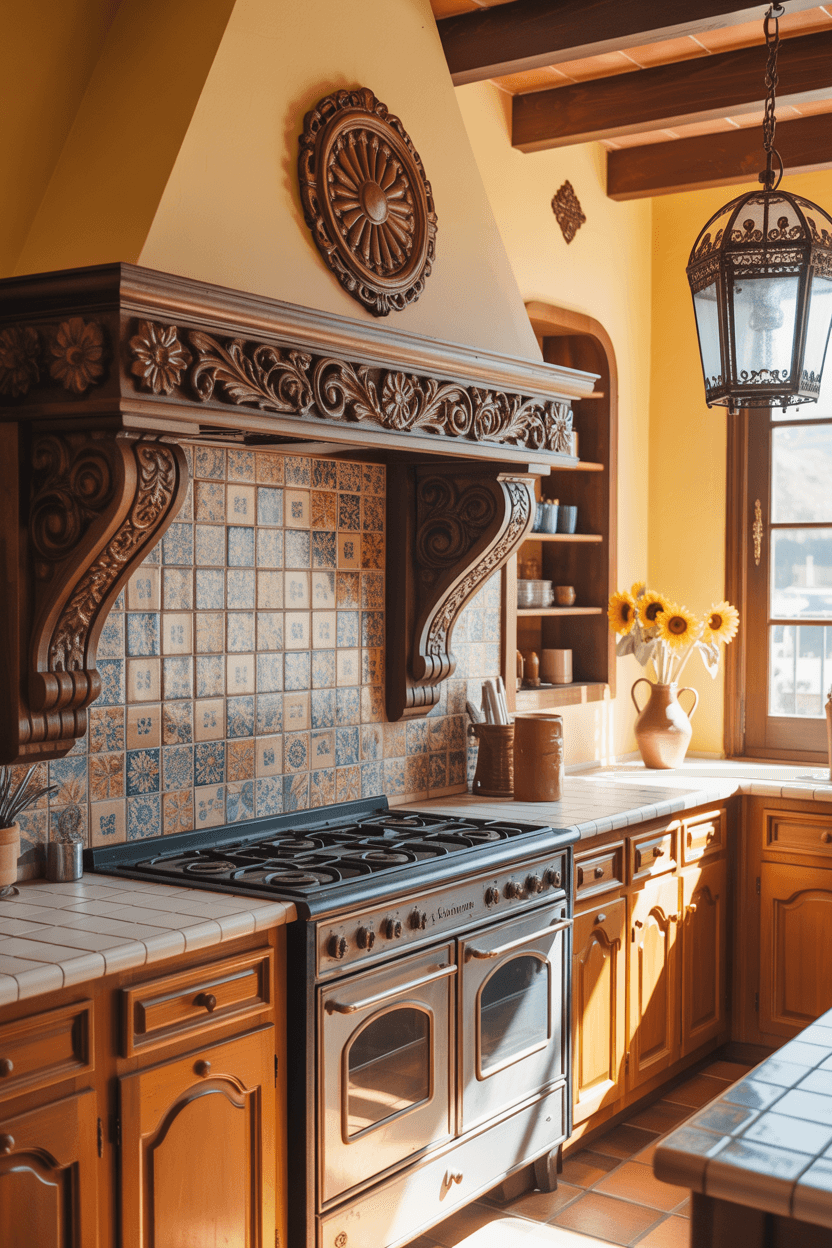
A Spanish style kitchen often features a dramatic range hood that becomes the room’s centerpiece. These hoods are typically crafted from stucco, wood, or stone, with ornate details like carved corbels, tile inlays, or wrought-iron trim. They not only serve a practical purpose but also add architectural grandeur.
Placing emphasis on the range hood instantly grounds the cooking area, creating a sense of balance and tradition. Decorative hoods also give you the chance to showcase craftsmanship while tying together other design elements like beams, tiles, and lighting.
Best For: Large kitchens that benefit from a strong architectural focal point.
Pro Tip: Frame your range hood with colorful Spanish tiles to highlight it as a statement piece.
10. Dark Wood Cabinetry
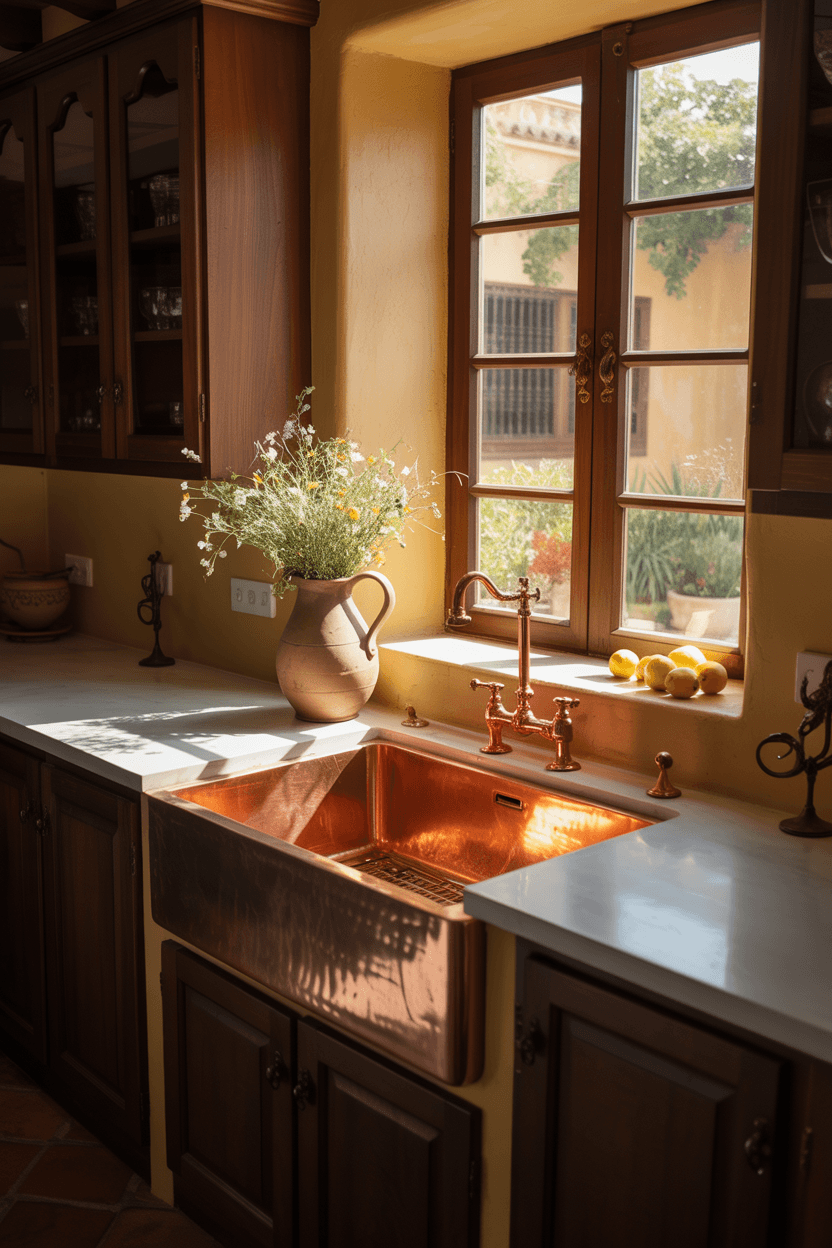
Rich wood cabinetry is another hallmark of Spanish kitchens, often featuring finishes in walnut, mahogany, or deep oak. These cabinets bring depth and warmth, grounding the lighter walls and colorful tiles around them. Carved panels or wrought-iron hardware add even more authenticity to the traditional look.
Dark wood also contrasts beautifully with terracotta floors and white plaster walls, striking a balance between rustic charm and refined elegance. While lighter kitchens feel airy, dark cabinetry offers a cozy, grounded feel that emphasizes tradition.
Best For: Homeowners who prefer a classic, bold kitchen with a warm and intimate atmosphere.
Pro Tip: Incorporate glass-front cabinet doors to break up the heaviness and showcase decorative dishware.
11. Open Shelving with Pottery Display
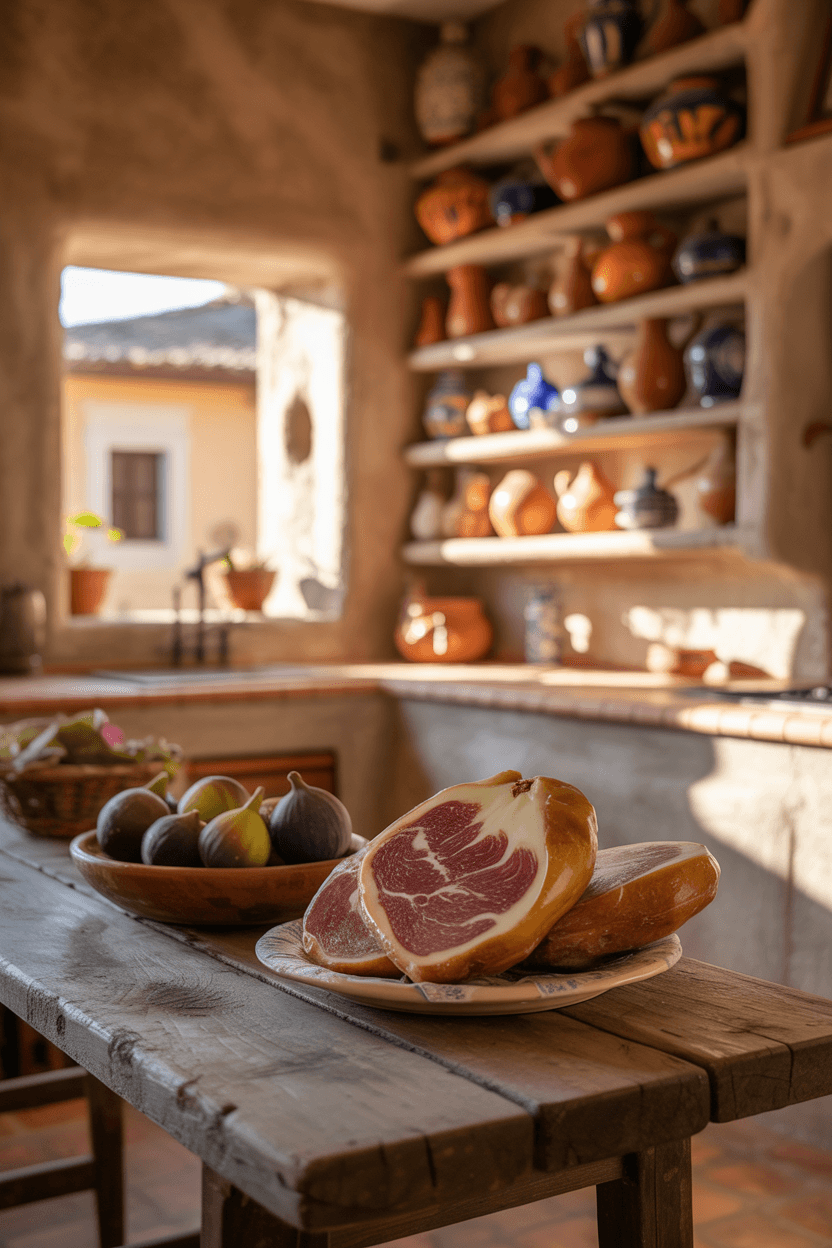
Open shelving is a staple in Spanish style kitchens, often lined with colorful pottery, ceramic bowls, or hand-painted plates. This design not only provides easy access to everyday items but also transforms functional storage into a decorative showcase. The rustic wood shelves contrast beautifully with vibrant dishware, adding a lived-in warmth to the space.
Displaying pottery highlights the artisanal charm that defines Spanish interiors. From earthy terracotta jugs to bright Talavera dishes, each piece adds character and a personal touch. Open shelving encourages a casual, welcoming vibe that feels both authentic and timeless.
Best For: Families who want practical storage with a decorative element.
Pro Tip: Mix colorful pottery with neutral ceramics to avoid an overly busy look.
12. Vibrant Mosaic Details
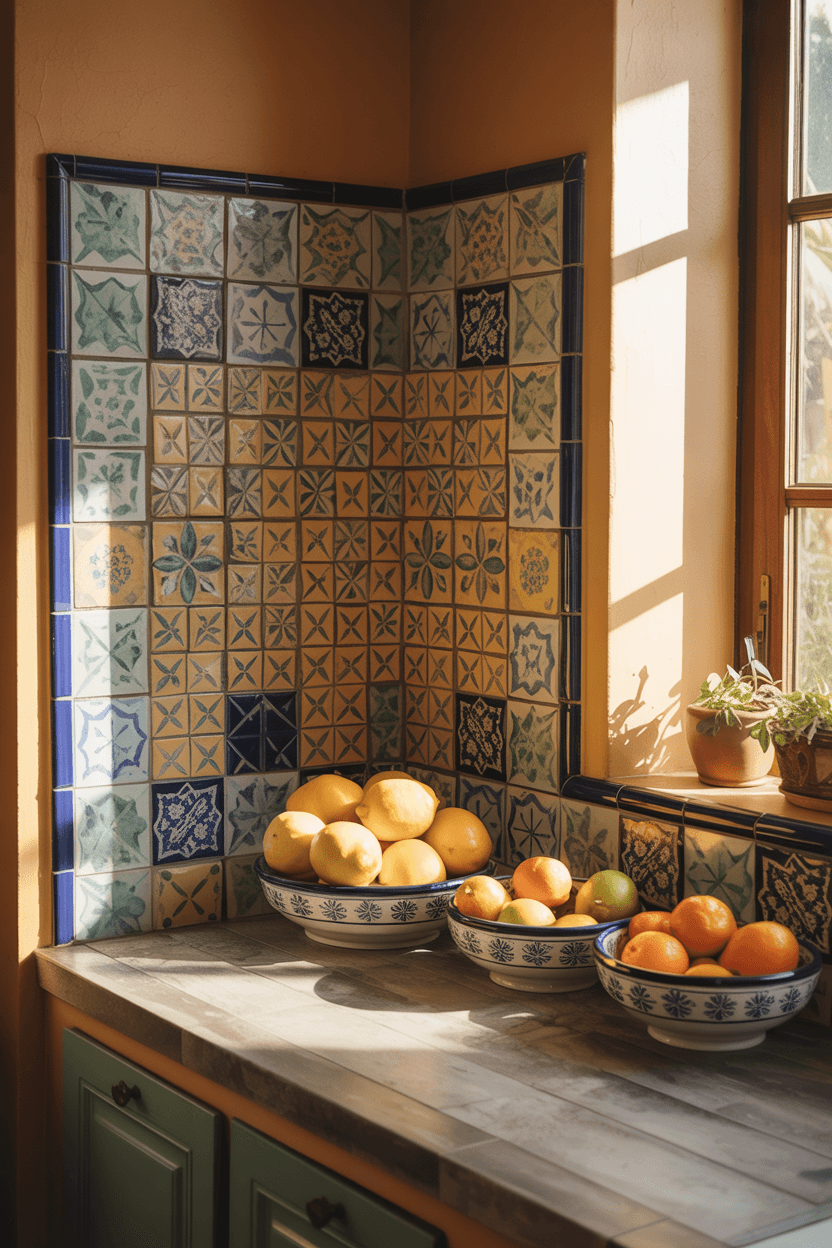
Spanish kitchens are known for their love of mosaic work, often used to bring artistry and detail into everyday spaces. A mosaic backsplash, tabletop, or floor inset can transform the kitchen into a lively and dynamic environment. These intricate designs often feature Mediterranean motifs with blues, greens, and golden yellows.
Mosaic details are not only beautiful but also durable, making them perfect for high-traffic areas like kitchens. Whether you prefer a full mosaic wall or subtle accents, this feature adds undeniable richness and cultural depth.
Best For: Homeowners who want a bold artistic statement rooted in tradition.
Pro Tip: Use mosaic designs sparingly in smaller kitchens to keep the space from feeling overwhelming.
13. Built-In Alcove for Cooking
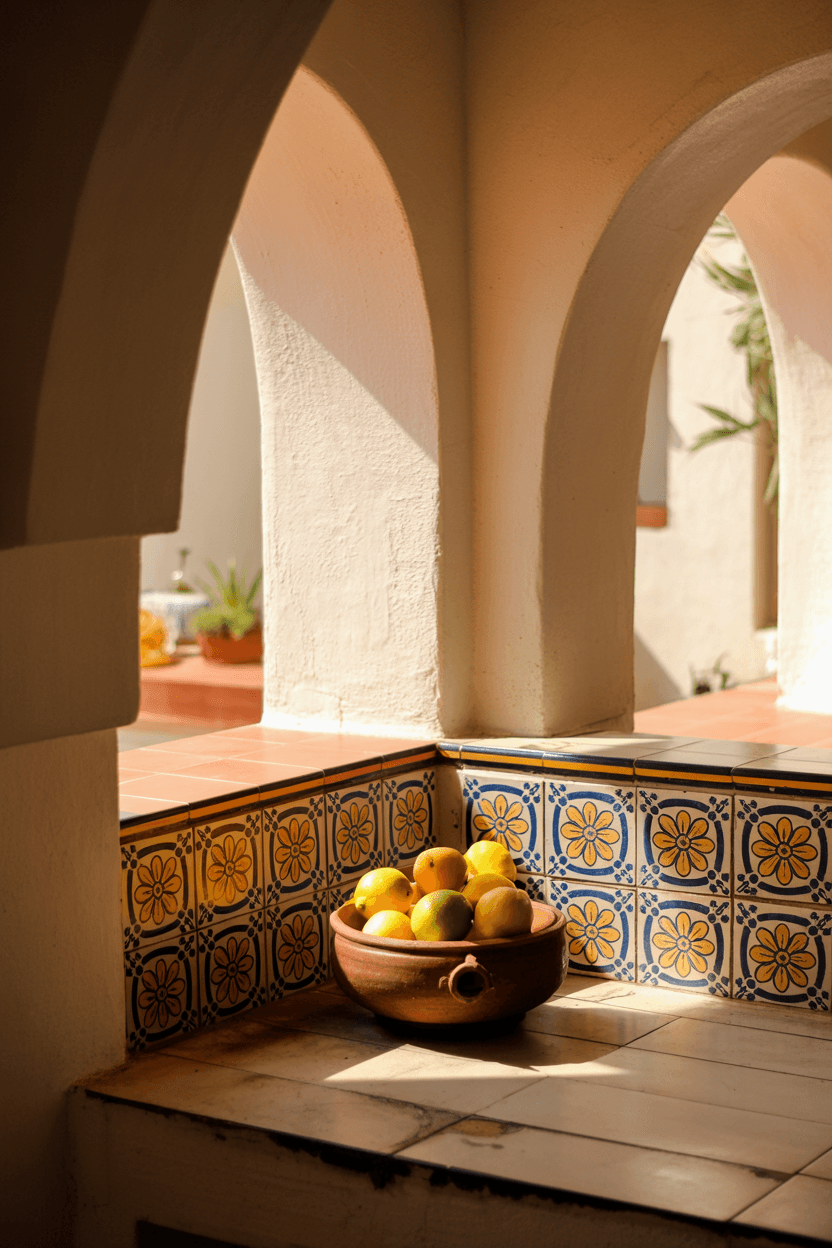
An arched alcove dedicated to the stove or cooking area is a signature Spanish kitchen feature. Often finished with decorative tile or plaster, this alcove frames the range beautifully and makes it the focal point of the room. The soft curves add architectural charm and elevate the sense of craftsmanship.
This design not only enhances aesthetics but also creates a cozy, intimate cooking space. The alcove draws attention to the heart of the kitchen while providing opportunities for custom details like accent lighting, patterned tiles, or wrought-iron trim.
Best For: Large kitchens where a defined cooking zone enhances function and beauty.
Pro Tip: Highlight the alcove with colorful Talavera tiles for a dramatic focal point.
14. Spanish Farmhouse Sinks
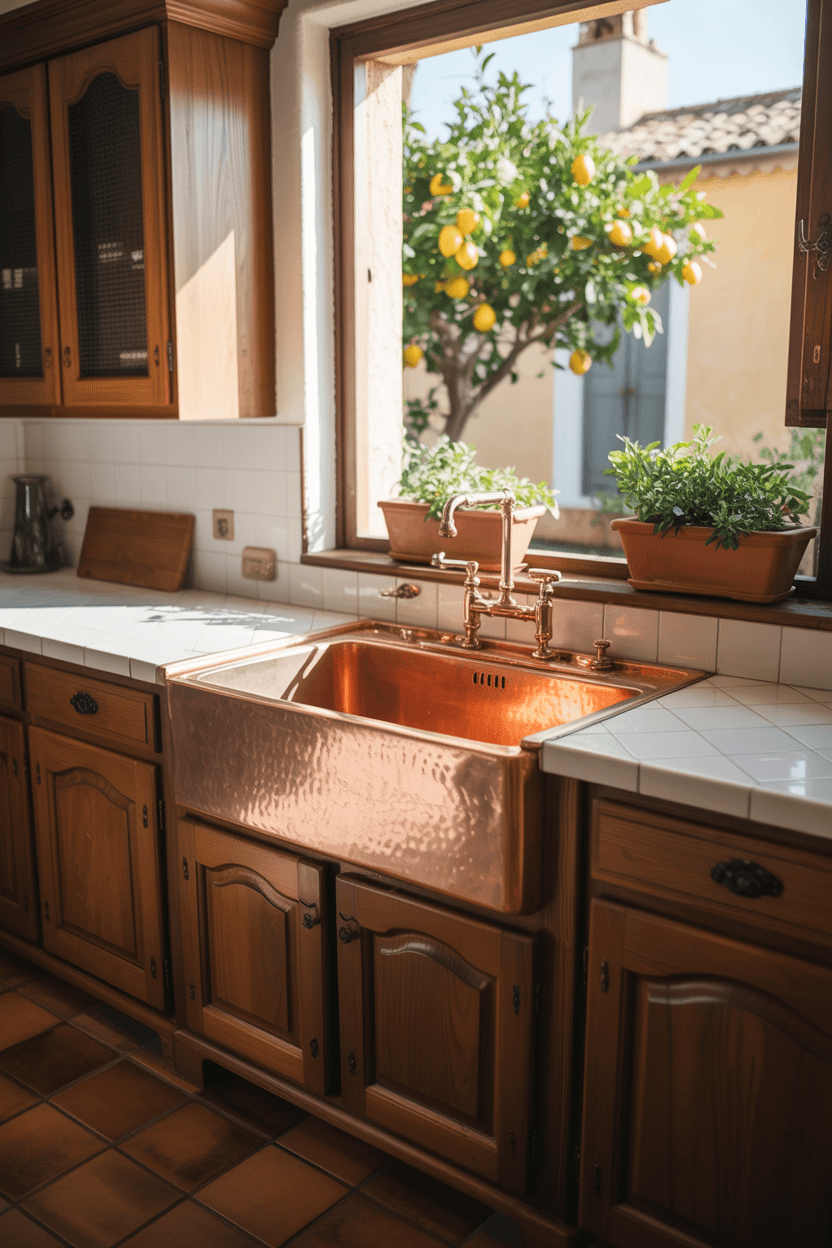
Deep, wide farmhouse sinks are a natural fit for Spanish kitchens. Often made of fireclay, stone, or copper, these sinks bring both function and rustic beauty to the space. Their generous size makes washing pots and pans easy, while their craftsmanship adds timeless character.
Farmhouse sinks pair wonderfully with dark wood cabinetry and patterned tiles, reinforcing the rustic charm of Spanish interiors. A copper or hand-painted ceramic sink can even become a decorative centerpiece that feels authentic and luxurious.
Best For: Busy households that need a spacious, durable sink with style.
Pro Tip: Choose an apron-front sink with a decorative edge to highlight craftsmanship.
15. Colorful Handwoven Textiles
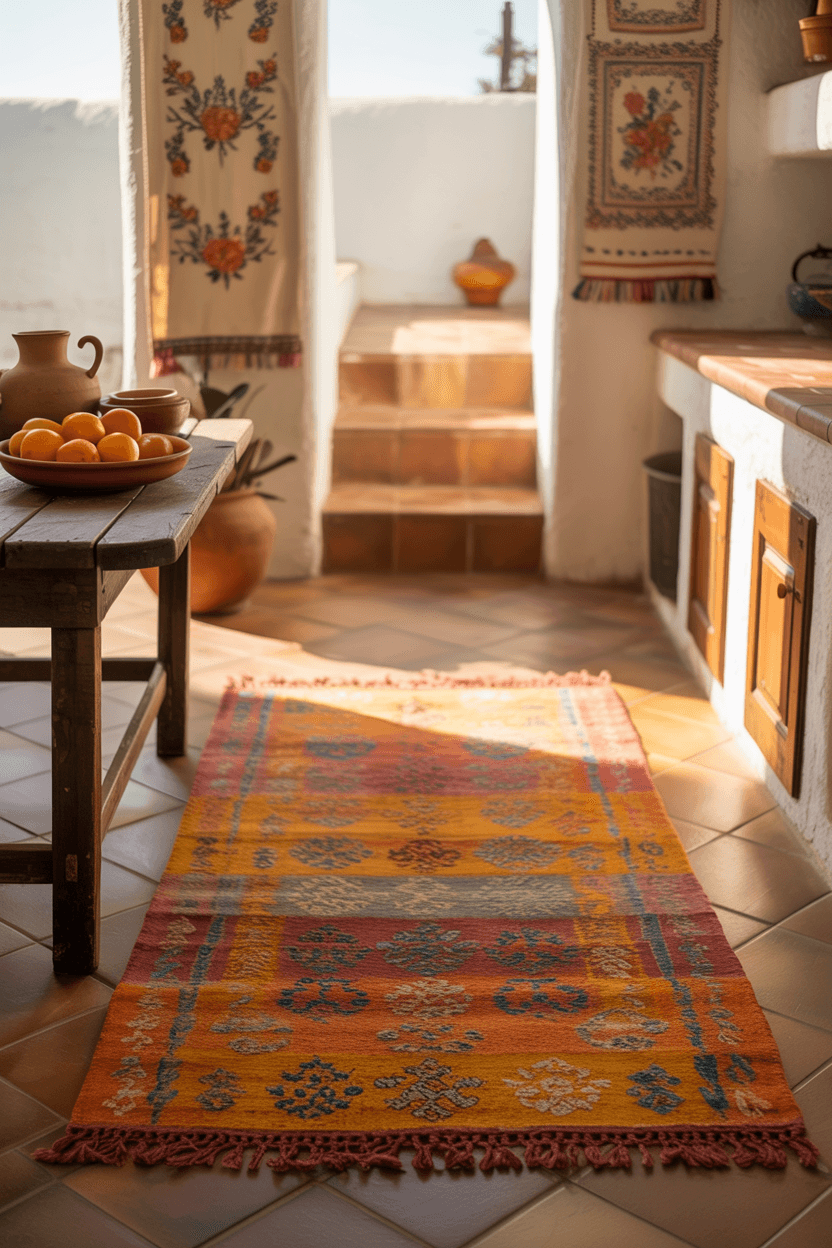
No Spanish style kitchen is complete without textiles that bring softness and vibrancy. Handwoven rugs, table runners, or embroidered curtains add splashes of color while grounding the room in tradition. Their patterns often reflect local artistry, with bold stripes, floral designs, or geometric motifs.
These textiles enhance the warmth of the kitchen, making it feel cozy and lived-in. A simple rug near the sink or a woven runner across the table adds comfort underfoot and infuses authenticity into the space.
Best For: Adding personality and warmth without major renovations.
Pro Tip: Layer small rugs in high-traffic areas for comfort and easy cleaning.
16. Decorative Tile Flooring Patterns
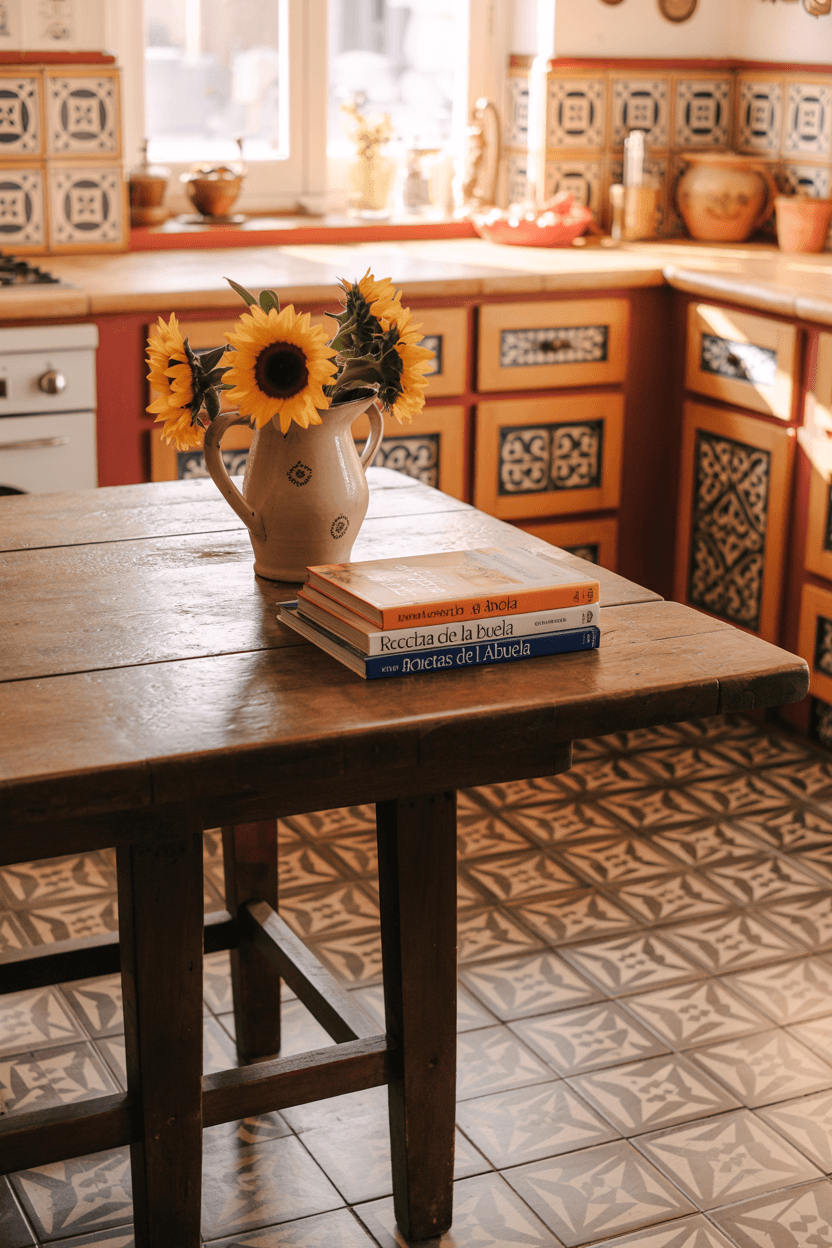
Spanish kitchens often feature floors with bold decorative tile patterns. From intricate mosaics to colorful geometric motifs, these tiles make a statement while maintaining durability. The blend of blues, yellows, and terracotta tones creates a lively base that feels rooted in tradition and artistry.
Beyond beauty, patterned tile floors are incredibly practical for kitchens since they resist spills, stains, and heavy foot traffic. They bring visual energy to the room, complementing rustic wood cabinetry and white plaster walls without overwhelming the space.
Best For: Homeowners who want a durable floor that doubles as a bold design feature.
Pro Tip: Use patterned tiles in smaller sections, like a border or island base, if you prefer subtlety.
17. Spanish Arch Windows
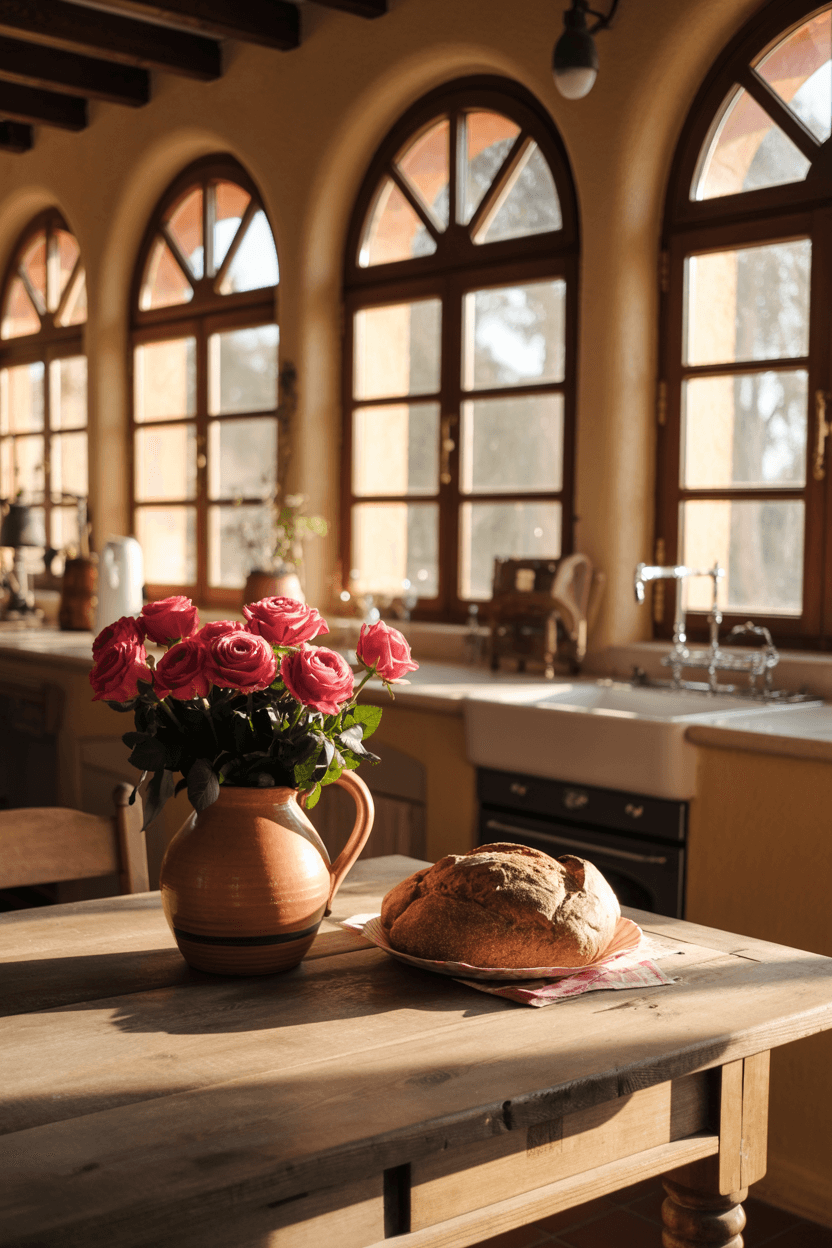
Arch-shaped windows are a defining feature of Mediterranean design and bring incredible light into a Spanish style kitchen. Their soft curves complement the plaster walls and create a graceful architectural rhythm that feels timeless. When framed with dark wood or wrought iron, they become striking focal points.
These windows also allow natural light to flood the kitchen, making it feel open and welcoming. Pairing them with simple woven shades or flowing textiles preserves the elegance while providing practicality for daily use.
Best For: Kitchens that benefit from natural light and architectural charm.
Pro Tip: Consider stained glass inserts for a dramatic, authentic Spanish touch.
18. Brick or Stone Archways
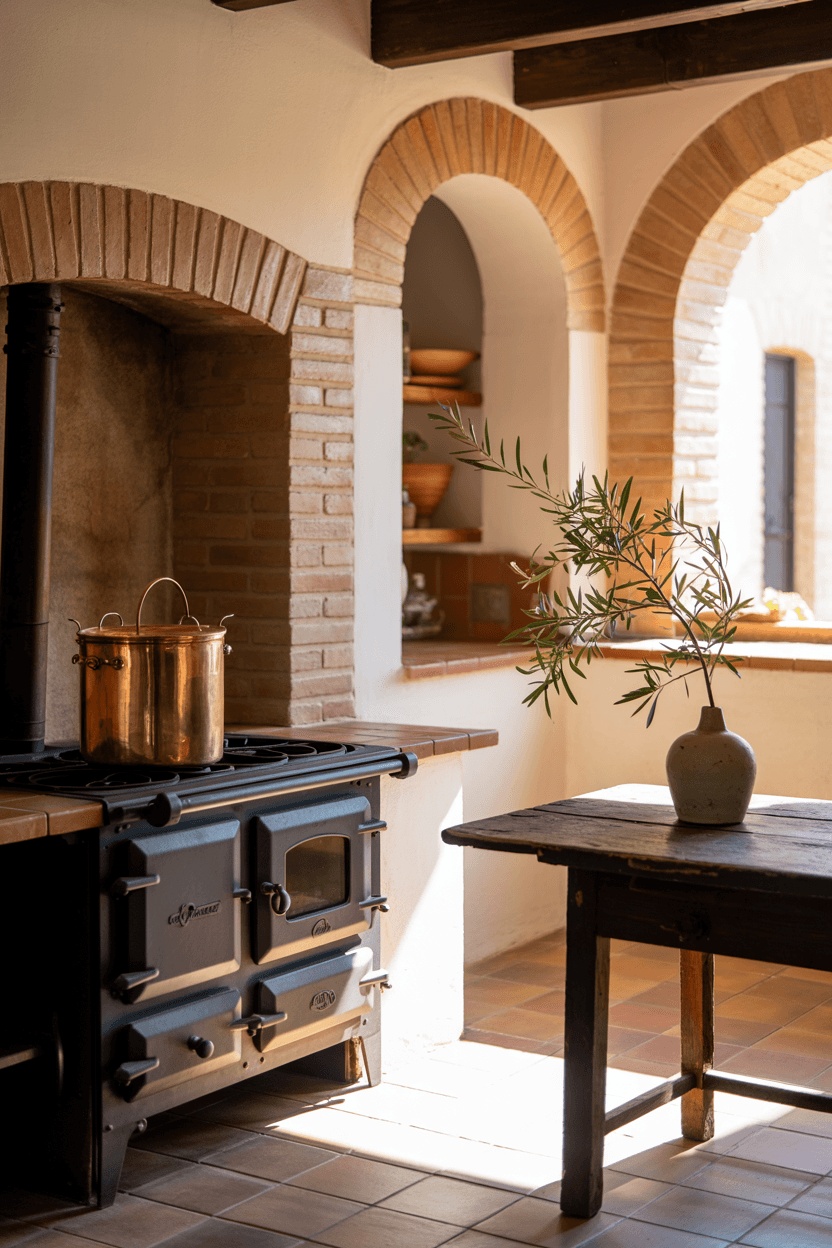
Archways built with brick or stone bring rustic grandeur into the kitchen. They can separate cooking and dining areas, frame entryways, or highlight alcoves in a way that feels handcrafted and historic. The use of natural materials adds both texture and authenticity to the overall design.
These archways also serve as lasting architectural statements, blending durability with artistry. Their earthy tones pair beautifully with terracotta floors and plaster walls, reinforcing the sense of old-world craftsmanship.
Best For: Large kitchens or open layouts that benefit from defined zones.
Pro Tip: Mix stone or brick with smooth plaster walls for striking contrast and balance.
19. Cozy Breakfast Nook
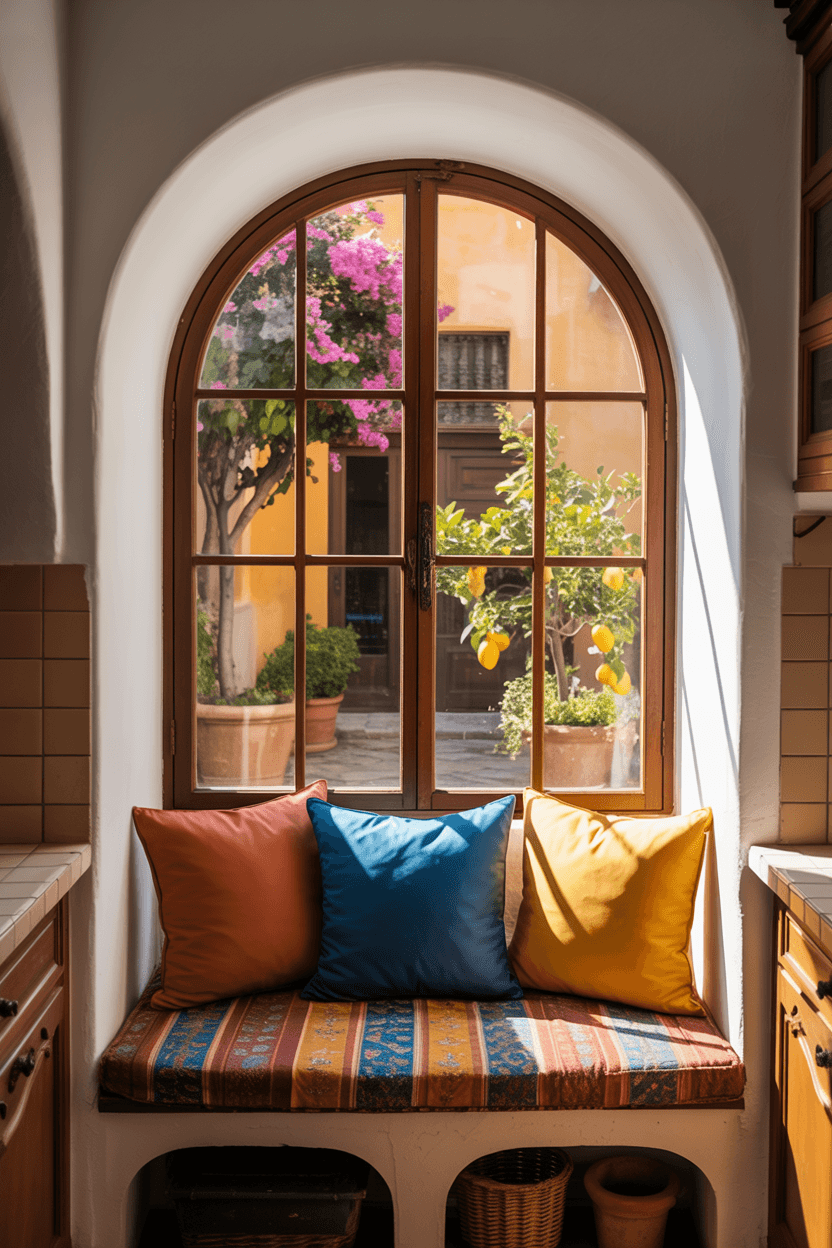
Spanish kitchens often feature a small, cozy breakfast nook that makes mornings more inviting. Usually framed by arched windows or tiled benches, these nooks create a warm spot to enjoy casual meals. The combination of wood furniture, colorful cushions, and rustic details makes them feel both charming and practical.
Beyond aesthetics, a breakfast nook adds functionality by offering additional seating and storage options. It serves as a family gathering spot, reinforcing the welcoming, communal atmosphere central to Spanish design.
Best For: Families who value casual dining and cozy morning spaces.
Pro Tip: Add handwoven cushions or patterned tile backs to highlight the Spanish flair.
20. Copper Pots and Accessories
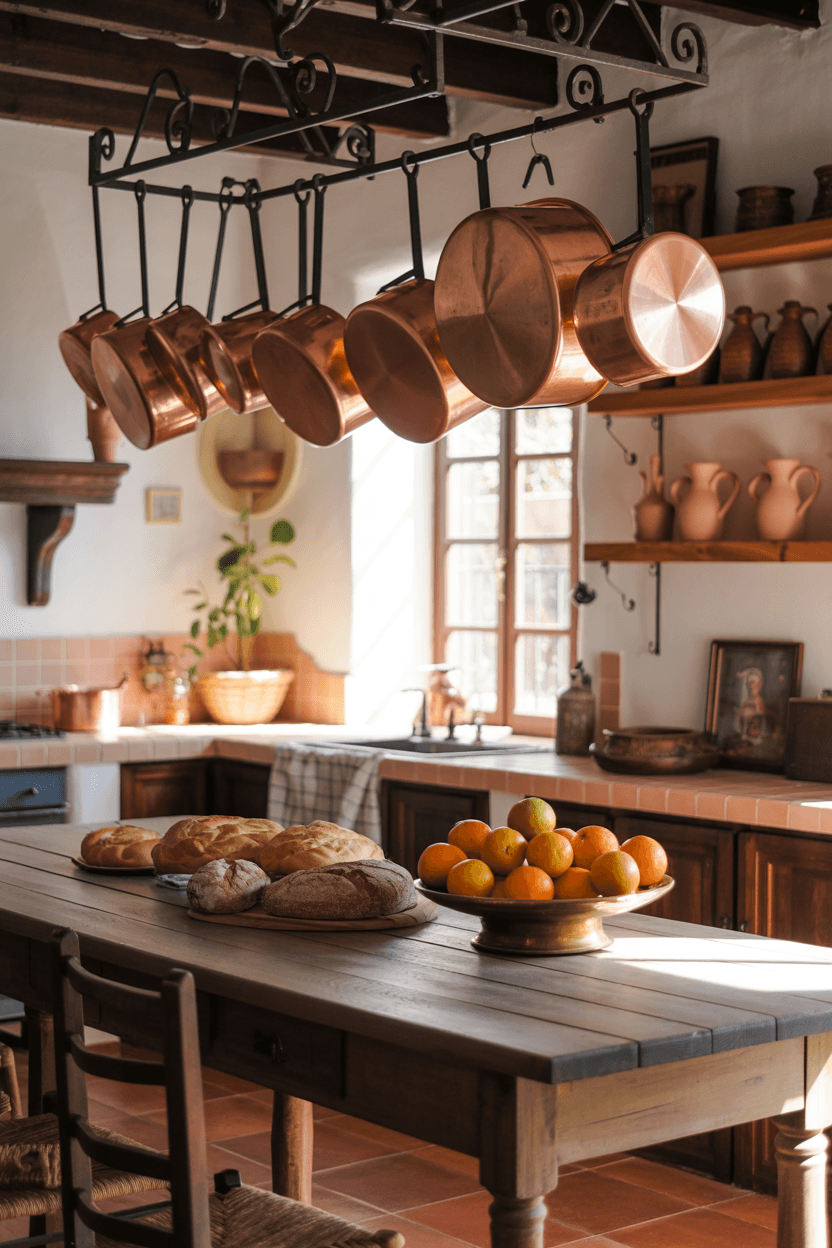
Copper is a material often found in Spanish kitchens, adding a rich, warm glow. From hanging pots to decorative pitchers, copper accessories pair beautifully with dark wood cabinetry and plaster walls. Their natural shine and patina bring artisanal depth to the kitchen.
Beyond beauty, copper is durable and functional, making it perfect for cookware. Displaying copper pots on open racks or hanging above an island turns them into décor while keeping them within easy reach for cooking.
Best For: Cooks who love functional décor with timeless charm.
Pro Tip: Polish copper regularly or embrace the natural patina for a rustic aged look.
21. Hand-Carved Wooden Details
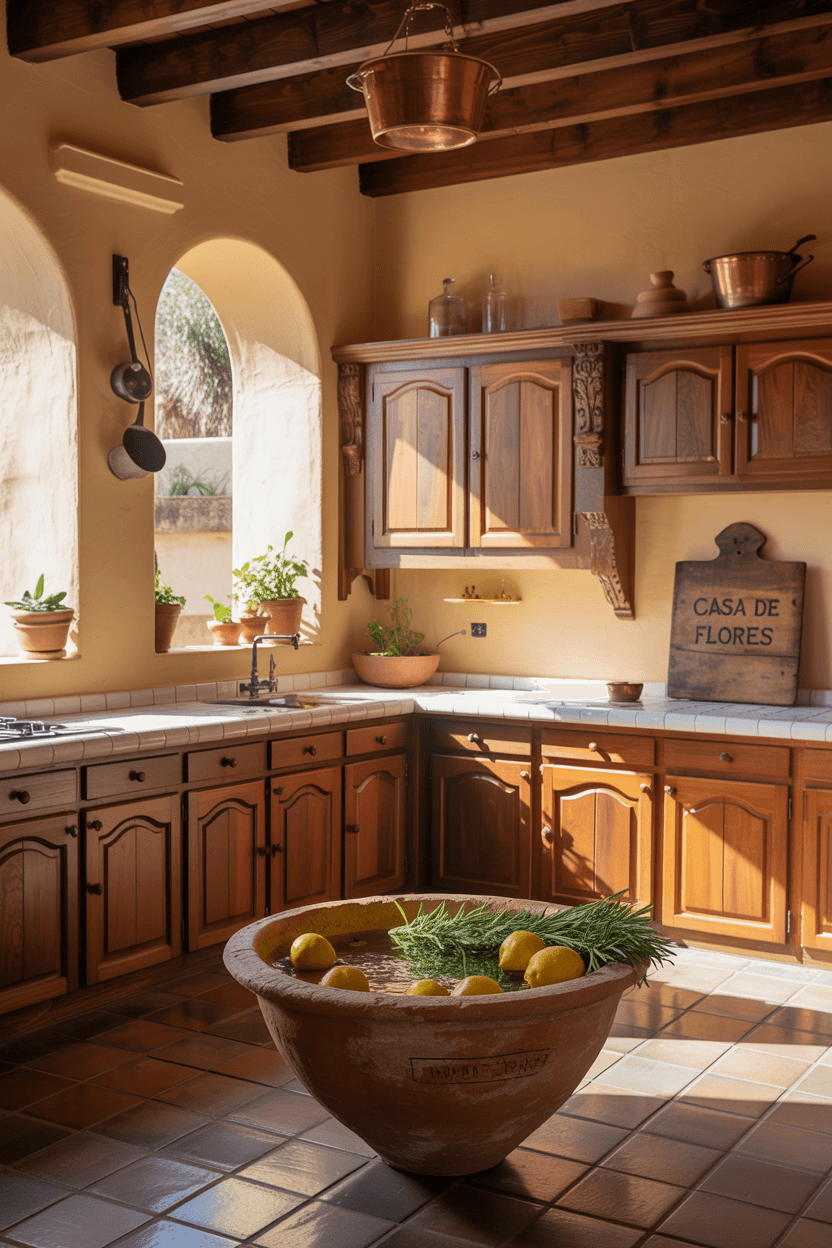
Hand-carved wooden elements are a hallmark of Spanish style kitchens, adding artistry and depth. From cabinet doors with intricate patterns to decorative corbels supporting open shelves, these details celebrate craftsmanship and tradition. They bring a tactile, organic beauty that instantly warms the space.
The carvings also serve as subtle focal points, balancing the boldness of tiles and wrought iron. Incorporating even small details like carved drawer fronts or wooden trim creates an authentic, old-world aesthetic that makes the kitchen feel timeless.
Best For: Homeowners who value craftsmanship and authentic traditional charm.
Pro Tip: Pair hand-carved wood with simple plaster walls to let the artistry stand out.
22. Large Kitchen Islands
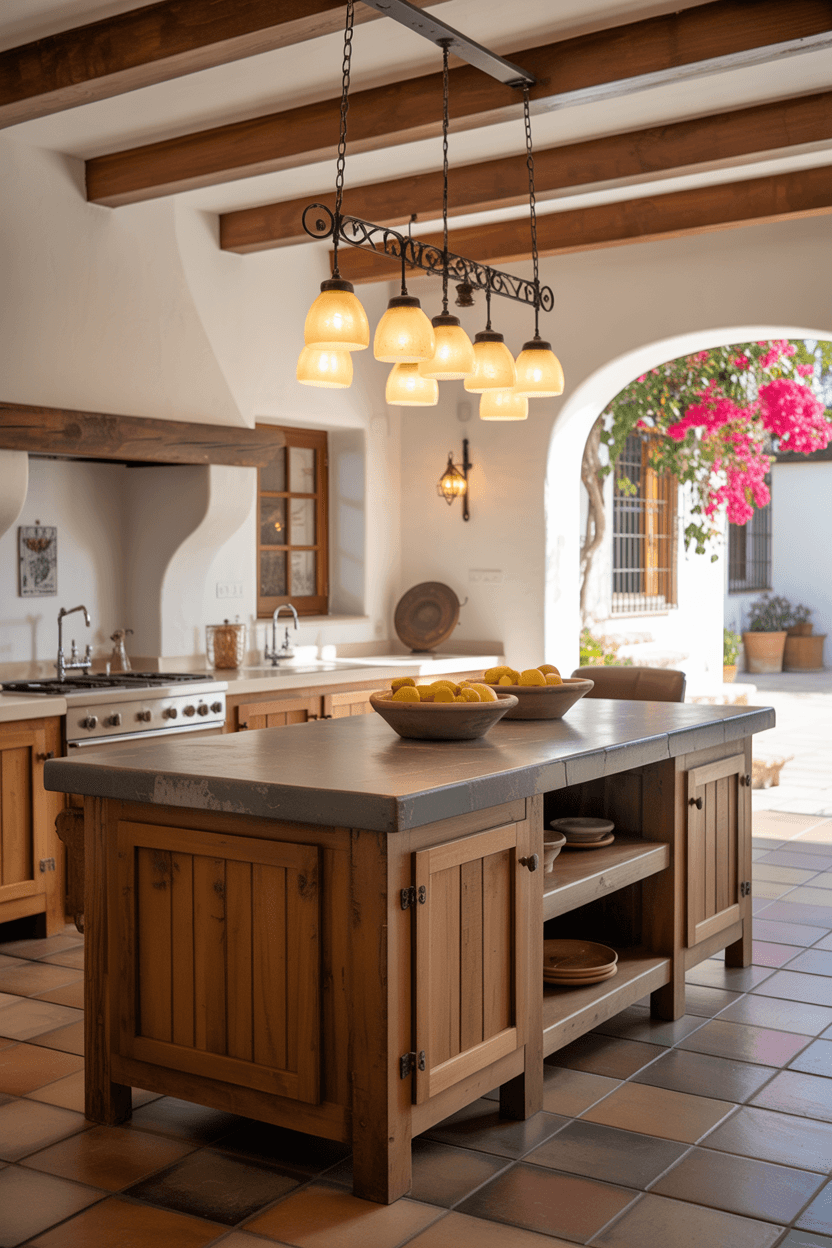
Spanish kitchens often feature expansive islands that serve as both prep space and gathering spots. These islands are typically made of rich wood or topped with stone, offering both functionality and rustic beauty. Their size makes them perfect for hosting family meals or entertaining guests.
Beyond practicality, the island becomes a design centerpiece. Adding decorative tile to the base, carved wooden legs, or a wrought-iron chandelier above enhances its Spanish authenticity and makes it a warm focal point.
Best For: Families and entertainers who need both workspace and social gathering areas.
Pro Tip: Incorporate a tiled countertop or patterned inlay to tie the island into the overall design.
23. Earth-Toned Color Palettes
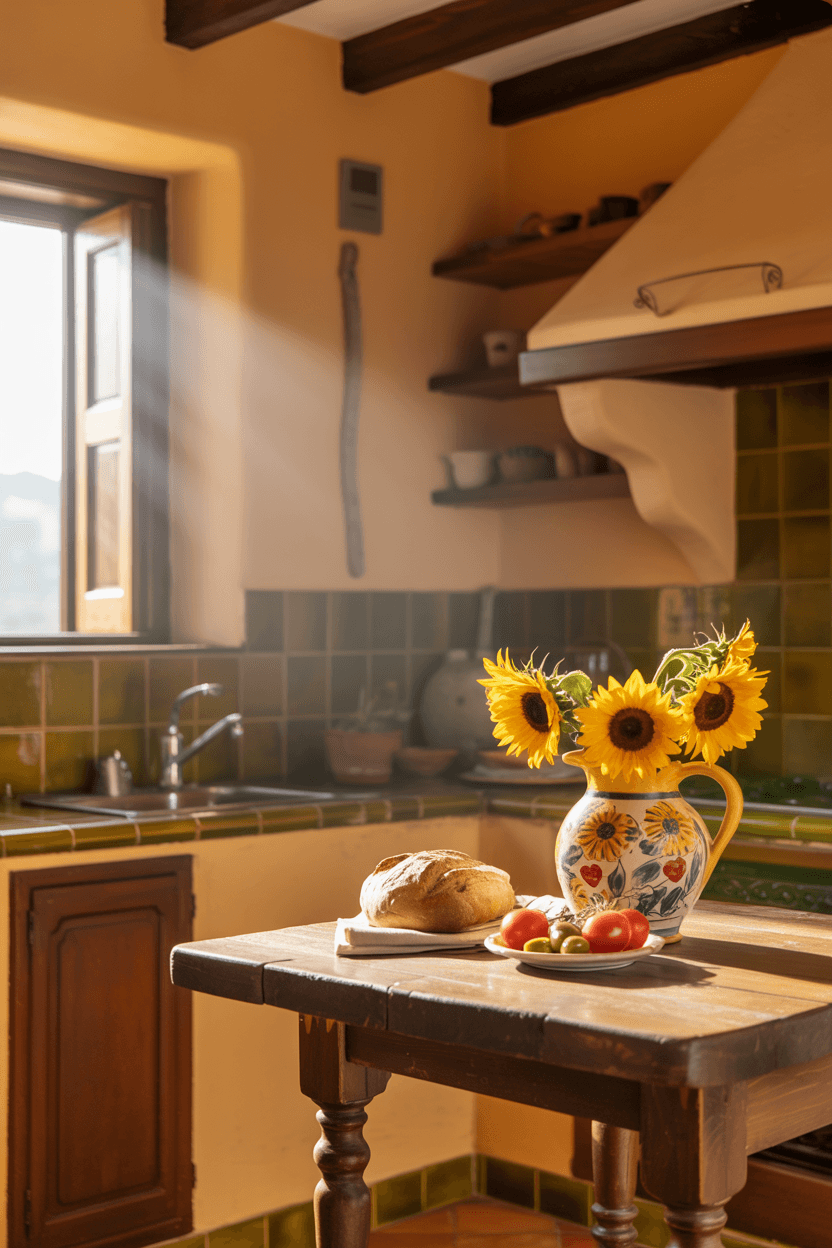
Spanish style kitchens thrive on warm, earthy tones that reflect the Mediterranean landscape. Shades of terracotta, sand, olive green, and deep browns create a palette that feels natural and grounded. These colors bring balance to vibrant tilework and bold accents.
Earthy hues also make the kitchen feel cozy and timeless, ensuring it never feels sterile or cold. Layering different tones in walls, cabinetry, and textiles creates depth while preserving harmony across the space.
Best For: Those who want a grounded, inviting kitchen inspired by nature.
Pro Tip: Balance earthy tones with crisp white plaster for lightness and contrast.
24. Ornamental Ceiling Tiles
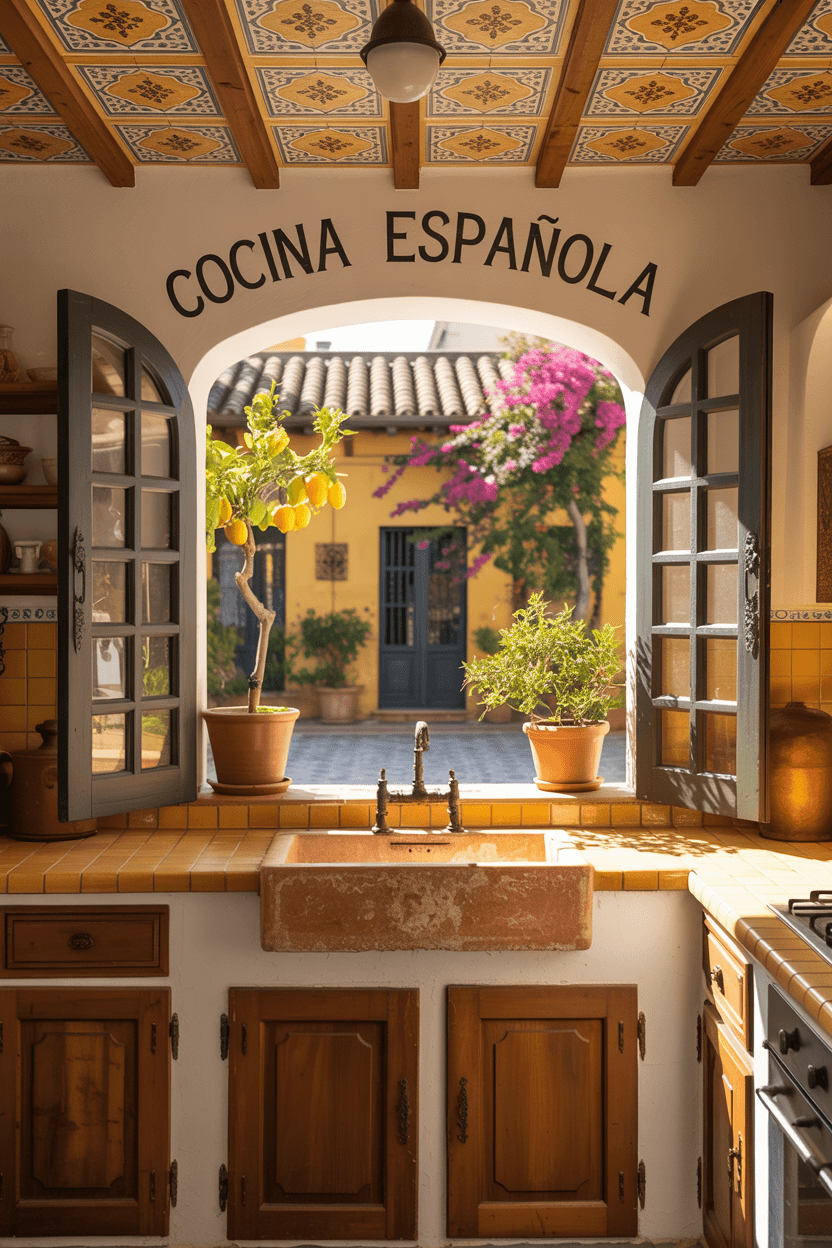
Decorative ceilings are another feature that elevate Spanish kitchens. Ornamental tiles, often in patterned terracotta or carved wood, draw the eye upward and give the room an architectural richness. This detail transforms the ceiling into an artistic feature instead of an afterthought.
Adding ceiling tiles also enhances acoustics and texture, making the kitchen feel more intimate. Whether subtle or bold, this design choice emphasizes the layered, handcrafted beauty that defines Spanish interiors.
Best For: Large kitchens where ceiling details can shine without overwhelming.
Pro Tip: Use muted tile tones if your floor already features bold patterns for balance.
25. Indoor-Outdoor Flow
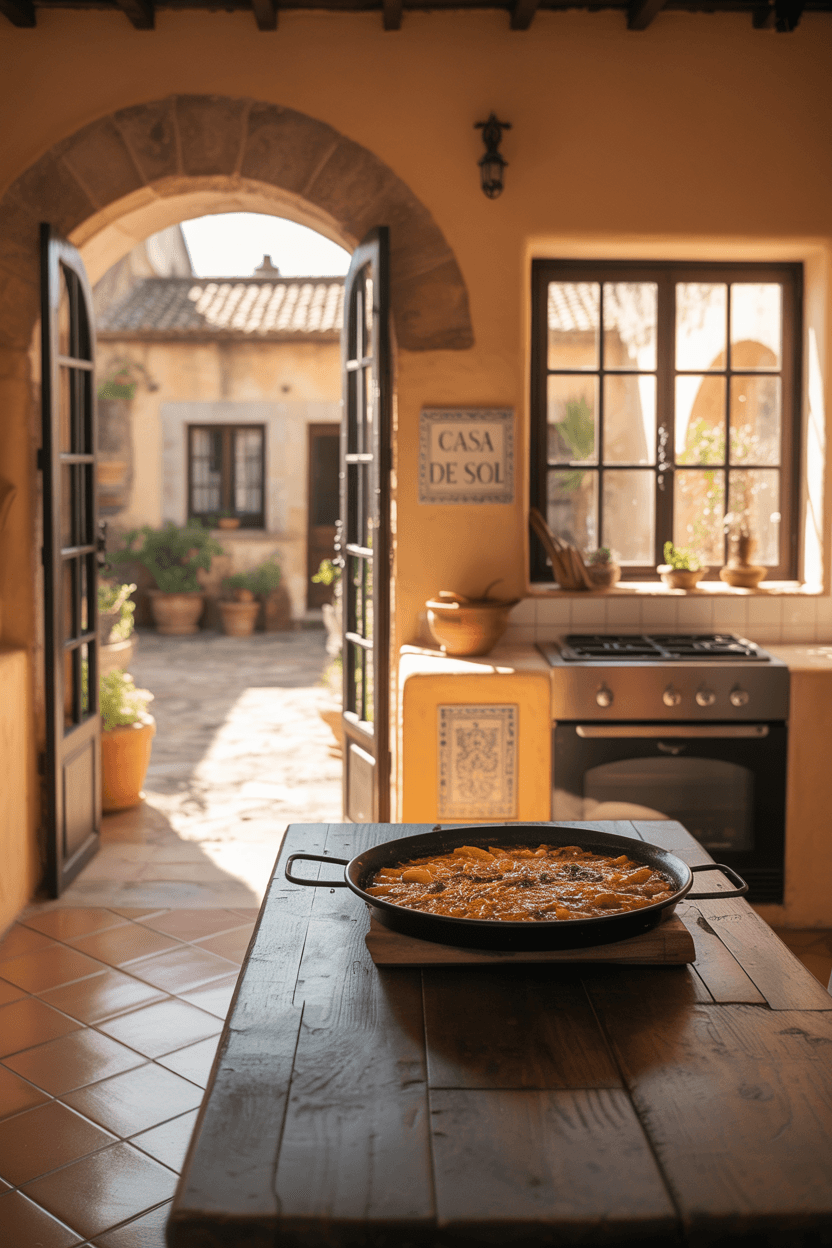
One of the most enchanting aspects of Spanish style is its connection to the outdoors. Many kitchens incorporate French or arched doors leading to patios or courtyards, creating a seamless flow. This design invites fresh air, natural light, and a sense of openness.
The indoor-outdoor connection also enhances entertaining, making it easy to extend meals and gatherings outside. Paired with terracotta pavers, lush greenery, and wrought-iron details, the result is a kitchen that feels like part of a Mediterranean villa.
Best For: Homes in warm climates where outdoor living is part of the lifestyle.
Pro Tip: Frame patio doors with colorful tiles to highlight the transition between spaces.
Final Thoughts
Designing a Spanish style kitchen is about more than materials and layouts—it’s about creating a space that feels soulful, warm, and timeless. With features like terracotta floors, Talavera backsplashes, and wrought-iron details, these kitchens embody tradition while remaining functional for modern living. Every detail tells a story, making your home feel more connected to heritage and artistry.
Whether you dream of a rustic hacienda-inspired space or a refined Mediterranean retreat, Spanish design brings charm and authenticity that few other styles can match. Embrace the textures, colors, and handcrafted beauty of these ideas, and transform your kitchen into a welcoming sanctuary where family and friends gather with joy.
Loved these ideas? Be sure to save your favorite Spanish Style Kitchen inspirations and follow Trendy Decor Guide on Pinterest for more timeless home design tips and décor inspiration!


